FBI-62HQ-83894/sarbanis-radio-ham-contactee-alien-message-july-1947 / 1947-07-10 to 1947-09-17 / FBI
Mrs. A. G. Sarbanis 'Radio Ham' Coded Alien Message Newspaper Case, July-September 1947
FBI case file documenting Mrs. A. G.
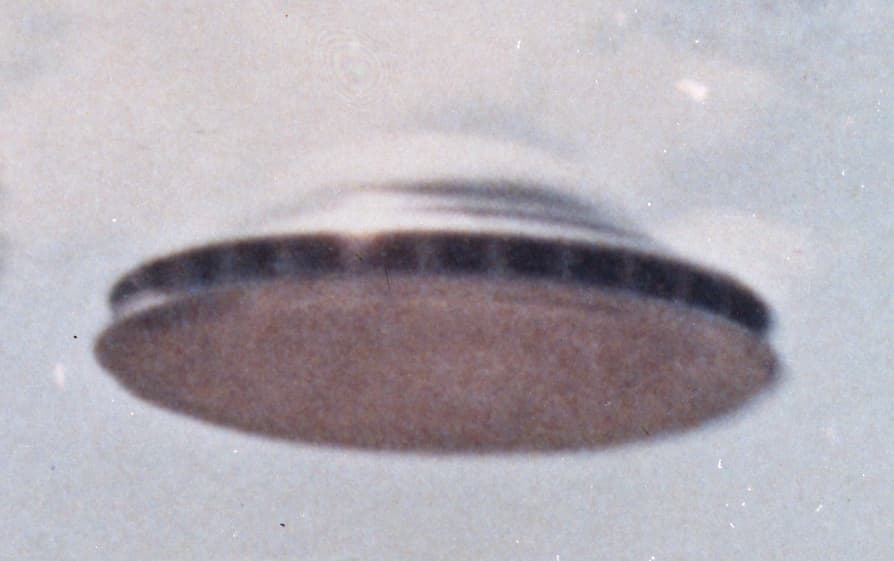
Federal Bureau of Investigation / New York Office (1947). Mrs. A. G. Sarbanis 'Radio Ham' Coded Alien Message Newspaper Case, July-September 1947. The UFO Files. https://the-ufo-files-site.netlify.app/dossier/sarbanis-radio-ham-contactee-alien-message-july-1947
"Mrs. A. G. Sarbanis 'Radio Ham' Coded Alien Message Newspaper Case, July-September 1947." Federal Bureau of Investigation / New York Office. 1947. https://the-ufo-files-site.netlify.app/dossier/sarbanis-radio-ham-contactee-alien-message-july-1947.
Mrs. A. G. Sarbanis 'Radio Ham' Coded Alien Message Newspaper Case, July-September 1947
Case ID: FBI-62HQ-83894/sarbanis-radio-ham-contactee-alien-message-july-1947
Agency: Federal Bureau of Investigation / New York Office
Date: 1947-07-10 to 1947-09-17
Source: https://www.war.gov/medialink/ufo/release_1/65_hs1-834228961_62-hq-83894_section_2.pdf
Retrieved: Sat May 09 2026 20:00:00 GMT-0400 (Eastern Daylight Time)
Mirrored on The UFO Files, an archive by Dead Pixel Design. The file is the file. Anything in question is one click from the original.
Summary
FBI case file documenting Mrs. A. G. Sarbanis (Long Island, New York) who reported a coded alien message that appeared in the “County Irritant” feature of the Newsday newspaper on July 12, 1947. The message, signed “Radio Ham,” when decoded read: “TIRED OF HUMAN NONSENSE WONT AWAIT ATOMIC WAR DISRUPTING ORDER SOLAR SYSTEM SO SENT FLYING DISKS AND WILL SET UP WORLD ORDER UNDER MARTIANS LATE THIS YEAR.” The FBI Laboratory verified that Sarbanis’ decoding was “substantially correct.” FBI investigation (July-September 1947) involved interviewing Sarbanis, contacting the Newsday editor (Jack Altschul), and attempting to identify the anonymous “Radio Ham” sender via FCC amateur radio records. The case was assessed as a local hoax perpetrated by a “screwball” motivated by flying disc media publicity. This case represents the earliest documented FBI institutional treatment of a UFO-contactee message narrative—distinguishing between credible government experiment hypothesis (contemporaneous Garrett memo, same archive) and probable public hoax/mental health manifestation. The case is significant as documentation of the rapid proliferation of flying disc mythology in mid-summer 1947 and the FBI’s method for vetting contactee narratives.
What the FBI Case File Documents
Initial Referral and Sarbanis Interview
Mrs. A. G. Sarbanis, resident at 66 Notre Dame Avenue, Hicksville, Long Island, New York, wrote to the FBI on July 10, 1947, enclosing a newspaper clipping from the Newsday “County Irritant” feature. The clipping contained a coded message signed “Radio Ham.” The FBI Liaison Section (SAC Edward Scheidt, New York) responded with outreach to the newspaper’s City Editor to identify the sender.
Sarbanis was interviewed by Special Agent William A. Johnson on August 12, 1947:
“Mrs. SARBANIS was interviewed by Special Agent William A. Johnson on August 12, 1947, at which time she advised that this coded message had appeared in ‘Newsday,’ the local newspaper of Nassau and Suffolk County, Long Island, New York. She stated that the message had appeared in the ‘County Irritant,’ a feature of this paper, and had been signed ‘Radio Ham.’”
The Coded Message Content
The Newsday newspaper feature “County Irritant” published the message on July 12, 1947, under the title “Garbles” (a reference to garbled code). The original encoded message was presented to readers, with Stephen M. Schuster (Westbury, New York) providing his decoding attempt. The FBI Laboratory subsequently verified Sarbanis’ full decoding:
“TIRED OF HUMAN NONSENSE WONT AWAIT ATOMIC WAR DISRUPTING ORDER SOLAR SYSTEM SO SENT FLYING DISKS AND WILL SET UP WORLD ORDER UNDER MARTIANS LATE THIS YEAR.”
The original encoded message shows variation in reader decoding attempts—Schuster decoded “OUTLAW” for one phrase instead of Sarbanis’ “AWAIT,” “DISRUPTING” instead of “DISTURBING” for another, and some readers decoded the final phrase as “under minister” rather than “under Martians.” The FBI Laboratory confirmed Sarbanis’ version as substantially accurate.
FBI Laboratory Assessment:
“The FBI Laboratory checked Mrs. Sarbanis’ decoding of this message and advised that it was substantially correct.”
Newspaper Editor Assessment
Jack Altschul, City Editor of Newsday, was interviewed by FBI Special Agent Johnson. Altschul provided institutional context for the message:
“Mr. JACK ALTSCHUL, City Editor of ‘Newsday,’ Hempstead, New York, was interviewed and advised that this article had been sent to the newspaper by letter which was signed ‘Radio Ham,’ and explained that he had no way of determining the identity of the writer.”
Altschul’s hoax assessment:
“Mr. ALTSCHUL stated that it was his opinion that the code had been made up by some local ‘screwball’ who had been affected by all of the newspaper publicity that had been given at that time to the story about flying discs.”
FBI Investigative Disposition
The FBI Liaison Section (SAC Scheidt) recommended closure with minimal further effort:
“Unless advised to the contrary, no further effort is being made to establish the identity of the person who signed himself ‘Radio Ham.’”
Subsequent FBI Headquarters Memorandum (dated September 17, 1947, from W. V. Cleveland to J. P. Coyne) documents follow-up assessment. The memo notes that the FCC maintains amateur radio records by geographic breakdown and call letters, and the FBI Laboratory could obtain a list of all amateur radio operators in the Bellmore, Long Island section if desired. However:
“RECOMMENDATION: It is recommended that no further action be taken in connection with this matter in view of the opinion expressed by the City Editor of the ‘Newsday’ that the letter received by him signed ‘Radio Ham’ was from some local ‘screwball.’”
Why This Matters
-
Earliest documented FBI institutional treatment of UFO contactee narrative. This case (July-September 1947) represents the baseline for how the Bureau categorized UFO-related mental health manifestations vs. investigative substance. The contemporaneous Garrett memo (same month, same archive) documents classified experiment hypothesis taken seriously by Air Force Intelligence; the Sarbanis case documents the parallel institutional stream treating flying disc mythology as public paranoia/hoax.
-
FBI Laboratory cryptographic verification of civilian submitted evidence. The case documents the FBI’s procedural response to amateur cryptography claims: route to Lab for verification, assess decoding accuracy, determine whether message content supports investigation. This procedural baseline appears in subsequent contactee cases.
-
Schuster’s decoding commentary preserves reader interpretation variance. The newspaper’s publication of multiple proposed decodings (“OUTLAW” vs. “AWAIT,” “DISRUPTING” vs. “DISTURBING,” “MINISTER” vs. “MARTIANS”) documents how ambiguous coded messages permit multiple readings. This is methodologically relevant to later analyses of ambiguous witness reports (shape interpretation, speed estimation variance).
-
Altschul’s “screwball” assessment and publicity hypothesis. The Newsday editor’s attribution of the message to media-induced pseudomessaging—that flying disc publicity caused a local person to fabricate an “alien message”—documents the rapid mythologization of the 1947 phenomenon within weeks of Roswell. This psychological mechanism (paranoia-by-publicity) recurs in later contactee cases.
-
FCC amateur radio traceback capability noted but not pursued. The FBI memo documents that the Lab knew FCC maintains geographic and call-letter indexed amateur radio records. The decision to recommend closure rather than pursue list-based identification suggests institutional cost-benefit judgment: investigating potential hoaxes is resource-intensive relative to investigative payoff.
-
Concurrent case-comparison reveals institutional bifurcation. In the same archive, the Garrett memo treats flying disc hypothesis as probable classified government experiment worthy of inter-agency discussion (August 19, 1947); the Sarbanis case treats flying disc mythology as public mental health manifestation within days (July-September 1947). This institutional split—treating hypothesis seriously internally while dismissing public manifestations—structures the 1947-1950 institutional response.
-
Timing: pre-July-30 Bulletin #42 baseline. The Sarbanis message (July 12, 1947) and initial FBI referral (July 10, 1947) precede the Air Force’s July 30, 1947 Bulletin #42 (official flying saucer acknowledgment). This case documents the investigative posture before official public statement of the phenomenon.
-
Long Island geographic concentration. Nassau and Suffolk County (where Sarbanis, Altschul, Schuster, and unnamed other decoders resided) represent the greater New York metropolitan region. FBI casework on New York sightings appears throughout Section 2, suggesting the post-Roswell wave generated densest reporting in metropolitan areas with newspaper infrastructure capable of amplifying narratives.
Connections
- PURSUE full inventory — full PURSUE Release 01 file inventory
- FBI 62-HQ-83894 case index — complete FBI 62-HQ-83894 case-mining index
- government-secret-experiment-theory-august-1947 — Garrett memo (same month, same archive) treating hypothesis seriously at inter-agency level
- kenneth-arnold-cascade-1947 — Kenneth Arnold case (pass 38) media cascade that contextualizes Altschul’s “publicity hypothesis” observation
- portland-police-department-september-1947 — Portland Police multi-witness cluster (same month, same regional wave)
- civilian-correspondence-hoover-pattern-1949-1950 — Later contactee correspondence handling baseline
Open Questions
-
Radio Ham identity unresolved. The FBI memo notes that FCC records could provide “names of all amateurs in the Bellmore, Long Island, New York Section” but recommends closure rather than pursuit. Unresolved: Was the identity ever determined, and if so, was there psychiatric or occupational follow-up to assess the sender’s mental state or motivation?
-
Message origin hypothesis. Altschul’s assessment that the message was “made up by some local ‘screwball’ who had been affected by all of the newspaper publicity” assumes reactive psychology. Unresolved: Could the message have originated from someone with direct knowledge of government experiments (supporting the Garrett hypothesis), or was the psychological-mimicry hypothesis the only working theory?
-
Sarbanis’ follow-up status. The memo documents her initial report (July 10) and one interview (August 12). Unresolved: Did Sarbanis provide any follow-up reports or observations, or was her case closed after the single interview?
-
Other Long Island reportage. The FBI’s interaction with Newsday and the newspaper’s apparent expertise with flying disc letters and decoding attempts suggest active reader reporting to the newspaper. Unresolved: Did the FBI request access to the Newsday archives of other flying disc messages or sightings reported to the paper during summer 1947?
-
Decoding ambiguity resolution. The multiple proposed decodings of the original message (“MINISTER” vs. “MARTIANS”) represent meaningful semantic variation. Unresolved: Did the FBI Lab provide analysis of which decoding was cryptographically most probable, or was Sarbanis’ version simply accepted as correct without comparative assessment?
Quotes Worth Keeping
“The code had been made up by some local ‘screwball’ who had been affected by all of the newspaper publicity that had been given at that time to the story about flying discs.” — Jack Altschul, City Editor of Newsday, as reported in FBI memo, September 4, 1947. Assessment of flying disc mythology causation.
“TIRED OF HUMAN NONSENSE WONT AWAIT ATOMIC WAR DISRUPTING ORDER SOLAR SYSTEM SO SENT FLYING DISKS AND WILL SET UP WORLD ORDER UNDER MARTIANS LATE THIS YEAR.” — Coded message decoded by Mrs. A. G. Sarbanis, published in Newsday “County Irritant” feature July 12, 1947. Alien-message narrative claiming responsibility for flying discs.
“The FBI Laboratory checked Mrs. Sarbanis’ decoding of this message and advised that it was substantially correct.” — FBI memo to J. P. Coyne from W. V. Cleveland, September 17, 1947. FBI Laboratory verification of civilian cryptographic work.
“The Laboratory could possibly get the names of all amateurs in the Bellmore, Long Island, New York Section in the event it is desired that another attempt be made to identify the person who sent this coded message to the ‘Newsday.’” — FBI memo September 17, 1947. Documentation of FCC amateur radio record traceability.
“It is recommended that no further action be taken in connection with this matter in view of the opinion expressed by the City Editor of the ‘Newsday’ that the letter received by him signed ‘Radio Ham’ was from some local ‘screwball.’” — FBI memo to J. P. Coyne from W. V. Cleveland, September 17, 1947, FBI serial 62-83894-94. Institutional closure rationale based on editor’s hoax assessment.