FBI-62HQ-83894/civilian-correspondence-hoover-pattern-1949-1950 / 1949-10-08 / FBI
The Bureau's Civilian-Witness Correspondence Pattern: Hoover Form-Reply, Internal NOTE, and the Substance Preserved in the File (1949–1950)
Across the 1948–1950 sections of FBI file 62-HQ-83894, the Bureau evolved a stable bureaucratic pattern for handling the rising tide of civilian correspondence about flying saucers addressed to Director J. Edgar Hoover.
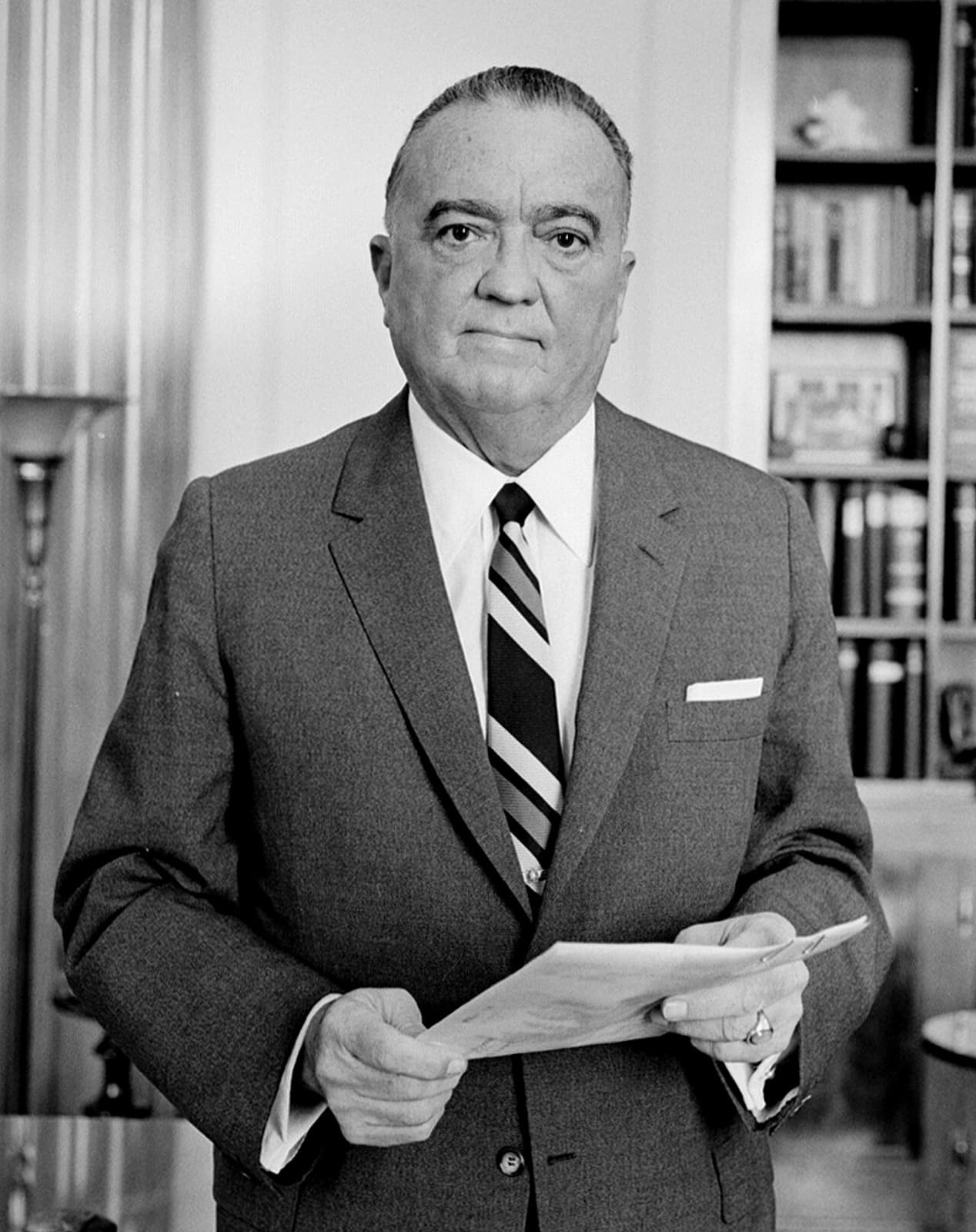
FBI / U.S. Department of Justice (1949). The Bureau's Civilian-Witness Correspondence Pattern: Hoover Form-Reply, Internal NOTE, and the Substance Preserved in the File (1949–1950). The UFO Files. https://the-ufo-files-site.netlify.app/dossier/civilian-correspondence-hoover-pattern-1949-1950
"The Bureau's Civilian-Witness Correspondence Pattern: Hoover Form-Reply, Internal NOTE, and the Substance Preserved in the File (1949–1950)." FBI / U.S. Department of Justice. 1949. https://the-ufo-files-site.netlify.app/dossier/civilian-correspondence-hoover-pattern-1949-1950.
The Bureau's Civilian-Witness Correspondence Pattern: Hoover Form-Reply, Internal NOTE, and the Substance Preserved in the File (1949–1950)
Case ID: FBI-62HQ-83894/civilian-correspondence-hoover-pattern-1949-1950
Agency: FBI / U.S. Department of Justice
Date: 1949-10-08
Source: https://www.war.gov/medialink/ufo/release_1/65_hs1-834228961_62-hq-83894_section_5.pdf
Retrieved: Thu May 07 2026 20:00:00 GMT-0400 (Eastern Daylight Time)
Mirrored on The UFO Files, an archive by Dead Pixel Design. The file is the file. Anything in question is one click from the original.
Summary
Across the 1948–1950 sections of FBI file 62-HQ-83894, the Bureau evolved a stable bureaucratic pattern for handling the rising tide of civilian correspondence about flying saucers addressed to Director J. Edgar Hoover. The pattern has three parts: a short outgoing form-reply over Hoover’s signature, an attached internal NOTE summarizing the substance for the file, and zero analytical follow-up by the Bureau itself. The headline finding for researchers is methodological. The form-reply was bureaucratic courtesy, but the internal NOTE was substantive — and the NOTE survives in the file. Dozens of substantive civilian observations, theories, and policy proposals are therefore preserved in primary FBI source as a byproduct of this practice, even when the Bureau did nothing analytical with them.
The form-reply has a recognizable signature. The opening is some variant of “Your letter of [date] has been received and I want to thank you for [making your observation available / forwarding information / sending me information]”. The middle, when present, refers the correspondent to the Air Force (“you may wish to communicate directly with the Secretary of the Air Force, National Defense Building, The Pentagon”). The close is “Sincerely yours, John Edgar Hoover, Director”, and from at least 1948 onward Hoover’s signature appears personally on these replies. The internal NOTE, separated from the outgoing letter by typographical convention (”***” or a horizontal divider) and never sent to the correspondent, opens almost without exception with the formula “NOTE: Correspondent…”.
What the NOTE preserved was the analytical residue: who the correspondent was, what they had said, whether they had previously written, and (occasionally) the Bureau’s tacit dismissal of their observation. The Florence B. Pervier file (Tulsa, 1950) is the cleanest exemplar — see pervier-tulsa-fbi-agent-corroboration-1950 for the substantive case. This page documents the pattern itself.
The pattern has continuity. The same form-reply structure (“Your letter of [date] has been received”) appears in January 1948 (Beuscher, Wisconsin), May 1949 (Beston, Maine), February-March 1950 (Fisher, Pervier), April 1950 (Ward), July 1950 (Adams), and continues with minor variation through Hoover’s death in 1972 and into Director Kelley’s tenure (Fraide, October 1973). The earlier 1948 variant included an explicit jurisdictional disclaimer (“The facts you related, however, do not reflect any violation of a Federal statute within the investigative jurisdiction of the FBI”); by 1950 the Bureau had dropped that line in favor of a softer “thank you” with optional Air Force referral.
What the Civilian Correspondence Cluster Documents
The Hoover form-reply structure
Two early-1950 outgoing letters from the Director’s office establish the formula. To Walter Fisher of Parinos, Pennsylvania (February 20, 1950):
Your letter of February 12, 1950, has been received and I appreciate your thoughtfulness in making available the information which you furnished. If in the future additional data comes to your attention which you feel should be made available to the FBI please feel free to furnish it to Mr. A. Cornelius, Special Agent in Charge of our Philadelphia Office (Section 5, page 52).
To Florence B. Pervier of Tulsa (March 7, 1950):
Your letter of February 28, 1950, has been received and I want to thank you for making your observation available to me. Your thoughtfulness in this connection is appreciated. Sincerely yours, J. Edgar Hoover (Section 5, page 66).
The reply to Mrs. Henry Beston of Nobleboro, Maine (May 25, 1949) tracks the same structure: “Your letter postmarked May 16, 1949, has been received and I want to thank you for sending me information concerning the matter you mentioned. It was indeed very thoughtful of you to report that data to this organization” (Section 4, page 189). All three were signed by Hoover personally as “John Edgar Hoover, Director”. The replies are short, typically four to six lines, occupying a fraction of the page they consume in the file.
The internal NOTE practice
Below the dividing rule sits the NOTE — invisible to the correspondent, indispensable to the file. Its function was to preserve the substance the form-reply elided. The typographical convention is unusually consistent. Examples:
- Pervier (Section 5, page 66): “NOTE: Correspondent lengthly relates her observation concerning flying saucers and advised that she believes they are of Russia origin. It is noted that in her letter of February 14, she wrote to commend Mr. Hoover for his services as Director of the FBI.”
- Beuscher (Section 4, page 28): “NOTE: Correspondent reports correspondence she has had with the Ziff-Davis Publishing Company in connection with the ‘flying saucers’ which were observed by her brother. She is of the opinion that this publication may be trying to conceal information related to our Nation’s security and she mentions a threat that does not refer injury to person or property.”
- Beston (Section 4, page 189): “NOTE: Correspondent saw a small object in the sky near the end of the day which took various shapes and through glasses appeared like a double bloom trailing something below it. She belives it might be a flying disk. In view of her nebulous information and as it was very possibly a weather balloon no further action is deemed necessary.”
- Adams (Section 5, page 186): “NOTE: Correspondent refers to a book ‘The Flying Saucers are Real’ by Donald Keyhoe… It is not malicious in the references to the FBI, by Keyhoe who wrote the article on saucers for True Magazine.”
- Ward (Section 5, page 132): “NOTE: Correspondent advises he has been in contact with the Buffalo Office and states that he has deemed the information he has furnished with reference to flying saucers important enough to write direct to the Bureau. He advises that he desires us to use a plain envelope in connection with our reply and further stipulates that he does not desire that his name be furnished to ‘Army Chiefs.’”
The NOTE catalogued who the correspondent was relative to Bureau indices, what they claimed to have seen, whether they had a prior relationship with the Bureau (the Pervier NOTE specifically flags her February 14 commendation letter), and the bureaucratic next step. The Ward NOTE went further and triggered an actual SAC visit (Section 5, page 145) “to discourage further correspondence and to obtain any information he might have in his possession” — the rare case where the Bureau followed up because the correspondent had been too productive a writer.
Maurice E. Hatten — Circleville, Ohio, October 8, 1949
Hatten’s letter to Hoover is the substantive civilian-engineer policy proposal in this cluster. Written from 419 East Main Street, Circleville (permanent address Route 2, Delaware, Ohio), the letter responded to contemporary press claims that Soviet leaders intended to use flying disks to “confuse and terrify the American people”. Hatten’s counterproposal was an air-drop information operation, mediated through the United Nations, of American printed statements into the USSR (Section 5, page 38):
If is it true that the Soviet leaders intend to use the flying disk in an attempt to confuse and terrify the American people, why should we not state to the United Nations that we believe this condition to exist and further request permission from United Nations to fly American printed statements into the USSR in the interests of peace and better understanding between the two nations?
The technical proposal explicitly anticipated the bomb-suspicion objection and offered two patent-claimable delivery vehicles:
There are several possible means of placing information at the disposal of citizens of either country via air; I mention small balloons incapable of carrying more than a few pounds, or finned, cardboard disks capable of drifting on wind currents for great distances after release from several miles height (I reserve the right to claim patent rights to the latter).
Hatten requested that the letter be returned and “no record of it kept in FBI files”. The file annotation shows the request was disregarded — INDEXED-36, RECORDED-36, 62-83894-201. Hatten’s identity, address, and engineering claims are preserved verbatim in the FBI record despite his explicit instruction to the contrary. The blue circle around “If” and red checkmark in the margin indicate Bureau review; no Hoover form-reply has been located in the same section, suggesting the request to return-the-letter was logged as a request to not-reply.
Other civilian witnesses in the cluster
- Marion Beuscher, Menomonee Falls, Wisconsin (January 1948). Reported correspondence with Ziff-Davis Publishing about her brother’s flying-saucer sighting; suspected the publication of concealing national-security information. Hoover’s reply (Section 4, page 28) declined federal jurisdiction.
- Mrs. Henry Beston, Chimney Farm, Nobleboro, Maine (May 1949). Reported “a small object in the sky… which took various shapes and through glasses appeared like a double bloom trailing something below it” (Section 4, page 189). Bureau internal assessment: “very possibly a weather balloon”.
- Walter Fisher, Route 1, Parinos, Pennsylvania (February 1950). Letter of February 12, 1950 (substance not preserved in this read). Form-reply directs him to the Philadelphia SAC for future communications (Section 5, page 52).
- Florence B. Pervier, 1039 North College, Tulsa, Oklahoma (February-March 1950). See pervier-tulsa-fbi-agent-corroboration-1950 for full case. Believed flying saucers were of Russian origin; had previously written to commend Hoover (February 14, 1950).
- Lewis A. Ward, 336 Bird Street, Yuba City, California (April-June 1950). Wrote two letters dated April 8, 1950 about flying-saucer drawings he believed to be in Russian; had previously contacted the Buffalo Office and requested replies in plain envelopes. The Bureau dispatched an agent from the San Francisco field office “to discourage further correspondence” (Section 5, pages 132 and 145). SAC SF visit completed June 13, 1950 (Section 5, page 163, added on pass 26). SA Charles J. Prelsnik located Ward at 78 South Tenth Street, San Jose, California (relocated from Yuba City). The interview surfaced two on-record character assessments from Ward’s union contacts: Mr. R. E. McCarthy (Local 39, International Union of Stationary Engineers) described Ward as “odd”; Mr. R. A. Christiansen (Business Representative, Local 39, International Union of Operating Engineers) said Ward “was given to weird imaginings” and “not exactly insane but … getting along in years and … prone to exaggerate on queer imaginings.” The interviewing agent’s own evaluation: “Mr. WARD is abnormal mentally.” Filed at FBI serial 162-83894-231. The SAC SF visit instantiated Bureau Bulletin tradecraft (located the witness, advised him jurisdiction lay with Air Force, and produced a written record of the witness’s mental-health state on file) — operationalizing the “discourage further correspondence” disposition logged in pass 17.
- Glenn Lee Adams, 921 South 40th Street, Louisville, Kentucky (July 1950). Postcard about Donald Keyhoe’s The Flying Saucers are Real. Form-reply referred him to the Air Force (Section 5, page 186).
- E.L. Welton, 413 Irving Avenue, Glendale, California (October 7, 1950 — added on pass 22, originally surfaced in pass 21). Brief handwritten letter advancing a mechanical-disc / electric-generator power-theory hypothesis (“By use of the new light weight electric motors, there is less weight, and less space taken. The revolving disc is in side of light shell. Forward motion of ship allows disc to revolve, generating elec power”). Indexed-125 / Recorded-125, filed in Section 6 page 20 as part of the October 1950 cluster surrounding the Frank Scully URGENT teletype (pass 21). Fifth named civilian-engineer UAP physics-vocabulary correspondent alongside Hatten (finned-cardboard), Pervier (slotted-saucer engineering), Mrs. Merchant (cosmic-ray, pass 9), and the Jones tipster of pass 14 (negative-gravity).
- DeWayne B. Johnson, UCLA Graduate Department of Journalism, Los Angeles 24, California (June 2, 1950 — added on pass 22, substantively extended on pass 26). The earliest documented academic UAP-research outreach to FBI in this archive. Johnson was researching a graduate dissertation “to analyze the socio-logical and psychological implications of the flying saucer phenomenon” (Section 5, page 160). His letter is structurally distinct from the civilian-witness correspondents: he reports no sighting, requests no jurisdictional engagement, and instead asks the methodological question directly: “Is there any reason why the flying saucer situation should be ‘played down?’ Is there any official attitude toward the matter?” Johnson notes he has encountered “no such ‘official censorship’ as [the published authors] mention. In fact I have been surprised at the openness with which some people have replied to my queries.” File serial 62-83894-230, June 19 1950 stamp, ack 6-8-50 logged. Section 5 page 161 (added on pass 26) preserves the substantive document Johnson submitted alongside his meta-inquiry letter — a “REPORT OF FLYING SAUCER” on University of California letterhead containing a first-person narrative of an aerial sighting on June 24, 1947 that exactly matches Kenneth Arnold’s Mt. Rainier sighting on every quantitative parameter (Chehalis-to-Yakima route, 9,500 ft altitude, nine objects in formation, 1,200 MPH speed, three-minute duration, saucer-shape, metallic sheen). Either Arnold’s own re-written second-version statement, or Johnson’s first-person paraphrase for academic-research purposes — second-pass primary-source preservation of the seminal post-war UAP sighting at a 35-month removal from the original 4AF CIC interview. See dewayne-johnson-ucla-dissertation-arnold-second-pass-1950 for the full case treatment. The Bureau-internal handling of academic-research inquiries is methodologically distinct from civilian-witness intake — Johnson’s dissertation question is a meta-inquiry about the Bureau’s posture, and the Bureau’s response (a routine ack only, no substantive engagement) is itself an answer to his question.
- Douglas Harrison, 2337 Ashmead Place N.W., Washington, D.C. (June 25, 1950 — added on pass 26). Hot Shoppe employee on Connecticut Avenue NW. Telephoned SAC Washington Field at 9:25 AM June 25, 1950, reporting a cigar-shaped silver object, the end tilted down toward the earth, at an estimated 20,000-25,000 ft altitude moving easterly. First flying saucer he had ever seen. SAC WFO memo to Director, “INTERNAL SECURITY - X” caption, “no action being taken by this Office” disposition (Section 5 page 166, FBI serial 162-83894-232, June 29 1950). One of the cleanest single-witness 1950 case-handling artifacts: civilian witness calls SAC, SAC documents the substance, SAC takes no action, Bureau files the memo for the record. Form-reply not documented in this read.
- Tage Stensig, 4905 Bryan Place, Downers Grove, Illinois (July 4-11, 1950 — added on pass 26). Meteorologist with United Air Lines. Telephonically advised SA John E. Keating (Chicago) at 9:54 PM July 4, 1950 that at 9:38 PM that evening he and his wife observed a large, bright, silvery object at approximately 10,000 ft moving north-northwesterly over Downers Grove, estimated speed 700-800 MPH “by comparing its rate of movement with that of commercial airplanes.” Stensig’s evaluative posture: “the object he observed was not a plane nor was it a fireworks display.” SAC Chicago memo to Director, July 11, 1950 (Section 5 page 169, FBI serial 62-83894-233). Stensig’s UAL-meteorologist credentials are unusual in the civilian-witness corpus — a working-meteorologist witness saying explicitly an object was not weather phenomena (no fireworks display, no aircraft) is a comparable mid-1950 epistemic data point to Hatfield’s Naval-Air-Corps-instructor credentials in pass 24’s Myrtle Creek case. Stensig’s wife corroborated.
- Walter D. Jones, 36 King Street East, Toronto, Ontario, Canada (August 29, 1950 — added on pass 22). Sighting letter describing a 35-minute UAP observation over his farm 12 miles NE of Toronto City Hall on July 19, 1950. Two-witness corroboration (his houseman, summoned in slippers and bathrobe). Standard Hoover form-reply September 8, 1950 with Air Force referral (file serial 62-83894-2405). The Walter D. Jones letter triggered Bureau cross-loading against an existing Domestic Security file (see “Communist-affiliation cross-loading on UAP correspondents” section below). Not the same Walter Winchell-tipster Jones from pass 14 (pass 14’s Jones could not be located by the LA Office at the cited California address; this Jones is a Toronto businessman with a documented 1944 RCMP-Bureau cross-reference history).
Communist-affiliation cross-loading on UAP correspondents (added on pass 22)
The Bureau’s standard intake for civilian UAP correspondents was the Hoover form-reply + internal NOTE pattern documented above. Two cases in this archive show a second, parallel handling pattern: when a correspondent’s name returned a hit in Bureau Domestic Security indices, the UAP letter was cross-loaded against the existing 100-series file in the internal NOTE alongside the substantive UAP content.
Pattern instance 1 — Walter D. Jones / Toronto / 100-309856 cross-loading (Section 5 page 207, this pass):
The standard September 8, 1950 Hoover form-reply to Jones is present and unremarkable. But the file’s internal NOTE expands well beyond the typical “Correspondent reports…” structure:
“Note: Bureau files reflect that a Walter D. Jones in 1944 was the Treasurer of the National Council for Canadian-Soviet Friendship located at 80 King Street, Toronto, Ontario. The RCMP advised in February, 1945 that Walter D. Jones was a prominent Canadian businessman and was not known to be connected in any way with the Labor Progressive Party (CP of Canada). The RCMP further advised that the National Council for Canadian-Soviet Friendship was formed primarily by persons prominent in the business life of Canada. According to the RCMP, the list of patrons included the Prime Minister of Canada, the Lieutenant Governors of the Provinces, the Premiers of the Provinces and several of the Chief Justices of Canada. (100-309856, serials 1 & 5)” — Internal NOTE on Walter D. Jones reply, Section 5 page 207, September 8, 1950
The cross-loading is logged: Jones’s name returned a 1944 Bureau hit on file 100-309856 (Domestic Security, the “100” series). Despite the RCMP exoneration in February 1945, despite the National Council for Canadian-Soviet Friendship being identified as a business-establishment organization with patrons including the Prime Minister of Canada and Provincial Premiers, the 1944 reference was preserved in the Bureau’s indexing. The 1950 UAP letter was cross-indexed against the 1944 Communist-Friendship file as a matter of standard Bureau intake practice. The cross-loading is procedural, not investigative — the form-reply was sent normally and no follow-up surveillance is documented on this letter.
Pattern instance 2 — Frank Scully cross-loading (October 13, 1950 URGENT teletype, pass 21):
See frank-scully-communist-teletype-october-1950. Hoover’s URGENT teletype to SAC Los Angeles ordered cross-reference of the author of Behind the Flying Saucers against an existing LA Office Frank Scully late-1930s Communist-activities subject file. Eighteen days later the file item -254 was reclassified out of 62-HQ-83894 and into 100-2244-6.
The two instances together establish a Bureau procedural pattern. Civilian UAP correspondents whose names returned Domestic Security hits were processed through the standard form-reply + internal NOTE pattern AND simultaneously cross-loaded against the 100-series file. The cross-loading was procedural and routine; whether it produced substantive Domestic Security investigation depended on the specific case (the Jones letter — RCMP-cleared, no follow-up; the Scully teletype — Director-level escalation, file-transfer to 100-2244-6).
The pattern is genuinely structural: the Bureau’s UAP-correspondence handling included a standing cross-reference pass against Domestic Security indices. Civilian UAP correspondents who happened to share names with existing 100-series subjects became, by file-routing logic, simultaneously UAP correspondents and Domestic Security cross-references. The corpus is therefore a dual-purpose sociological dataset: it preserves civilian-witness UAP content (the documented Hatten / Pervier / Welton / Jones / Johnson / etc. observations) AND the Bureau’s standing Communist-cross-loading procedure on civilian correspondents (visible in the Jones and Scully cases). Researchers should expect that a name search across both 62-HQ-83894 outgoing form-replies AND the 100-series referenced in internal NOTEs will surface additional cross-loaded correspondents not yet identified in this archive.
The substance the Bureau filed without action
The aggregate observation is straightforward: every civilian-correspondent NOTE in this cluster preserves civilian-witness UAP content (observations, theories, suspicions, proposals) that the Bureau itself never engaged with analytically. The Bureau’s analytical work, where it happened (Project Grudge consultation, Oak Ridge radar coverage, the Cuneo-Jones-Winchell channel), happened in parallel and was driven by inter-agency or political relationships, not by civilian-witness input. The civilian-witness input was filed and forgotten. The methodological consequence: the 62-HQ-83894 file is a far richer civilian-witness UAP corpus than its analytical content would suggest, but only because the NOTE-writing clerks were doing internal-record-keeping, not analysis.
The pattern persisted past 1950. The Joe Thorn (Princeton, West Virginia, December 1966), Ray Robinson (Winchester, Virginia, October 1967), Jane Ferry (La Canada, California, March 1968), Larry Stephens (Del City, Oklahoma, May 1969), Paul Brassington (Ajax, Ontario, October 1969), and Ron Fraide (La Habra, California, October 1973, replied to by Director Kelley) letters all show variations of the same structure (Section 10, pages 39, 94, 121, 138, 145, 164). The 1966-1969 NOTEs are shorter (“Correspondent is not identifiable in Bufiles”), reflecting that by then the file-indexing question had become more important to the Bureau than the substance of the report.
Why This Matters
- The form-letter pattern is a primary-source methodological artifact. Citable evidence of how mid-century federal-bureaucracy handled civilian UAP correspondence at the Director level. The fact that Hoover personally signed dozens of these short replies, and that the Bureau preserved both outgoing and NOTE in the file, makes the corpus structurally analyzable.
- Internal NOTEs preserve substance the Bureau filed without action. Researchers interested in 1948-1950 civilian-witness UAP observation content can recover it from the NOTE corpus even though the Bureau itself never investigated. The “no further action is deemed necessary” closes the analytical loop but leaves the data intact.
- The volume of correspondence is itself data. Section 5 alone contains at least six distinct Hoover form-replies to civilian flying-saucer correspondents in the February-July 1950 window. Across the full file the count is higher; across the 1948-1973 sweep the count runs into the dozens. This is a measurable signal of public engagement with the UAP question independent of any official channel.
- Pre-existing Bureau correspondent relationships are documented. The Pervier NOTE specifically logs her February 14, 1950 commendation letter, indicating the Bureau cross-indexed civilian flying-saucer correspondents against prior contacts. This makes the corpus a probe into who, in mid-century America, was the kind of person who wrote unsolicited letters to the Director — a sociological signal embedded in the file metadata.
- Hoover’s personal signature on routine UAP correspondence is itself a methodological observation. The Director was reading and signing replies to civilian flying-saucer letters at the same time he was managing internal-security cases. The decision to handle this volume at the Director level (rather than delegating to a public-information clerk) is a measurable indicator of how seriously the Bureau took the civilian-letter channel as a political surface, even while the Air Force was the substantive analytical authority.
- Civilian-engineer UAP physics-vocabulary claims are now documentable as a 1948-1950 recurring category. Hatten’s “finned, cardboard disks capable of drifting on wind currents… I reserve the right to claim patent rights to the latter”, combined with the Jones letter’s negative-gravity speculation in pass 14, Pervier’s slotted-saucer engineering in pass 16, and Mrs. Merchant’s cosmic-ray theory in pass 9, is a coherent civilian-engineer correspondent type with characteristic vocabulary (patent claims, Russian-origin attribution, defensive-technology proposals, physics-mechanism speculation).
- The dropping of the explicit jurisdictional disclaimer between 1948 and 1950 is itself a signal. The 1948 Beuscher reply still cited “the investigative jurisdiction of the FBI”; by the February-March 1950 replies, that line was gone. By the post-Project-Grudge 1966+ replies it returned in a different form (“not within the jurisdiction”). The form-letter is not static — it tracks the Bureau’s evolving public posture on UAP.
- The “discourage further correspondence” instruction in the Ward case (Section 5, page 145) shows the Bureau had a tipping-point response. Most civilian correspondents got the form-reply and nothing more. Correspondents who wrote repeatedly, claimed inside contacts, or otherwise threatened to become a sustained channel triggered an in-person SAC visit specifically designed to close the channel. This is the Bureau-managed version of what the Cuneo-Jones-Winchell pass 14 case shows for politically-connected correspondents.
- The Bureau’s standing Communist-affiliation cross-loading procedure on civilian UAP correspondents is documented in two distinct cases. Walter D. Jones / Toronto’s 1950 UAP letter was cross-indexed against the 1944 National Council for Canadian-Soviet Friendship file 100-309856 despite RCMP exoneration; Frank Scully’s authorship of Behind the Flying Saucers triggered the October 13 1950 URGENT teletype and the file-transfer to 100-2244-6 (pass 21). The cross-loading was procedural — every civilian UAP letter passed through Bureau Domestic Security indices on intake — and produced substantive escalation only when the correspondent’s prior 100-series file warranted it. The corpus is therefore a dual-purpose sociological dataset: civilian-witness UAP content + the Bureau’s Cold War-era cross-reference machinery operating in parallel on the same letters.
- The earliest documented academic UAP-research outreach to FBI in this archive is DeWayne B. Johnson’s June 2 1950 UCLA Graduate Department of Journalism letter to Hoover. Johnson’s dissertation question — “Is there any reason why the flying saucer situation should be ‘played down?’ Is there any official attitude toward the matter?” — is structurally distinct from civilian-witness intake. He requests no jurisdictional action, reports no sighting, and asks the meta-question about Bureau posture directly. The Bureau’s response (routine ack only, no substantive engagement) is itself the empirical answer to Johnson’s research question. UCLA in 1950 is one of the first US universities documented as a UAP-research-correspondent institution in this archive.
Connections
- PURSUE full inventory
- PURSUE master report
- pervier-tulsa-fbi-agent-corroboration-1950 — pass 16; the substantive Tulsa case in this same correspondence cluster
- cuneo-jones-winchell-followup-1949 — pass 14; the asymmetry against the Cuneo political-channel
- project-grudge-vital-installations-1948-1949 — pass 9; Mrs. Merchant cosmic-ray theory as another civilian-engineer-correspondent example
- frank-scully-communist-teletype-october-1950 — pass 21; the second instance of the Communist-affiliation cross-loading pattern (Frank Scully URGENT teletype + 100-2244-6 file transfer). The Walter D. Jones / 100-309856 case (page 207, this page, added on pass 22) is the first instance.
- UAP disclosure (concept)
j-edgar-hoover
Open Questions
- How many total civilian flying-saucer letters did the Director receive in the 1949-1950 window? A full count of 62-83894 series numbers attached to outgoing form-replies (62-83894-201 Hatten, -205 Fisher, -208 Pervier, -226 Ward outgoing, -227 Ward follow-up, -239 Adams, -179 Beston, -138 Beuscher) would establish a denominator.
- Was there a tipping-point volume after which the Bureau standardized the form-reply? The 1948 Beuscher reply has a different opening clause than the February 1950 Fisher reply, suggesting the formula stabilized between those dates. When and why?
- Did any civilian correspondent receive more than the form-reply (i.e. a follow-up interview or substantive analytical engagement) before Ward in April 1950 triggered the SAC visit?
- Who drafted the NOTEs? Initials at the foot of the NOTEs (NJC, WN, DDC, DCL, JRP, jkb) recur — these were file clerks operating against a stable template. Identifying them would let researchers track NOTE-style drift over time.
- Does the Bureau’s internal NOTE pattern survive in other Hoover-era files (organized crime, civil rights, internal security)? If yes, the methodology generalizes well past UAP and gives researchers a template for reading the Hoover-era file as a sociological corpus rather than an analytical one.
- Are there responses signed by Hoover-substitutes (Helen Gandy, Tolson, etc.) that indicate the Director was deferring some replies? The Larry Stephens reply (Section 10, page 138) is signed by Helen W. Gandy as “Secretary” — when did the Director-personally-signing pattern break?
Quotes Worth Keeping
Your letter of February 28, 1950, has been received and I want to thank you for making your observation available to me. Your thoughtfulness in this connection is appreciated. Sincerely yours, J. Edgar Hoover.
— Hoover form-reply to Florence B. Pervier, March 7, 1950 (Section 5, page 66)
NOTE: Correspondent lengthly relates her observation concerning flying saucers and advised that she believes they are of Russia origin. It is noted that in her letter of February 14, she wrote to commend Mr. Hoover for his services as Director of the FBI.
— Internal NOTE attached to the Pervier reply (Section 5, page 66)
Your letter of February 12, 1950, has been received and I appreciate your thoughtfulness in making available the information which you furnished. If in the future additional data comes to your attention which you feel should be made available to the FBI please feel free to furnish it to Mr. A. Cornelius, Special Agent in Charge of our Philadelphia Office.
— Hoover form-reply to Walter Fisher, February 20, 1950 (Section 5, page 52)
Note: Bureau files reflect that a Walter D. Jones in 1944 was the Treasurer of the National Council for Canadian-Soviet Friendship located at 80 King Street, Toronto, Ontario. The RCMP advised in February, 1945 that Walter D. Jones was a prominent Canadian businessman and was not known to be connected in any way with the Labor Progressive Party (CP of Canada). The RCMP further advised that the National Council for Canadian-Soviet Friendship was formed primarily by persons prominent in the business life of Canada. According to the RCMP, the list of patrons included the Prime Minister of Canada, the Lieutenant Governors of the Provinces, the Premiers of the Provinces and several of the Chief Justices of Canada. (100-309856, serials 1 & 5)
— Internal NOTE on Walter D. Jones reply, September 8, 1950 (Section 5 page 207). The first documented instance of Bureau Communist-affiliation cross-loading on a civilian UAP correspondent (Scully via URGENT teletype, pass 21, is the second).
Is there any reason why the flying saucer situation should be “played down?” Is there any official attitude toward the matter?
— DeWayne B. Johnson to Hoover, June 2, 1950 (Section 5 page 160). UCLA Graduate Department of Journalism dissertation researcher’s meta-inquiry on Bureau posture, the earliest documented academic UAP-research outreach to FBI in this archive.
By use of the new light weight electric motors, there is less weight, and less space taken. The revolving disc is in side of light shell. Forward motion of ship allows disc to revolve, generating elec power. This way, the flying disc could fly almost any length of time. Compressed air could be used to start power disc.
— E.L. Welton to FBI, October 7, 1950 (Section 6 page 20). Fifth named civilian-engineer UAP physics-vocabulary correspondent.
If is it true that the Soviet leaders intend to use the flying disk in an attempt to confuse and terrify the American people, why should we not state to the United Nations that we believe this condition to exist and further request permission from United Nations to fly American printed statements into the USSR in the interests of peace and better understanding between the two nations?
— Maurice E. Hatten to Hoover, October 8, 1949 (Section 5, page 38)
There are several possible means of placing information at the disposal of citizens of either country via air; I mention small balloons incapable of carrying more than a few pounds, or finned, cardboard disks capable of drifting on wind currents for great distances after release from several miles height (I reserve the right to claim patent rights to the latter).
— Hatten’s patent-claimable delivery-vehicle proposal (Section 5, page 38)
NOTE: Correspondent saw a small object in the sky near the end of the day which took various shapes and through glasses appeared like a double bloom trailing something below it. She belives it might be a flying disk. In view of her nebulous information and as it was very possibly a weather balloon no further action is deemed necessary.
— NOTE attached to Hoover’s reply to Mrs. Henry Beston, May 25, 1949 (Section 4, page 189)
NOTE: Correspondent advises he has been in contact with the Buffalo Office and states that he has deemed the information he has furnished with reference to flying saucers important enough to write direct to the Bureau. He advises that he desires us to use a plain envelope in connection with our reply and further stipulates that he does not desire that his name be furnished to “Army Chiefs.” He has stated that he “wants to get a lot more information to give to you.”
— NOTE attached to Hoover’s reply to Lewis A. Ward, April 17, 1950 (Section 5, page 132)