FBI-62HQ-83894/portland-police-department-september-1947 / 1947-09-11 / FBI
Portland Oregon Police Department Multi-Witness Cluster, September 11, 1947 (Chief of Police Leon V. Jenkins, Government Witnesses, Citywide Coordination, Newspaper Corroboration)
On September 11, 1947, at approximately 5:21–5:30 PM, the Portland, Oregon Police Department received multiple reports of an unidentified object in flight over the city. The first report came from officers in District 18 (Robert D. Adair and J.
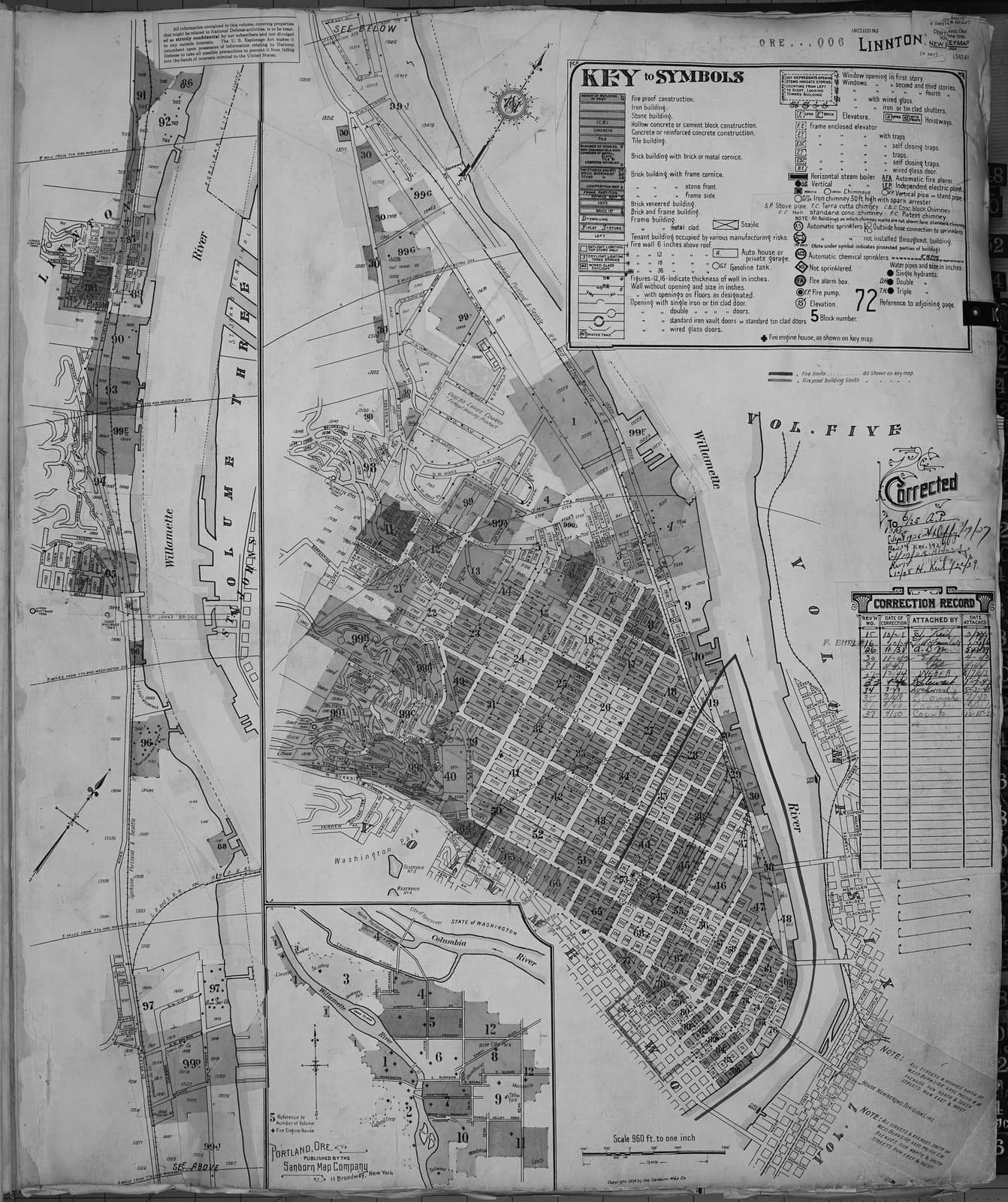
FBI (SAC Portland) (1947). Portland Oregon Police Department Multi-Witness Cluster, September 11, 1947 (Chief of Police Leon V. Jenkins, Government Witnesses, Citywide Coordination, Newspaper Corroboration). The UFO Files. https://the-ufo-files-site.netlify.app/dossier/portland-police-department-september-1947
"Portland Oregon Police Department Multi-Witness Cluster, September 11, 1947 (Chief of Police Leon V. Jenkins, Government Witnesses, Citywide Coordination, Newspaper Corroboration)." FBI (SAC Portland). 1947. https://the-ufo-files-site.netlify.app/dossier/portland-police-department-september-1947.
Portland Oregon Police Department Multi-Witness Cluster, September 11, 1947 (Chief of Police Leon V. Jenkins, Government Witnesses, Citywide Coordination, Newspaper Corroboration)
Case ID: FBI-62HQ-83894/portland-police-department-september-1947
Agency: FBI (SAC Portland)
Date: 1947-09-11
Source: https://www.war.gov/medialink/ufo/release_1/65_hs1-834228961_62-hq-83894_section_4.pdf
Retrieved: Fri May 08 2026 20:00:00 GMT-0400 (Eastern Daylight Time)
Mirrored on The UFO Files, an archive by Dead Pixel Design. The file is the file. Anything in question is one click from the original.
Summary
On September 11, 1947, at approximately 5:21–5:30 PM, the Portland, Oregon Police Department received multiple reports of an unidentified object in flight over the city. The first report came from officers in District 18 (Robert D. Adair and J. R. Caldwell). The Portland police radio dispatcher immediately coordinated a citywide response, directing District 14 officers to observe. Chief of Police Leon V. Jenkins and his driver, Officer H.S. Raney, were alerted and observed the object from their patrol car traveling southbound on N. Williams Avenue. The object was described as round to egg-shaped, approximately 10,000 feet altitude, moving with extreme speed from northeast to southwest, then turning to due south before disappearing in approximately 30 seconds. District 14 officers (Robert W. Shaylor and Donald W. Cowling) received the alert but reported seeing nothing despite being positioned for optimal visibility. The case represents a government witness cluster (municipal police chief + multiple uniformed officers), citywide dispatch coordination, and newspaper corroboration (The Oregonian, September 12, 1947 article + additional civilian callers to the newspaper).
What the Bureau Documents Show
First Report — District 18 Officers (Adair and Caldwell)
Officer Robert D. Adair (4325 S.E. Madison Ave., Portland) reported from District 18 in the extreme north-east section of the city:
“ADAIR observed the very bright reflection of the sun on some object which was apparently made of silvery metal. The object was coming from the east and made a wide turn over the city and disappeared to the south. ADAIR estimated its speed at about 150 miles per hour and its altitude at about 5,000 feet. He watched it for a period of about two minutes and during that time it gradually disappeared in such a manner as to appear that the angle was slowly changing, so that the sun was no longer reflected into ADAIR’s eyes. He says that the shape appeared to be round but that the glare was so bright that it could have hidden the true outline of the object. There was no oscillation visible - only steady flight.”
Adair’s observation is notably skeptical in framing: “He believes it was an ordinary metal airplane reflecting light of the afternoon sun.”
Adair’s partner, J. R. Caldwell (7652 S.E. Lincoln St., Portland, Oregon), provided a contrasting assessment:
“CALDWELL states that the object appeared to him to take the same course as that described by ADAIR. He pointed out that the speed, height, and size of the object were difficult to judge, because of the interdependence of the three factors. However, he believes that the object when first sighted was about three miles away and about two miles high. He believes it was traveling at a much greater speed than a conventional airplane and was a great deal larger. It appeared to him to be elliptical in shape, and inasumch as it did not bank or tip he could not judge its thickness. It was of a very bright silver or aluminum substance.”
Multi-observer disagreement: Adair estimated 150 mph and 5,000 feet altitude, believing it was a conventional aircraft. Caldwell estimated the object as much larger, traveling much faster than a conventional airplane, and elliptical rather than round.
Chief of Police Response — Jenkins and Raney
Chief of Police Leon V. Jenkins received the radio alert while traveling south on N. Williams Avenue near Russell Street:
“Chief of Police LEON V. JENKINS advised that he was travelling south on N. Williams Avenue near Russell St., when he and Officer H. S. RANEY, his driver, received a call on the police radio requesting District 14 to attempt to observe an unknown object in the sky reported by officers in District 18. JENKINS observed what appeared to be a round silver object, about 10,000 feet high, travelling northeast to southwest. It was directly to JENKIN’s left when observed first. He thought it was a weather balloon. Further observation convinced him that it could not be a balloon because of its speed which was extremely great. As JENKINS watched, it turned gradually until it was travelling due south, and as it did so, its shape seemed to change until it appeared to be egg-shaped. It disappeared in about 30 seconds.”
Jenkins’s initial hypothesis (weather balloon) was immediately rejected based on speed. His description of the shape change from round to egg-shaped occurred during the turn from northeast-southwest to due south.
Officer H.S. Raney (Jenkins’s driver) observed:
“Patrolman H. S. RANEY stated that when he first observed the object it was straight ahead of him and travelling straight away from his car. RANEY was driving south on N. Williams Avenue. To RANEY it appeared to be just a glare of sun on some object, and he was unable therefore to tell its shape. It appeared to be very high and travelling extremely fast. It was out of sight after he had travelled 4 or 5 city blocks at a speed of about 25 mph. RANEY stated that he has never seen an object at such an extreme height before and that if the sun had not reflected from it he could not have seen it at all. He believes it could possibly have been a reflection from a large airplane at great altitude.”
Sun-reflection dependency: Raney explicitly noted that the object would have been invisible without sun reflection, establishing that the high glare environment was critical to observation.
District 14 Non-Observation — Shaylor and Cowling
Robert W. Shaylor (4810 N. Fessenden St., Portland) and Donald W. Cowling were stationed in District 14:
“ROBERT W. SHAYLOR, 4810 N. Fessenden St., Portland stated that he was on duty in District 14 with Officer DONALD W. COWLING on September 11, 1947 and received the call to watch for the object flying over the city. SHAYLOR and COWLING immediately scanned the sky from a vantage point in open territory where they could see the entire sky. They saw nothing in the sky at that time, SHAYLOR stating that they did not even see any airplanes.”
Negative confirmation: District 14 officers had superior visibility (open territory with full-sky vantage) and received immediate alert but observed nothing. The object was either not over District 14 during their window of observation, or was not visible from that location.
Newspaper Corroboration — The Oregonian
The FBI case memo documents The Oregonian’s coverage:
“A short article in ‘The Oregonian’, Portland daily newspaper, for September 12, 1947, describes the object as seen by Chief of Police JENKINS and also states that ‘The Oregonian’ received several calls from other persons reporting the object. FRED M. WHITE, Assistant City Editor, advised that the paper has no record of the identities of the people making the calls.”
Civilian multiplicity: Multiple Portland citizens called The Oregonian to report the same event, but the newspaper does not have the identities recorded.
Why This Matters
-
Government witness cluster — municipal police chief plus multiple uniformed officers. Chief of Police Jenkins (authority figure, formal position) plus four uniformed officers from the Portland Police Department. Credible government witnesses with institutional standing.
-
Citywide police radio coordination. The Portland Police Department radio dispatcher coordinated a citywide response, creating a documented timeline (5:21 PM District 18 report, 5:23 PM District 14 alert, 5:24 PM Chief Jenkins report, 5:27 PM District 14 negative report). Real-time institutional response documentation.
-
Multi-observer perspective disagreement within a single event. Same object, same time, different observers reported: round vs. elliptical shape, 150 mph vs. “much greater speed,” 5,000 feet vs. ~10,000 feet, conventional aircraft vs. weather balloon vs. unidentifiable. The disagreement suggests genuine observation variance, not coordinated narrative.
-
Shape transformation documented by credible observer. Jenkins’s description of the shape change from round to egg-shaped as the object turned from northeast-southwest to due south was observed by the Police Chief during the event, not post-hoc interpretation.
-
Speed assessment consensus across multiple observers. Despite other disagreements, all observers (Adair, Caldwell, Jenkins, Raney) converged on “extreme” or “very great” speed exceeding conventional aircraft.
-
Sun-reflection dependency explicitly documented. Raney’s statement that the object would have been invisible without sun glare establishes the environmental sensitivity of the observation and explains why some positioned officers (District 14) saw nothing.
-
Newspaper corroboration with multiple civilian callers. The Oregonian independently published an article on September 12, 1947 describing the Chief’s sighting and received multiple civilian calls. Institutional newspaper verification.
-
Clear temporal and geographic boundaries. 5:21–5:30 PM, September 11, 1947, Portland Oregon, citywide dispatch coordination. Verifiable time, location, and institutional response documentation.
Connections
- PURSUE full inventory
Entity: Leon V. Jenkins, Chief of Police Portland OregonEntity: Portland Police DepartmentConcept: Government Witness Clusters — Multi-Officer Police Department Cases, 1947
Open Questions
-
The Oregonian article (September 12, 1947) — full text and civilian caller identities. The FBI memo notes that the newspaper has no record of the identities of the civilian callers. Did any of the callers follow up with FBI or police department? Can The Oregonian archives provide the original article text and any followup reporting?
-
District 14 officers’ vantage point and timing. Shaylor and Cowling reported “open territory where they could see the entire sky” but saw nothing. Was their vantage point aligned with the object’s trajectory? Were they scanning the sky at the moment the object passed, or did they scan after it had already departed?
-
Mayor Carlin T.D. Army notification. A handwritten note on page 2 states “Info to Mayor Carlin T.D. Army 10/14/47.” Did the Mayor’s office conduct an independent investigation or receive briefing from the police department?
-
Weather balloon hypothesis context. Jenkins initially thought weather balloon. Were there known weather balloon operations or test programs in the Portland area on September 11, 1947? What specific characteristics disqualified the balloon hypothesis in Jenkins’s assessment?
-
Air Force identification/response. The case was filed October 9, 1947 by SAC Portland. Did the Air Force (AAF) conduct an independent investigation of the Portland sighting? Was it correlated with the ongoing Project Sign data-collection efforts?
Quotes Worth Keeping
“JENKINS observed what appeared to be a round silver object, about 10,000 feet high, travelling northeast to southwest. It was directly to JENKIN’s left when observed first. He thought it was a weather balloon. Further observation convinced him that it could not be a balloon because of its speed which was extremely great. As JENKINS watched, it turned gradually until it was travelling due south, and as it did so, its shape seemed to change until it appeared to be egg-shaped. It disappeared in about 30 seconds.” — Chief of Police Leon V. Jenkins, September 11, 1947, as documented in FBI SAC Portland memo dated October 9, 1947. Section 4 page 4.
“He believes it was traveling at a much greater speed than a conventional airplane and was a great deal larger. It appeared to him to be elliptical in shape, and inasumch as it did not bank or tip he could not judge its thickness. It was of a very bright silver or aluminum substance.” — J. R. Caldwell, Portland Police District 18 Officer, September 11, 1947, describing the same object observed by Adair but with divergent assessment. Section 4 page 2.
“RANEY stated that he has never seen an object at such an extreme height before and that if the sun had not reflected from it he could not have seen it at all. He believes it could possibly have been a reflection from a large airplane at great altitude.” — Officer H.S. Raney, Police Chief Jenkins’s driver, September 11, 1947. Establishes sun-reflection dependency and visual contrast threshold. Section 4 page 4.
“Records of the Radio Dispatcher, Portland Police Department, reflect that first notice of unidentified objects in flight over the city on September 11, 1947 was received from officers in District 18, which is in the extreme north-east section of the city, at 5:21 P.M.” — FBI SAC Portland Memo, October 9, 1947. Establishes real-time institutional dispatch coordination. Section 4 page 2.