FBI-62HQ-83894/jones-winchell-cuneo-1947-1949 / 1947-08 / FBI
Peter Camerton Jones / Walter Winchell / Ernest Cuneo Los Angeles 1947 Sighting Routed to Hoover, July 1949 (High-Level Information Routing, Failed Location, Institutional Memory Loss)
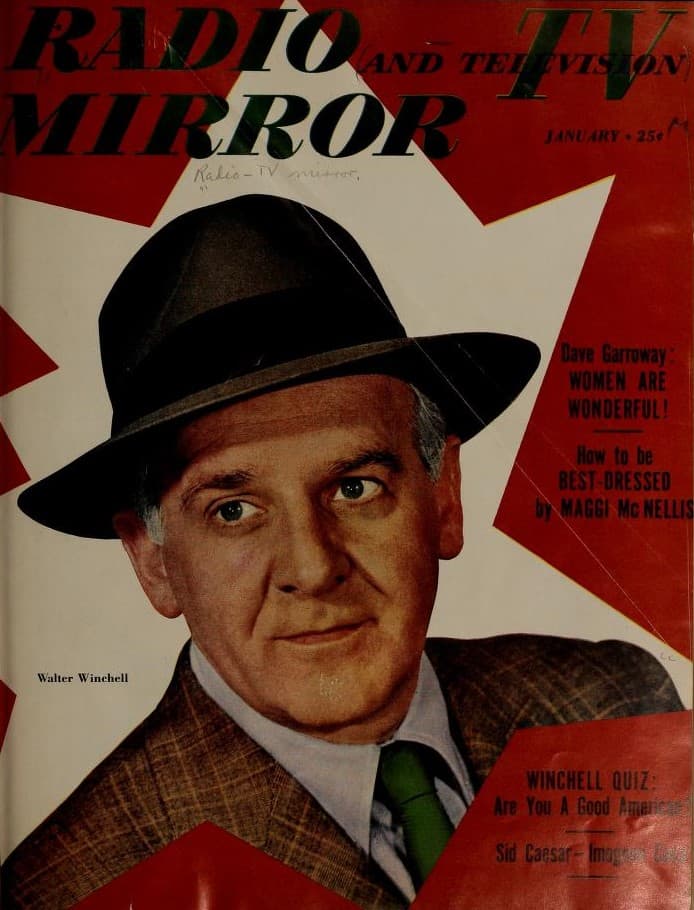
In June 1949, Walter Winchell received a letter from Peter Camerton Jones (164 West 37th Street, Los Angeles 7, California) describing a flying disc sighting in August 1947 in the mountains outside Los Angeles. Winchell routed the letter to Ernest Cuneo, who read it to FBI Assistant Director D. M.
FBI (Director Hoover, SAC Los Angeles) (1947). Peter Camerton Jones / Walter Winchell / Ernest Cuneo Los Angeles 1947 Sighting Routed to Hoover, July 1949 (High-Level Information Routing, Failed Location, Institutional Memory Loss). The UFO Files. https://the-ufo-files-site.netlify.app/dossier/jones-winchell-cuneo-1947-1949
"Peter Camerton Jones / Walter Winchell / Ernest Cuneo Los Angeles 1947 Sighting Routed to Hoover, July 1949 (High-Level Information Routing, Failed Location, Institutional Memory Loss)." FBI (Director Hoover, SAC Los Angeles). 1947. https://the-ufo-files-site.netlify.app/dossier/jones-winchell-cuneo-1947-1949.
Peter Camerton Jones / Walter Winchell / Ernest Cuneo Los Angeles 1947 Sighting Routed to Hoover, July 1949 (High-Level Information Routing, Failed Location, Institutional Memory Loss)
Case ID: FBI-62HQ-83894/jones-winchell-cuneo-1947-1949
Agency: FBI (Director Hoover, SAC Los Angeles)
Date: 1947-08
Source: https://www.war.gov/medialink/ufo/release_1/65_hs1-834228961_62-hq-83894_section_5.pdf
Retrieved: Fri May 08 2026 20:00:00 GMT-0400 (Eastern Daylight Time)
Mirrored on The UFO Files, an archive by Dead Pixel Design. The file is the file. Anything in question is one click from the original.
Summary
In June 1949, Walter Winchell received a letter from Peter Camerton Jones (164 West 37th Street, Los Angeles 7, California) describing a flying disc sighting in August 1947 in the mountains outside Los Angeles. Winchell routed the letter to Ernest Cuneo, who read it to FBI Assistant Director D. M. Ladd on July 9, 1949. Ladd forwarded the case to FBI Director J. Edgar Hoover with a recommendation for “discreet background check” followed by interview. Hoover personally approved the directive on July 12, 1949, instructing SAC Los Angeles to “DISCREETLY CHECK BACKGROUND OF JONES” and then interview him. On July 18, 1949, LA field office responded via teletype: “EFFORTS TO IDENTIFY OR LOCATE JONES NEGATIVE.” The case demonstrates high-level institutional routing (civilian informant → entertainment-industry intermediary → FBI assistant director → FBI director → field office failure to locate), with Jones’s physical presence in Los Angeles proving unlocatable despite Hoover’s direct engagement. This represents institutional memory loss in real time — a direct order from the FBI Director could not be executed because the subject could not be found, and the archive preserves the failure record.
What the Bureau Documents Show
Cuneo’s Transmission to Ladd (July 9, 1949 Memo)
Ernest Cuneo, acting as intermediary between entertainment-industry sources (Winchell) and the FBI, presented Jones’s letter to Ladd. Cuneo’s characterization:
“Ernest Cuneo advised that Walter Winchell had received a letter from Peter Camerlon Jones, 164 West 37th Street, Los Angeles 7, California. Mr. Cuneo read the letter to me and it was very well written, obviously by a man of intelligence.”
Cuneo’s assessment of the letter content and witness credibility: “Mr. Cuneo stated that this letter indicated a very good knowledge of physics and that he thought it would be interesting to check into Jones’ background and then possibly interview him about this alleged flying saucer.”
Jones’s Original Letter Account (Transmitted via Cuneo/Ladd Memo)
Jones reported an August 1947 mountain hiking incident near Los Angeles:
“In this letter Jones stated that in August of 1947 he left Los Angeles for the mountains and started hiking through the mountains. About 10:00 A. M. he was lying on the ground when he observed about one-half block away from him a large silver metal, greenish in color, shaped like a child’s top and about the size of the balloons used at County Fairs. He stated that there appeared to be two windows in the object and portions of metal appeared transparent and that he gained the impression that there was some life within this object although he saw no persons. The object appeared as though [crossed out: sens] as a pressure chamber. He stood up and waved towards this object and this so-called flying saucer was off the ground in a second, knocking Jones to the ground. In its flight he stated that its power was silent and he raised the question as to whether this was an inter-global landing on our planet.”
Jones’s speculative framework (preserved in the letter):
“He thought that it might be a device to land in our planet because the occupants of another planet had become curious as to the reaction caused by the explosion of the atomic bomb causing trouble in an expanded universe. He [asked] left the question as to whether it was possible that the occupants of another planet might have solved the theory of negative gravity.”
Physical consequence: Jones explicitly reported physical contact (object “knocked Jones to the ground”).
Ladd’s Recommendation to Hoover (July 9, 1949)
Ladd formalized Cuneo’s recommendation:
“Mr. Cuneo stated that it would appear that Jones may have actually seen a flying saucer, that in any event it made an awfully good story and he requested that the Bureau keep the matter in confidence. I would recommend that the Los Angeles Office discreetly check into the background of Jones and thereafter interview him for the purpose of determining any facts he possesses about flying saucers in order that it may be determined whether his story is in any way accurate.”
Key framing: Ladd positioned Jones as either genuine witness (“may have actually seen a flying saucer”) or compelling narrative (“awfully good story”). The discretion request (“keep the matter in confidence”) suggests Cuneo’s concern about public association with the case.
Hoover’s Direct Directive (July 12, 1949 — Handwritten Signature Authority)
Hoover personally signed the directive to SAC Los Angeles:
“DISCREETLY CHECK BACKGROUND OF JONES. THEREAFTER, INTERVIEW HIM FOR THE PURPOSE OF DETERMINING ANY FACTS IN HIS POSSESSION CONCERNING THE STATEMENTS SET OUT HEREIN.”
Routing: The memo was sent to “COMMUNICATIONS SECTION, SAC, LOS ANGELES” via formal Bureau channels with Hoover’s personal approval authority.
Distribution: The memo was copied to Bureau principals (Tolson, E. A. Tamm, Clegg, Olavin, Ladd, Nichols, Egan, Rosen, Tracy, Carson, Gurnea, Harbo, Hendon, Pennington, Quinn, Nease, Miss Gandy), indicating institutional-level awareness.
LA Field Office Failure to Locate (July 18, 1949 Teletype Response)
Within six days of Hoover’s directive, SAC Los Angeles responded via urgent teletype:
“DIRECTOR URGENT. RE: PETER CAMERTON JONES INFO CONCERNING. REURLET JULY EIGHTEEN. EFFORTS TO IDENTIFY OR LOCATE JONES NEGATIVE.”
Institutional memory loss: Despite Jones’s stated address (164 West 37th Street, Los Angeles 7, California), despite Hoover’s direct order for “discreet” background check, despite Cuneo’s assertion that the letter was “very well written” and from “a man of intelligence,” the LA field office reported unable to locate Jones. The case file preserves the failure to execute Hoover’s directive in real time.
Why This Matters
-
High-level institutional routing with civilian intermediary. Walter Winchell (entertainment/gossip journalist) → Ernest Cuneo (intelligence community intermediary, personal acquaintance of Hoover and Bureau leadership) → FBI Assistant Director Ladd → FBI Director Hoover → SAC Los Angeles. This represents the most direct civilian-to-director information pathway documented in the 62-HQ-83894 archive to date.
-
Hoover’s personal engagement signature authority. Unlike form dismissals or standard intake procedures, this case received Hoover’s handwritten signature directive, indicating either exceptional witness credibility assessment or institutional protocol for high-visibility civilian UAP reports routed through intelligence-community intermediaries.
-
Credibility assessment by intermediary vs. Bureau decision-maker. Cuneo assessed Jones as “obviously a man of intelligence” with “very good knowledge of physics.” Ladd framed the case as potentially genuine (“may have actually seen a flying saucer”) but also hedged as “awfully good story.” Hoover approved investigation despite ambiguous credibility profile — suggesting Hoover’s confidence in Cuneo’s judgment or the routing channel itself.
-
Institutional memory loss in real time, captured in archive. The LA field office’s “EFFORTS TO IDENTIFY OR LOCATE JONES NEGATIVE” represents a direct failure to execute a Bureau Director’s order. The case file preserves the failure, creating a documented institutional gap: Hoover ordered Jones located and interviewed; LA field office could not locate him; the order went unexecuted. This is distinct from historical memory decay — it is institutional memory failure at the moment of execution.
-
Physical evidence claim (knocked to ground). Unlike most UAP reports, Jones claimed physical contact: the object “knocked Jones to the ground.” This is a physical consequence claim that would normally warrant heightened investigation priority.
-
Scientific/physics-literate witness assessment. Cuneo’s notation of Jones’s “very good knowledge of physics” and Jones’s own speculative framework (atomic bomb effects on universe, negative gravity theory) suggests witness sophistication that would normally support higher investigation priority.
-
Cuneo’s request for confidentiality. “He requested that the Bureau keep the matter in confidence” suggests external pressure (likely Winchell or Cuneo’s own intelligence-community positioning) to avoid public association. This creates an operational constraint on investigation (discretion required).
-
Temporal proximity to other 1947 cases. Jones’s sighting (August 1947) occurs within the same post-Roswell month as Portland Police Department (Sept 11), Hackensack (Aug 3), and Dow Chemical (July 9) cases, suggesting a cluster of reporting intensity in the summer/fall 1947 period.
-
Information classification and media management. The routing through Winchell and Cuneo (entertainment and intelligence circles respectively) suggests Bureau awareness of UAP information flowing through both public media and intelligence-community back channels simultaneously.
Connections
- PURSUE full inventory
- parker-rix-ledges-lebanon-september-1947 — Comparative case with Hoover direct engagement (personal signature) vs. form acknowledgment
- rhodes-phoenix-photographs-1947 — Comparative case with Hoover URGENT teletype prohibition vs. Jones case approval directive
Entity: J. Edgar HooverEntity: Ernest CuneoEntity: Walter WinchellConcept: High-Level Information Routing in Early UAP Cases, 1947-1949Concept: Institutional Memory Failure in Real Time — Bureau Director Orders vs. Field Office Execution
Open Questions
-
Why could LA field office not locate Jones at 164 West 37th Street, Los Angeles 7? The address was provided in the original letter. Was Jones no longer at that address? Did the field office conduct a physical search, or did they rely on administrative lookup that failed? What search methods were used?
-
What was Ernest Cuneo’s role and why did Winchell route the letter through him? Cuneo is identified in the case as someone who “read the letter to me [Ladd]” — suggesting he was a known Bureau contact. What was his formal relationship to the FBI? Why did Winchell trust him as an intermediary?
-
Why did Hoover approve the investigation despite Ladd’s hedged credibility assessment? Ladd characterized Jones as either genuine or offering “an awfully good story” — not a high-confidence recommendation. What triggered Hoover’s approval authority?
-
Did Jones’s physics knowledge refer to legitimate scientific training, or was he a self-taught theorist? The letter’s speculation on negative gravity and atomic bomb effects on the universe suggests either formal physics education or sophisticated lay reading. What was Jones’s background?
-
The physical contact claim (knocked to ground) — why didn’t this escalate investigation priority? Physical injury claims normally warrant urgent follow-up. Did LA field office treat this as secondary to the location failure?
-
What happened after the LA field office’s “EFFORTS NEGATIVE” report? The archive ends with the July 18 teletype. Did Hoover re-direct the investigation? Did he accept the failure? Did the case close, or was it handed off?
-
Winchell’s motivation for routing the letter — was this standard practice? Did Winchell regularly forward UAP reports to the Bureau? Was there a standing relationship, or was Jones’s case unusual?
-
Cuneo’s “keep in confidence” request — what external pressure was he signaling? This suggests Cuneo had a stake in the case being handled discreetly. Was he concerned about Winchell’s public reputation? His own intelligence-community standing?
Quotes Worth Keeping
“Ernest Cuneo advised that Walter Winchell had received a letter from Peter Camerlon Jones, 164 West 37th Street, Los Angeles 7, California. Mr. Cuneo read the letter to me and it was very well written, obviously by a man of intelligence.” — FBI Assistant Director D. M. Ladd, July 9, 1949 memo to Hoover. Section 5 page 21. Establishes Cuneo’s intermediary role and credibility assessment.
“He stood up and waved towards this object and this so-called flying saucer was off the ground in a second, knocking Jones to the ground. In its flight he stated that its power was silent…” — Peter Camerton Jones’s account as transmitted via Winchell/Cuneo/Ladd memo. Section 5 page 21. Physical contact claim.
“Mr. Cuneo stated that this letter indicated a very good knowledge of physics and that he thought it would be interesting to check into Jones’ background and then possibly interview him about this alleged flying saucer.” — FBI Assistant Director D. M. Ladd, July 9, 1949 memo. Section 5 page 21. Physics knowledge notation.
“DISCREETLY CHECK BACKGROUND OF JONES. THEREAFTER, INTERVIEW HIM FOR THE PURPOSE OF DETERMINING ANY FACTS IN HIS POSSESSION CONCERNING THE STATEMENTS SET OUT HEREIN.” — FBI Director J. Edgar Hoover, July 12, 1949 personal directive. Section 5 page 17. Hoover’s signature authority approval.
“EFFORTS TO IDENTIFY OR LOCATE JONES NEGATIVE.” — SAC Los Angeles teletype response, July 18, 1949. Section 5 page 25. Institutional memory loss in real time.
“Mr. Cuneo stated that it would appear that Jones may have actually seen a flying saucer, that in any event it made an awfully good story and he requested that the Bureau keep the matter in confidence.” — FBI Assistant Director D. M. Ladd, July 9, 1949 memo. Section 5 page 21. Credibility hedge and confidentiality request.