FBI-62HQ-83894/d3-briefing-halfery-mister-x-may-1950 / 1950-05-19 / FBI
D-3 Briefing and the Halfery 'Mister X' Photograph Case, May 1950 (Bureau-Internal Analytical Position on UAPs and Crashed-Saucer Rumors)
Section 5 pages 149, 153-159 of the FBI 62-HQ-83894 flying-discs case file is a tightly co-located **May 1950 cluster** that contains two independently load-bearing items separated only by a routing slip: 1. **The D-3 Briefing of May 19, 1950 by Mr.
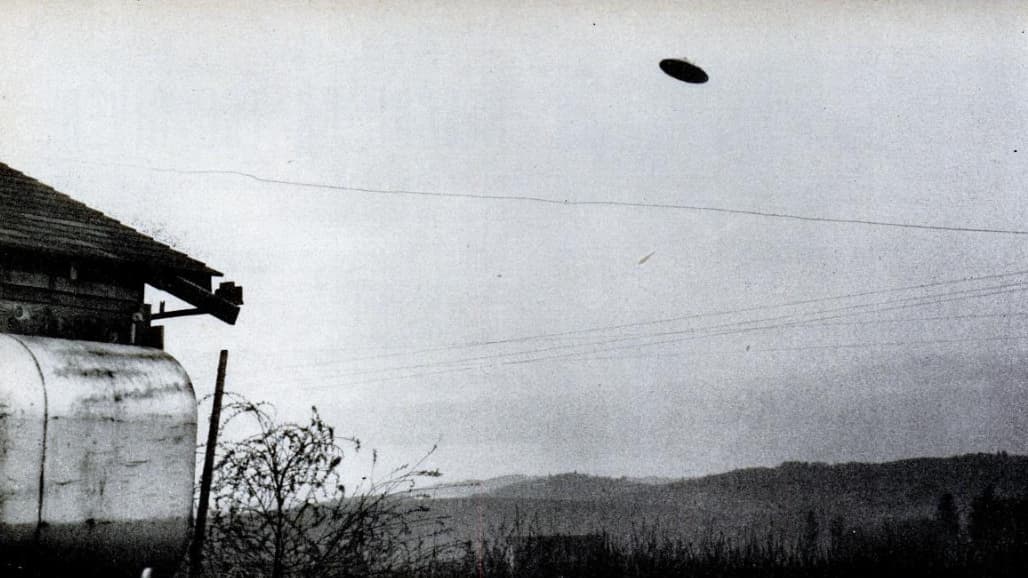
FBI / U.S. Department of Justice (D-3 Briefing); U.S. Army Intelligence Branch, New Orleans Port of Embarkation (Halfery report) (1950). D-3 Briefing and the Halfery 'Mister X' Photograph Case, May 1950 (Bureau-Internal Analytical Position on UAPs and Crashed-Saucer Rumors). The UFO Files. https://the-ufo-files-site.netlify.app/dossier/d3-briefing-halfery-mister-x-may-1950
"D-3 Briefing and the Halfery 'Mister X' Photograph Case, May 1950 (Bureau-Internal Analytical Position on UAPs and Crashed-Saucer Rumors)." FBI / U.S. Department of Justice (D-3 Briefing); U.S. Army Intelligence Branch, New Orleans Port of Embarkation (Halfery report). 1950. https://the-ufo-files-site.netlify.app/dossier/d3-briefing-halfery-mister-x-may-1950.
D-3 Briefing and the Halfery 'Mister X' Photograph Case, May 1950 (Bureau-Internal Analytical Position on UAPs and Crashed-Saucer Rumors)
Case ID: FBI-62HQ-83894/d3-briefing-halfery-mister-x-may-1950
Agency: FBI / U.S. Department of Justice (D-3 Briefing); U.S. Army Intelligence Branch, New Orleans Port of Embarkation (Halfery report)
Date: 1950-05-19
Source: https://www.war.gov/medialink/ufo/release_1/65_hs1-834228961_62-hq-83894_section_5.pdf
Retrieved: Thu May 07 2026 20:00:00 GMT-0400 (Eastern Daylight Time)
Mirrored on The UFO Files, an archive by Dead Pixel Design. The file is the file. Anything in question is one click from the original.
Summary
Section 5 pages 149, 153-159 of the FBI 62-HQ-83894 flying-discs case file is a tightly co-located May 1950 cluster that contains two independently load-bearing items separated only by a routing slip:
-
The D-3 Briefing of May 19, 1950 by Mr. Stites (pages 156-159), captioned “UNIDENTIFIED AERIAL PHENOMENA (Flying Saucers)”, received from G-2 on May 22, 1950 — the Bureau-internal analytical position document on the entire UAP phenomenon, taking explicit positions on a five-theory taxonomy and rejecting all five categories with reasoning. The briefing’s most evidentially load-bearing single line: “Even these have been reported in the press - complete with descriptions of men only 18 inches tall! Such reports are sheer fabrication.” This is the Bureau’s analytical posture, in writing, on the exact class of rumor the famous Hottel memo (pass 18, March 22, 1950) had filed without analytical action seven weeks earlier.
-
The Michael Halfery / “Mister X” hoax-photograph case (pages 149, 153-155) — Army Intelligence Branch, New Orleans Port of Embarkation Summary of Information, May 23, 1950, case T4-15-0, on Subject HALFERY, Michael of 2453 Urquhart Street, New Orleans. Halfery sold for $1.00 two photographs to John R. Esposito, who gave them to a CID agent; the photographs were of “flying saucers and a man from Mars in the custody of two U.S. Army Military Policemen.” A composite German-tabloid version of the same photographs (page 154/155) appears in the file with the caption “Mister X, ein Besatzungsmitglied der ‘fliegenden Untertasse’” — labeling the photo as a crashed-saucer occupant in the Wiesbaden Marktkirche / Bleidenstadter Kopfes area. The Bureau-OSI handling, written across the bottom of the New Orleans bridge memo: “Matter discussed with Col. Bordon, OSI. Advised that hundreds of such matters are received by A.F. They do not consider them worthy of investigation.”
The two items belong together because the D-3 Briefing’s “sheer fabrication” line is the Bureau’s general-policy answer to the exact class of physical artifact the Halfery case puts in front of the Bureau. The May 1950 cluster pairs the analytical-policy position with a named-witness in-archive instance of the rumor-class the policy explicitly disowns. Together they constitute the Bureau’s full procedural posture on Hottel-class crashed-saucer / 3-foot-bodies / dead-alien-photograph rumors in mid-1950: routine intake, OSI-handoff disposition, A-2-tier internal analysis labels the genre “sheer fabrication.”
This is also the earliest in-archive Bureau document explicitly rejecting the Soviet-missile attribution for UAPs (D-3 Briefing page 158: “There is absolutely no evidence that the Soviet Union possess either guided missiles or disc shaped aircraft capable of making round trip flights to the US”). The five-theory taxonomy / mass-hysteria attribution / Rickenbacker-quote-as-press-amplifier framing is the Bureau’s working internal model in May 1950, two months before Belmont’s August 23, 1950 master memo (pass 11) would consolidate the Bureau’s three-type taxonomy.
What the May 1950 Cluster Documents
Pages 156-159 — The D-3 Briefing of May 19, 1950 (Mr. Stites, received from G-2 May 22, 1950)
Four-page Bureau-internal briefing document, captioned “UNIDENTIFIED AERIAL PHENOMENA (Flying Saucers)”, marked CONFIDENTIAL (now crossed out). Header on page 156 reads: “D-3 Briefing / Mr. Stites / 19 may 50 / Recd from G-2 5-22-50 CW[illegible].” The “D-3” designation indicates an FBI Domestic Intelligence Division briefing; “Mr. Stites” is the briefing presenter. G-2 is U.S. Army Intelligence — the Bureau received the analytical content from G-2 on May 22, 1950 and re-presented it on May 19 (the date ordering suggests Stites’ briefing date is the internal presentation date, with G-2 receipt date logged separately).
Page 156 — Historical/global frame. The briefing opens by anchoring UAP phenomena in deep historical precedent:
“Reports of strange and mysterious objects seen in the sky over most of the countries of the world during the past five years have created quite a stir in the public press. The sighting of such objects has not been confined to the last five years. History records many instances of man’s inability to explain what he saw or thought he saw. The prophet Ezekiel in the 6th century BC reported ‘a whirl wind came out of the north, a great cloud, and a fire unfolding itself, and a brightness was about it.’ He then saw ‘a wheel in the middle of a wheel’ and reported ‘when they went, they went up on their four sides and they turned not when they went’. (Ezekiel 1:16)” — D-3 Briefing, Section 5 page 156, May 19, 1950
This is the only known in-archive Bureau-internal document citing biblical UAP precedent (Ezekiel 1:16 specifically) — a historical-precedent framing that long predates the Bureau-period flying-saucer flap.
The briefing then describes the 1946 Sweden ghost-rocket flap as the modern wave’s origin point:
“The present flury of flying saucers, ghost rockets, etc., began in mid-1946 in Sweden. Hundreds of people reported seeing strange objects flying over the country. Newspapers speculated that they were Soviet guided missiles being tested over the Baltic Sea, either from the former German experimental station at Peenemunde, or from Dago Island off the Estonian Coast. The fact that an experimental V-2 fired by the Germans from Peenemunde had landed in Sweden in 1944 lent credence to their speculation. The Swedish defence staff made an investigation and may have deliberately allowed the public to believe this theory for some time for political reasons. Careful investigation by the US Ma[ilitary Attaché] and by an [continued page 157] independent British team, failed to uncover any evidence to support the theory of Soviet missiles.” — D-3 Briefing, Section 5 pages 156-157
Two findings in this paragraph: (a) the Bureau-internal acknowledgment that the Swedish defence staff deliberately allowed a Soviet-missile attribution to persist for political reasons is one of the most direct in-archive admissions that a national defence apparatus can rationally choose to maintain attributional ambiguity for political ends; (b) the briefing identifies a US Military Attaché-coordinated Anglo-American investigation that specifically failed to uncover Soviet-missile evidence, on the record. By 1947 “the Swedish Government finally issued a report identifying most of the incidents with natural phenomena and denying that any foreign power was involved” (page 157).
Page 157 — US 1947 onward, USAF investigation, Rickenbacker quote.
“Incidents were first reported over the US in 1947 and are still continuing. Much space in the press has been given to these reports and various semi-official opinions have been quoted. For example, on 16 May, Captain Eddie Rickenbacker was quoted as saying ‘There must be something to them, for too many reliable persons have made reports on them. I am duty bound not to say what I know about them - or what I don’t know about them. However, if they do exist, you can rest assured that they are ours.’” — D-3 Briefing, Section 5 page 157
Rickenbacker’s May 16, 1950 quote is preserved verbatim in a Bureau-internal briefing dated three days later. Rickenbacker’s “they are ours” framing — paired with the simultaneous Bureau-internal explicit rejection of US-experiment attribution two pages later — is itself the briefing’s rhetorical anchor: a famous American is publicly hinting that UAPs are US weapons, and the Bureau-internal analytical position is that he is wrong.
The briefing then logs the USAF’s 1947-onward investigation: “approximately 75% of the reports could definitely be related to known causes such as meteorological balloons, aircraft, meteors and other common phenomena.” A USAF public statement debunked “the entire existence of flying disks or saucers” — but, the briefing notes acidly, “This did little to cut down the flood of reports. It only resulted in convincing a large number of people that the National Military Establishment was trying to cover up our own experiments with new weapons.” The Bureau’s analytical position is that USAF public-debunking statements have themselves been read by the public as confirmation of cover-up — a self-inverting credibility dynamic the briefing acknowledges in writing.
Page 157 closes with the five-theory taxonomy:
“Many theories have been advanced to explain these reports of aerial phenomena over the US. These include:
- Space ships from other planets
- Soviet guided missiles or aircraft-, probably atomic-powered.
- US experiments with new weapons
- Natural phenomena
- Mass hysteria, or other psychological causes.” — D-3 Briefing, Section 5 page 157
This is the analytical taxonomy the Bureau works against in mid-1950 — five categories, exhaustive coverage. It predates by three months Belmont’s August 23, 1950 three-type taxonomy (green fireballs / discs / meteors, pass 11) and is wider in scope. Belmont’s taxonomy is phenomenal (what the objects look like); the D-3 Briefing’s taxonomy is causal (what they might be).
Page 158 — Explicit rejection of all five categories. The single most analytically committed page in this Bureau-internal document. Each category is rejected with reasoning:
Theory 1, space ships from other planets:
“While it is not possible to categorically rule out theory No. 1 it is very easy to do so on reasonable grounds. The existence of any form of life on other planets is extremely tenuous and debatable. The level of technical achievement required to launch piloted or pilotless missiles from one planet to another and return is several orders of magnitude byond that existing on the earth today and probably would have resulted in some firm contact prior to this, either through deliberate landings or un-scheduled crashes. (Even these have been reported in the press - complete with descriptions of men only 18 inches tall! Such reports are sheer fabrication.)” — D-3 Briefing, Section 5 page 158, May 19, 1950
This parenthetical sentence is the Bureau-internal analytical answer to the Hottel memo from pass 18. Hottel’s March 22, 1950 memo described “three so-called flying saucers” recovered in New Mexico, “Each one was occupied by three bodies of human shape but only 3 feet tall.” The D-3 Briefing of May 19, 1950 — seven weeks later, in the same case file — labels this exact class of report “sheer fabrication.” The two documents sit roughly 100 page-numbers apart in Section 5 and Section 6 of the same archive. The Bureau’s analytical position on the Hottel-rumor type was already in writing seven weeks before pass 18’s memo was famously rediscovered as “FBI confirmed alien bodies” in popular culture.
Theory 2, Soviet missiles or aircraft:
“There is absolutely no evidence that the Soviet Union possess either guided missiles or disc shaped aircraft capable of making round trip flights to the US, and the use of atomic energy for the propulsion of any aerial vehicle is still at least several years in the future. Even if the Soviets are that far ahead of us in such a program, there is no reason to expect the airplanes would be other than of conventional design. An atomic power plant, alone, would be sufficiently radical, without also designing a completely new vehicle to carry it.” — D-3 Briefing, Section 5 page 158
This is the Bureau-internal explicit rejection of the Soviet-missile attribution, written into the analytical position six months after Col. Gasser’s confidential off-the-record briefing to the FBI (pass 8, December 1948 / February 1949) had argued for the opposite attribution (Russian atomic propulsion). The Bureau has by May 1950 reversed its stance away from Gasser’s framing. Belmont’s August 23, 1950 master memo (pass 11) also avoids the Soviet attribution — the D-3 Briefing is the bridge document from Gasser’s 1948-1949 attribution to Belmont’s later non-attribution.
Theory 3, US new-weapon experiments:
“The US is not experimenting with any new weapon that could reasonably be mistaken by identified as a flying disc or saucer. The US is launching large numbers of meteorological and cosmic ray balloons for experimental purposes and a fair number of the reports can be definitely attributed to sightings of these objects or reflections of other shiny objects such as aircraft.” — D-3 Briefing, Section 5 page 158
This contradicts Rickenbacker’s “they are ours” public framing on the previous page directly. The Bureau-internal position is: no, they are not ours.
Theory 4 (natural phenomena) and Theory 5 (mass hysteria) are merged in the closing analytical sentence (pages 158-159):
“The continued reporting of aerial phenomena must then be attributed to a mass hysteria caused by the present tenseness in the international situation; the public belief in the ability of science to accomplish miracles; and to statements in the press by ‘name’ individuals hinting at [page 159] the existence of some new weapon. Such statements, of the type attributed to Rickenbacker, often solicited in the most sensation form by news reporters in order to make a good story, make people watch the sky and any object they cannot immediately recognize is called a ‘flying saucer.’ This helps to maintain the ‘chain reaction’ of such reports.” — D-3 Briefing, Section 5 pages 158-159
Mass hysteria is the Bureau-internal residual attribution after rejecting all four substantive theories. The chain-reaction model — Rickenbacker-class press statements amplify public sky-watching, which produces more reports, which Rickenbacker-class press statements further amplify — is the Bureau’s working sociological model of the UAP-report phenomenon in May 1950. The model is internally consistent, but it disclaims the substance of every report it covers.
Page 149 — SAC New Orleans bridge memo on Halfery (May 31, 1950)
Standard Form No. 64 Office Memorandum from SAC New Orleans to Director, FBI, dated May 31, 1950, Subject “MICHAEL HALFERY / FLYING DISCS.” Key paragraph:
“On May 24, 1950, this office received from Major MERLE L. MENNIE, Intelligence and Security Officer, New Orleans Port of Embarkation, a report dealing with MICHAEL HALFERY of 2453 Urquhart Street, New Orleans, Louisiana. A copy of this report is attached to this letter for your information.
The report states that HALFERY sold for $1.00 two photographs to one JOHN R. ESPOSITO, 615 Piety Street, New Orleans, who in turn gave the photographs to an agent of CID, New Orleans Port of Embarkation. These photographs were of flying saucers and a man from Mars in the custody of two U. S. Army Military Policemen. A copy of one negative and a copy of one positive of these photographs are also enclosed herewith.” — SAC New Orleans to Director, May 31, 1950, Section 5 page 149, FBI serial 62-83894-229
The key handwritten annotation across the bottom of the page (different hand, dated June 21, 1950):
“Matter discussed with Col. Bordon, OSI. Advised that hundreds of such matters are received by A.F. They do not consider them worthy of investigation. 6-21-50” — Bureau handwritten annotation on the Halfery bridge memo, Section 5 page 149
Bureau action on the case: forwarded to OSI’s Col. Bordon, who confirmed the photographs were a class of artifact OSI received in volume and considered un-investigable. The case was closed with the OSI-handoff disposition pattern of the Cabell-directive era (formally established four months later but already operating informally in mid-1950).
Page 153 — Army Intelligence Branch Summary of Information cover sheet (case T4-15-0, Halfery)
The header of the underlying Army CID/Intelligence-Branch report on Halfery:
“CONFIDENTIAL / SUMMARY OF INFORMATION / DATE: 23 May 1950 / PREPARING OFFICE: Intelligence Branch, New Orleans Port of Embarkation, New Orleans 12, La. / SUBJECT: HALFERY, Michael / 2453 Urquhart Street / New Orleans, La. / CASE NO. T4-15-0” — Army Intelligence Branch Summary, Section 5 page 153, May 23, 1950
The Army CID case-number prefix T4-15-0 indicates the New Orleans Port of Embarkation Intelligence/Security office’s contemporaneous case-tracking system. The Army intelligence office produced a formal Summary of Information on Halfery within nine days of the photographs reaching CID. The substantive content of the summary — the witness narratives Halfery provided about the photographs’ origin — is on page 153 reverse / following pages, but those pages are mostly source-evaluation form-template padding in the OCR (the Source Evaluation legend “COMPLETELY RELIABLE…” dots fill the body of the page).
Pages 154 & 155 — The “Mister X” composite hoax photograph (German tabloid version)
Both pages reproduce the same composite photograph (likely a duplicate filing or a front/back-facing-page in the original case file). The image is described in OCR as: “A composite image consisting of two parts. On the left, a black-and-white illustration of a church (Marktkirche) with two flying saucers hovering above it. On the right, a black-and-white photograph of two military policemen escorting a small, alien-like figure.”
The German caption preserved verbatim:
“Das Infra-Rot-Kathodenstrahlrohr offenbart mit Bildaufnahmegerät und Spezialfilm Vorgänge, die dem menschlichen Auge unsichtbar bleiben müssen. Das beweist unsere linke Abbildung: Zwei „fliegende Untertassen” kreisten — von den Wiesbadenern unbemerkt — um die Marktkirche. Die Geräusche der sausenden Scheiben waren nicht bemerkbar, da Ultra-Kurzschallwellen bekanntlich vom menschlichen Gehör nicht aufgenommen werden. Unser rechtes Bild zeigt erstmalig Mister X, ein Besatzungsmitglied der „fliegenden Untertasse”, die am Fuße des Bleidenstadter Kopfes zerschellt ist (3 Translag/USA-Fotos)” — German caption on the composite hoax photograph, Section 5 pages 154 and 155
Translation: “The infrared cathode-ray tube, with imaging device and special film, reveals processes that must remain invisible to the human eye. Our left image proves this: Two ‘flying saucers’ circled — unnoticed by the Wiesbadeners — around the Marktkirche. The sound of the whizzing disks was not noticeable, since ultra-short sound waves are notoriously not picked up by human hearing. Our right image shows for the first time Mister X, a crew member of the ‘flying saucer’ that crashed at the foot of the Bleidenstadter Kopfes (3 Translag/USA-Fotos)”
The “3 Translag/USA-Fotos” credit at the end of the caption is the operational fingerprint: the photographs are of US origin, distributed via the Translag (Trans-Atlantic Lagerung / news service) wire. The same photographic content that Halfery sold to Esposito for $1.00 in New Orleans had reached a German publication via Translag/USA wire by the time of this filing. The German caption invented an infrared cathode-ray + ultra-short-soundwave + Wiesbaden-Marktkirche hoax frame around US-circulated photographic content. The double provenance — US origin, German tabloid framing — is exactly the kind of cultural-pathway artifact that the D-3 Briefing’s “sheer fabrication” line was directed at.
The image of two Military Policemen escorting a small, alien-like figure is the photograph the SAC New Orleans memo identifies as “flying saucers and a man from Mars in the custody of two U. S. Army Military Policemen.” This is a named-witness in-archive instance of the Hottel-class crashed-saucer / 3-foot-bodies imagery, with full provenance trail: the photograph existed, was bought and sold, was filed by Army CID, was forwarded to FBI by SAC New Orleans, was reviewed by OSI Col. Bordon, was found “not worthy of investigation”, and was simultaneously circulating in German tabloid press via Translag wire under a fictional Wiesbaden frame.
Why This Matters
-
The D-3 Briefing’s “sheer fabrication” line is the Bureau’s analytical position on the Hottel-memo type of rumor, written seven weeks after the Hottel memo and filed in the same case file. Pass 18 (Hottel memo, March 22 1950) was filed without analytical action. The D-3 Briefing of May 19 1950 (pass 22) is the Bureau-internal analytical action that pass 18 lacked. The two documents together compose the Bureau’s full posture on Hottel-class crashed-saucer / 3-foot-bodies / dead-alien-photograph rumors: routine intake, OSI-handoff disposition, analytical-tier rejection. The famous “FBI confirmed alien bodies” cultural reading of the Hottel memo is contradicted on the Bureau’s own internal record by an analytical document filed seven weeks later in the same case file. The Bureau’s analytical position on the rumor class is “sheer fabrication.”
-
The Halfery case is the named-witness in-archive instance of the rumor class the D-3 Briefing labels “sheer fabrication.” The May 1950 cluster is the rare archival instance where a policy-tier Bureau analytical position and a case-tier named-witness instance of the analyzed phenomenon sit side-by-side in the same section. Pass 18 (Hottel memo, AAF-rumor) did not name the photograph or the witness. Halfery (pass 22) named Michael Halfery, John R. Esposito, the Urquhart Street and Piety Street New Orleans addresses, the $1.00 transaction, the CID handoff, and Major Merle L. Mennie’s intelligence-officer chain. Combined with the German tabloid Translag-USA wire trail, the Halfery case provides the full provenance graph for one of the photographs in active cultural circulation in 1950.
-
The D-3 Briefing is the earliest in-archive Bureau document explicitly rejecting the Soviet-missile attribution. Six months after Col. Gasser’s confidential off-the-record briefing to the FBI argued for Russian atomic propulsion (pass 8), the Bureau’s internal analytical position has reversed to “There is absolutely no evidence that the Soviet Union possess either guided missiles or disc shaped aircraft capable of making round trip flights to the US.” The reversal direction matches the OSI Wright Field October 1950 statement (pass 21) that “investigations of these aerial phenomena fail to indicate that the sightings involved space ships or missiles from any other planet or country.” The D-3 Briefing is the bridge document showing the Bureau-internal Soviet-attribution rejection was already in place five months before the OSI Wright Field statement.
-
The five-theory taxonomy predates Belmont’s three-type taxonomy by three months and is causally wider. Belmont’s August 23, 1950 master memo (pass 11) classifies what objects look like (green fireballs / discs / meteors). The D-3 Briefing of May 19, 1950 classifies what objects might be (extraterrestrial / Soviet / US-experimental / natural / mass-hysteria). The shift from causal to phenomenal taxonomy between May and August 1950 is itself a finding about Bureau analytical-framing evolution.
-
The Rickenbacker quote preserved verbatim in a Bureau-internal briefing three days after his public statement. May 16, 1950 was Rickenbacker’s “they are ours” press quote; May 19, 1950 was Stites’ D-3 Briefing. The three-day turnaround indicates active Bureau-G-2 monitoring of public-figure UAP statements with rapid integration into analytical product. The Rickenbacker quote becomes the briefing’s principal exemplar of the press-amplification chain-reaction model.
-
The biblical Ezekiel 1:16 citation is the only in-archive Bureau historical-precedent framing of UAPs. No other pass in this series has surfaced a Bureau-internal document anchoring the modern UAP phenomenon in deep historical precedent. The D-3 Briefing’s opening Ezekiel reference establishes a Bureau-internal frame in which the modern flying-saucer phenomenon is the latest instance of a recurrent human-history pattern. The briefing’s authority is partly built on this historical-precedent framing — the modern reports are not unique, therefore the modern reports do not require unique explanations.
-
The Swedish defence staff’s deliberate political ambiguity-maintenance is preserved in the record as a known-and-acknowledged tactical posture. The D-3 Briefing acknowledges in writing that the “Swedish defence staff made an investigation and may have deliberately allowed the public to believe this theory for some time for political reasons.” This is one of the rare in-archive Bureau-internal acknowledgments that a national defence apparatus can rationally choose to maintain attributional ambiguity for political ends. The acknowledgment sits in the same case file as Hoover’s August 30 1947 URGENT teletype prohibiting joint AAF/FBI investigation (pass 7) and the Cabell directive establishing the multi-agency UAP intake protocol (pass 10). The case file preserves both the operational-secrecy logic and the acknowledgment that operational-secrecy logic exists as a category of national-defence behavior.
-
The Halfery / Mister X photograph’s dual provenance — US-origin Translag wire + German tabloid framing — documents one of the earliest US-to-Europe UAP-hoax-content transmission paths in primary-source form. The cultural-pathway evidence (American photo content circulating as German Wiesbaden hoax via Translag) is preserved in the Bureau-archival case file alongside the Halfery New Orleans transaction trail. Researchers reconstructing 1950s UAP-photograph cultural circulation will find the case file is one of the rare archival sites where both ends of the path appear together.
Connections
- PURSUE full inventory
- guy-hottel-three-saucers-new-mexico-1950 — pass 18. The famous “FBI confirmed alien bodies” memo (March 22 1950) sits in the same Section 5 / Section 6 region as the D-3 Briefing of May 19 1950 (pass 22) that explicitly labels the Hottel-rumor class “sheer fabrication.” The two passes together compose the Bureau’s full procedural posture on crashed-saucer / 3-foot-bodies rumors in mid-1950.
- belmont-twinkle-master-memo-osi-log-1949-1950 — pass 11. Belmont’s August 23 1950 three-type phenomenal taxonomy succeeds the D-3 Briefing’s May 19 1950 five-theory causal taxonomy by three months. The taxonomy-evolution shift is itself a Bureau-internal finding.
- oak-ridge-gasser-atomic-propulsion-1947-1949 — pass 8. Col. Gasser’s December 1948 / February 1949 confidential briefing argued for Russian atomic propulsion attribution; the D-3 Briefing of May 19 1950 explicitly reverses the Bureau-internal position on the Soviet attribution. Pass 22 documents the reversal.
- frank-scully-communist-teletype-october-1950 — pass 21. October 13 1950 Hoover URGENT teletype on the author of Behind the Flying Saucers. The D-3 Briefing’s “sheer fabrication” line of May 19 1950 is the Bureau’s analytical posture on crashed-saucer rumors; the Scully teletype of October 13 1950 is the Bureau’s procedural posture on the author of one of the most prominent crashed-saucer books. Two distinct Bureau responses to the same broad rumor-genre, five months apart.
- civilian-correspondence-hoover-pattern-1949-1950 — pass 17. Bureau civilian-correspondence pattern. The May 1950 cluster’s Bureau-OSI handoff handling of the Halfery photograph case is the formal procedural pattern that the civilian-correspondence form-reply structure (pass 17) operationalizes for written civilian inquiries.
- rhodes-phoenix-photographs-1947 — pass 7. Rhodes Phoenix flying-disc photographs case — the procedural inverse: a real-witness real-photograph case the Bureau treated with active investigation. The Halfery / Mister X case is the procedural opposite: a hoax-genre photograph the Bureau handled with OSI-handoff disposition.
d-3-briefingmass-hysteriasweden-1946-ghost-rocketsfbi
Open Questions
- Who is “Mr. Stites”? The D-3 Briefing’s named presenter. The page-156 header reads “D-3 Briefing / Mr. Stites / 19 may 50”. No further identification appears in the OCR’d pages. Stites is presumably an FBI Domestic Intelligence Division officer of mid-rank in May 1950. Identification would require Bureau personnel records or cross-reference against other Bureau D-3 briefings of the period.
- What is the full provenance trail of the “Mister X” photograph? The case file shows: photograph → Halfery (sold for $1) → Esposito → CID New Orleans Port of Embarkation → Major Merle L. Mennie → SAC New Orleans → Director FBI → OSI Col. Bordon. Parallel: photograph → Translag/USA wire → German tabloid → Wiesbaden Marktkirche caption. Where did the photograph originate before Halfery? Halfery was the seller, not the photographer; the original photographer / hoax-producer is unidentified in the OCR. The Army Intelligence Branch Summary of Information (case T4-15-0, Section 5 page 153) presumably contains Halfery’s witness narrative on the photograph’s origin, but the body of that Summary is not visible in the OCR’d pages (page 153 is mostly source-evaluation form template padding).
- Where else does the “Mister X” photograph appear in 1949-1951 archival records? The Translag/USA wire credit on the German tabloid version suggests broad US-then-international circulation. UPI / AP / INS / Acme news-photo archives of the period might contain the same photograph under different captions. Cross-archive search would establish the full circulation footprint.
- Did Col. Bordon’s “hundreds of such matters are received by A.F. They do not consider them worthy of investigation” comment correspond to a specific OSI count? The June 21 1950 handwritten annotation logs the count as “hundreds” without specifying the period or the OSI office. If a corresponding OSI internal log of received-but-not-investigated UAP photograph cases exists from 1947-1950, it would quantify the rumor-genre intake volume in a way nothing currently in this archive does.
- Does the D-3 Briefing have additional pages beyond pages 156-159? The visible pages 156-159 are clearly numbered 1, 2, 3, 4 of the briefing. Whether the briefing continues onto a page 5+ with conclusions, recommendations, or an action-item list is uncertain. Section 5 page 160 is the DeWayne B. Johnson UCLA dissertation letter — a different document entirely. The briefing may end at page 159, or pages 5+ may live elsewhere in the case file.
- What G-2 source document did the D-3 Briefing draw from? Page 156 logs “Recd from G-2 5-22-50” — the briefing’s analytical content originated from U.S. Army G-2 Intelligence. The G-2 source document presumably has a separate G-2 file number and may live in War Department / Army Intelligence archives. Cross-archive target: the G-2 master document that the FBI D-3 Briefing internalized.
- What was the chain-of-custody for the negative + positive copies of the Halfery photograph the SAC New Orleans memo enclosed to the Director? Page 149’s enclosures (3) include “A copy of one negative and a copy of one positive of these photographs”. These attached photographs are not in the OCR’d Section 5 pages — they would have been physical photo-prints in the case-file folder. Whether they exist in an FBI photographic archive subfolder of 62-HQ-83894 is an open question. The published PURSUE Release 01 manifest lists 14 image files separately; cross-checking those against the Halfery filing is a possible target.
- The page-153 / page-154 / page-155 layout in the original case file. Page 153 is the Army Summary cover; pages 154 and 155 are duplicate German-caption composite images. Pages 154 and 155 are likely either (a) front-and-back of the same physical sheet in the original folder, or (b) two filed copies of the same press clipping. The OCR cannot disambiguate. Either way, the Bureau-archival decision to file two copies of the same German hoax-caption photograph is itself logged.
Quotes Worth Keeping
“(Even these have been reported in the press - complete with descriptions of men only 18 inches tall! Such reports are sheer fabrication.)” — D-3 Briefing, Section 5 page 158, May 19, 1950. Bureau-internal parenthetical sentence labeling Hottel-class crashed-saucer-and-3-foot-bodies rumors as fabrication. The Bureau’s analytical position on the “FBI confirmed alien bodies” cultural reading of the Hottel memo, written seven weeks after the Hottel memo and filed in the same case file.
“There must be something to them, for too many reliable persons have made reports on them. I am duty bound not to say what I know about them - or what I don’t know about them. However, if they do exist, you can rest assured that they are ours.” — Captain Eddie Rickenbacker, May 16, 1950, quoted verbatim in D-3 Briefing, Section 5 page 157. The “they are ours” press framing the Bureau-internal analytical position then explicitly rejects on the next page.
“There is absolutely no evidence that the Soviet Union possess either guided missiles or disc shaped aircraft capable of making round trip flights to the US.” — D-3 Briefing, Section 5 page 158, May 19, 1950. Earliest in-archive Bureau document explicitly rejecting the Soviet-missile attribution. Direct contradiction of Col. Gasser’s December 1948 / February 1949 confidential briefing (pass 8).
“The Swedish defence staff made an investigation and may have deliberately allowed the public to believe this theory for some time for political reasons.” — D-3 Briefing, Section 5 page 156, May 19, 1950. Bureau-internal acknowledgment that a national defence apparatus can rationally maintain attributional ambiguity for political ends.
“The continued reporting of aerial phenomena must then be attributed to a mass hysteria caused by the present tenseness in the international situation; the public belief in the ability of science to accomplish miracles; and to statements in the press by ‘name’ individuals hinting at the existence of some new weapon.” — D-3 Briefing, Section 5 pages 158-159. The Bureau-internal residual “mass-hysteria” attribution after rejecting all four substantive theories.
“These photographs were of flying saucers and a man from Mars in the custody of two U. S. Army Military Policemen.” — SAC New Orleans to Director, May 31, 1950, Section 5 page 149, FBI serial 62-83894-229. Bureau description of the Halfery / Mister X photograph in straight Bureau-procedural voice.
“Matter discussed with Col. Bordon, OSI. Advised that hundreds of such matters are received by A.F. They do not consider them worthy of investigation.” — Bureau handwritten annotation on the Halfery memo, June 21, 1950, Section 5 page 149. The Bureau-OSI handling that closes the Halfery case. Confirms OSI was receiving UAP-photograph cases in volume by mid-1950 and had internal-disposition policy on them.
“Unser rechtes Bild zeigt erstmalig Mister X, ein Besatzungsmitglied der ‘fliegenden Untertasse’, die am Fuße des Bleidenstadter Kopfes zerschellt ist (3 Translag/USA-Fotos)” — German caption, Section 5 pages 154 and 155. The German tabloid Wiesbaden / Bleidenstadter Kopfes hoax frame on a US-origin Translag wire photograph. (“Our right image shows for the first time Mister X, a crew member of the ‘flying saucer’ that crashed at the foot of the Bleidenstadter Kopfes.”) The dual-provenance fingerprint on one of the earliest US-to-Europe UAP-hoax-content transmission paths in primary-source form.