FBI-62HQ-83894/rhodes-phoenix-photographs-1947 / 1947-07-07 / FBI
William Albert Rhodes Phoenix Photographs, July 1947 and the 1947–1950 Recovery Dispute
m. on **July 7, 1947**, the day of the Phoenix storm and forty-eight hours after the Roswell Army Air Field "captured a flying disc" press release.
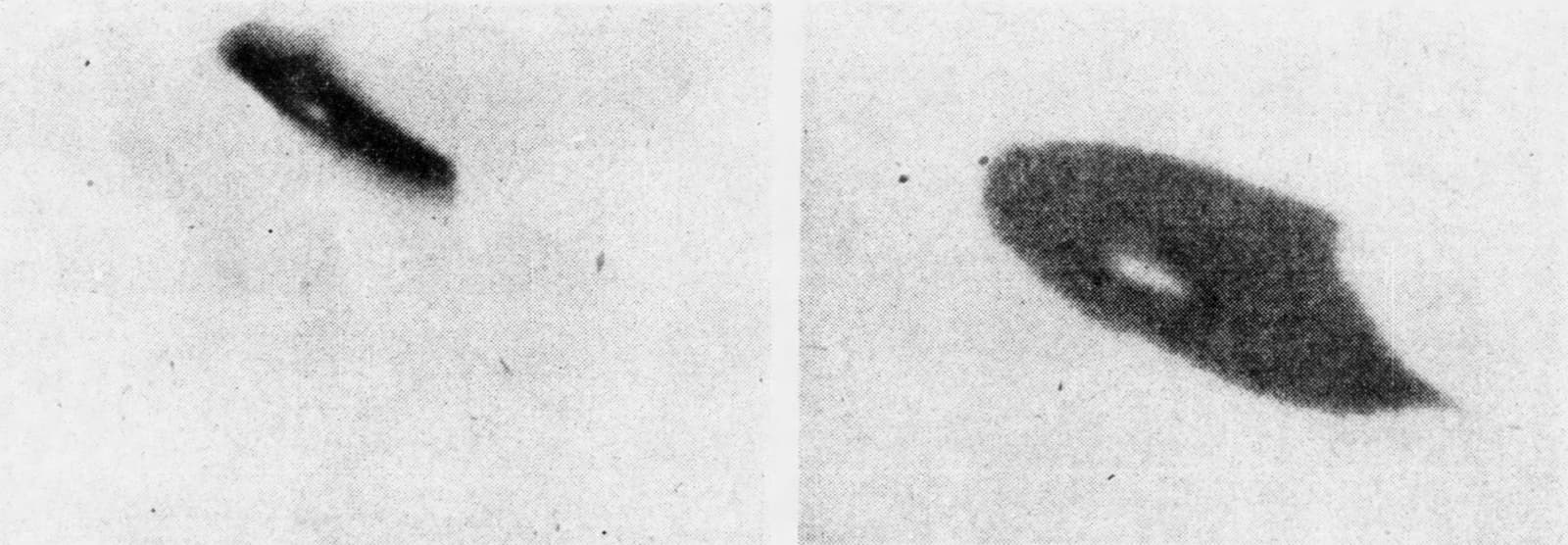
FBI / U.S. Department of Justice (1947). William Albert Rhodes Phoenix Photographs, July 1947 and the 1947–1950 Recovery Dispute. The UFO Files. https://the-ufo-files-site.netlify.app/dossier/rhodes-phoenix-photographs-1947
"William Albert Rhodes Phoenix Photographs, July 1947 and the 1947–1950 Recovery Dispute." FBI / U.S. Department of Justice. 1947. https://the-ufo-files-site.netlify.app/dossier/rhodes-phoenix-photographs-1947.
William Albert Rhodes Phoenix Photographs, July 1947 and the 1947–1950 Recovery Dispute
Case ID: FBI-62HQ-83894/rhodes-phoenix-photographs-1947
Agency: FBI / U.S. Department of Justice
Date: 1947-07-07
Source: https://www.war.gov/medialink/ufo/release_1/65_hs1-834228961_62-hq-83894_section_2.pdf
Retrieved: Thu May 07 2026 20:00:00 GMT-0400 (Eastern Daylight Time)
Mirrored on The UFO Files, an archive by Dead Pixel Design. The file is the file. Anything in question is one click from the original.
Summary
William Albert Rhodes is one of the most-cited witnesses of the early flying-disc era because he produced the first widely-circulated photographs of an unconventional aerial object — a pair of Brownie-camera shots taken at approximately 5 p.m. on July 7, 1947, the day of the Phoenix storm and forty-eight hours after the Roswell Army Air Field “captured a flying disc” press release. The Rhodes photos circulated in newspapers, in the May 1947 Mechanics Illustrated comparison (“the ship appeared to be flying backward”), and decades later in the Air Force Project Blue Book record.
What is not widely known — and what 62-HQ-83894 documents in primary form across thirteen pages spanning three Sections (Sept 4 1947, June 30 1949, April 18 1950) — is the investigative-jurisdiction dispute that surrounded the case from the day Rhodes handed his negatives over. The FBI primary source establishes:
- J. Edgar Hoover, on August 30, 1947, expressly forbade joint AAF/FBI investigation of the Rhodes case in a teletype to SACs San Francisco and Phoenix. The teletype did not arrive at Phoenix in time.
- George Fugate Jr., A-2 representative from Hamilton Field, proceeded to Phoenix anyway under orders from Col. Donald Springer (the same A-2 chief who would later decline to pursue the Madden Montana case three weeks earlier — see 1947-california-montana-cic).
- Fugate required FBI Special Agent J. Bailey Brower to conceal his Bureau identity from Rhodes during the interview, having him introduced only as “a representative of the United States government.”
- Fugate refused to commit, in writing or otherwise, that Rhodes’s negatives would be returned. Brower required that Rhodes be told Fugate’s actual identity and warned that the negatives would not come back, before the FBI would accept the negatives for transfer.
- Two years later, in June 1949, OSI was reconstructing the case from the FBI file because Fugate’s own recollection had gone “hazy” and Rhodes had begun asking the Air Force to return the photographs.
- In April 1950, True Magazine contacted Rhodes wanting the photographs for publication. The FBI declined to assist and referred him to OSI.
This is the cleanest documented case in the 62-HQ-83894 paper trail of inter-agency jurisdiction conflict around an early UAP photographic-evidence chain of custody. It captures Bureau investigative discipline (Brower’s identity-disclosure insistence), Director-level policy (Hoover’s no-joint-investigation order), and the slow OSI/A-2 evidence-trail decay that historians have only been able to infer from Air Force file fragments before this release.
What the Rhodes Documents Document
The sighting itself (Section 2, page 117)
Rhodes’s narrative as recorded by Brower and Fugate in the August 29, 1947 joint interview:
- Date and time: Afternoon of July 7, 1947, approximately 5 p.m. Storm conditions in Phoenix; clouds at ~5,000 ft, 15 mph wind.
- Location: Walking from his home (4333 N. 14th Street) to his Panoramic Research Laboratory and Hobby Shop at the same address.
- Initial trigger: He heard a noise resembling a P-80 aircraft coming from a westerly direction.
- Observation: Searching the skies, he observed an “odd shaped ship” to the northeast, 20–30 feet in diameter, traveling at an estimated 100 mph, making a tight spiral with a half- to three-quarter-mile radius. The original aircraft sound was “no longer audible.”
- Photographs: Rhodes “hurriedly procured a 120 Brownie Box Camera” from his shop. As the object completed its first circle he obtained Photograph #1. As the object began its second turn (now northwest of his position), he obtained Photograph #2 — designated Exhibit II — which “more closely resembled the shape of the ship.” Object then banked right and disappeared into clouds at an estimated 1,000–2,000 ft altitude.
- Visual comparison: The shape closely resembled a picture on the front cover of the May 1947 Mechanics Illustrated, “the only difference noted by Mr. RHODES being that the ship appeared to be flying backward.”
- Photographic anomaly: Rhodes was “surprised that the object appeared dark on a light background; that he fully expected that the object would be light on a dark background.” He described the light spot in the center of Exhibit II as a “green house.”
- Audio: Object made no audible noise once spotted; no propeller visible.
Witness profile (Section 2, page 118): age 30, born Garden City Kansas, 6’3”, Phoenix Union HS, ten years experimental work, employed at Naval Ordnance Laboratory Washington DC early WWII (left 1942), instructor in instrument training, aircraft identification, and gunnery practice at Falcon Field (leased by British Government), hobbies in science / physics / radio / electronics / astronomy, livelihood “music ability.” Built radio-controlled airplane models. Married, one son.
Hoover’s August 30, 1947 prohibition teletype (Section 2, page 66)
“REPORT OF FLYING DISCS. RE SANF MEMO AUGUST TWENTY EIGHT LAST CONCERNING INTERVIEW WITH WILLIAM A RHODES, PHOENIX, ARIZONA. SANF ADVISE A-TWO AIR FORCE NOT NECESSARY FOR FUGATE TO PROCEED TO PHOENIX, THAT BUREAU WILL HANDLE INTERVIEW IF DESIRED, BUT JOINT INVESTIGATION NOT DEEMED NECESSARY. IF FUGATE PROCEEDS PHOENIX IN SPITE OF ABOVE, ADVISE HIM YOU ARE NOT AUTHORIZED TO CONDUCT JOINT INVESTIGATION AND NOT POSSIBLE FOR FUGATE TO SIT IN ON INTERVIEW WITH RHODES.” — Hoover URGENT teletype to SACs San Francisco and Phoenix, August 30, 1947 (Section 2 page 66, FBI serial 62-83894-68)
This is a personally-attributed Director-level prohibition. The Bureau routing list (Tolson, E. A. Tamm, Clegg, Glavin, Ladd, Nichols, Rosen, Tracy, Carson, Egan, Gurnea, Harbo, Hendon, Pennington, Quinn Tamm, Nease, Gandy) shows it went to the entire senior Bureau leadership.
The order that Hoover’s teletype tried to stop (Section 2, page 115)
ASAC Heber M. Clegg’s account, written September 4, 1947 (one week after the interview):
“On August 29, 1947, a Mr. GEORGE FUGATE, JR. called at the Phoenix office and exhibited credentials reflecting that he is a representative of A-2, Fourth Air Force, Hamilton Field, California. He also exhibited orders emanating from the office of Colonel DONALD SPRINGER, A-2, Fourth Air Force, Hamilton Field, California, instructing him to proceed to Phoenix immediately and contact the FBI office, at which time a Special Agent of the Federal Bureau of Investigation would be designated to accompany him to interview WILLIAM RHODES.” — SAC Phoenix Sept 4 1947 letter to Director, ATTENTION: Asst. Director D. M. LADD (Section 2 page 115, FBI serial 62-83894-80)
ASAC Clegg telephoned SAC Harry Kimball at the San Francisco office, who verified Springer’s instructions and stated that “in connection with flying discs, he had maintained close contact with Colonel SPRINGER and that close cooperation existed.” Kimball further asserted the SF office “had apparently handled these matters in accordance with Bureau policy.” On that representation, Special Agent J. Bailey Brower was permitted to participate in the joint interview — before Hoover’s prohibition teletype reached Phoenix.
The Phoenix office records the timing gap explicitly: “the Phoenix office did not receive the Bureau teletype of reference instructing that no joint investigation should be conducted until after the matter had been handled” (Section 2 page 119).
The identity-concealment procedure (Section 2, page 118)
This is the most striking single procedural element in the entire 62-HQ-83894 file read so far:
“It should be stated that at the time of interview with RHODES, Mr. BROWER identified himself as an agent of the Federal Bureau of Investigation and exhibited his credentials. However, pursuant to a request from Mr. FUGATE, he was introduced only as a representative of the United States government. His exact official connection was not made known to Mr. RHODES. Agent BROWER advised that he felt it was a peculiar procedure, but it was not his business.” — Section 2 page 118, paragraph 3
A military intelligence officer (Fugate, A-2 / 4AF) directed an FBI Special Agent (Brower) to withhold his Bureau identity from a civilian witness during a flying-disc evidence interview. Brower, on the record, called it “a peculiar procedure.” He complied because the orders chain (verified through SAC Kimball) suggested AAF and Bureau coordination. The Bureau-level prohibition that would have stopped this had not yet reached Phoenix.
The negative-retention dispute (Section 2 pages 118–119)
“However, at the conclusion of the interview, Mr. FUGATE requested Mr. RHODES to furnish him with the negatives and RHODES stated he would be glad to do so, but they were not in his immediate possession, and he would deliver them to the FBI the following morning. Mr. RHODES requested that the negatives be returned to him. Agent BROWER states that to this request, Mr. FUGATE made no reply. Agent BROWER states that after leaving Mr. RHODES he asked FUGATE if the negatives would be returned to Mr. RHODES and FUGATE stated that he doubted very much that they would be returned. Mr. BROWER then advised Mr. FUGATE that before he, BROWER, would accept these negatives that RHODES must be advised of Mr. FUGATE’S identity and also advised that the negatives, if turned over to Mr. FUGATE, would not be returned to him.” — Section 2 page 118, paragraph 4
This is the exact moment Brower asserted Bureau investigative discipline against an A-2 collection officer. He refused to be the conduit for a transfer that would mislead the witness about its destination. The next morning (Aug 30 1947 — same day as Hoover’s teletype):
“On the morning on August 30, 1947, when Mr. RHODES called at the Phoenix office to deliver the negatives, they were accepted only after he was advised that they were being given to Mr. FUGATE, a representative of the Army Air Force Intelligence, United States Army, and that there was little, if any, chance of his getting the negatives back. Mr. RHODES turned the negatives over to this office with the full understanding that they were being given to the Army and that he would not get them back.” — Section 2 page 119, paragraph 1
Rhodes consented to the handover with full knowledge of where the photographs were going and the unlikelihood of return. This is documented informed-consent in primary form.
The 1949 OSI reconstruction effort (Section 4, pages 207, 209, 211, 212)
By June 1949 the Rhodes file had decayed. The Phoenix SAC (W. A. Murphy) wrote the Director on June 8, 1949:
“FUGATE, when questioned by his superiors concerning the matter, stated his recollection was ‘hazy’ on the matter. OSI is anxious to secure the substance of information in the Phoenix file concerning this matter.” — SAC Phoenix W. A. Murphy to Director FBI, June 8, 1949 (Section 4 page 211, FBI serial 62-83894-144)
OSI representative Lynn C. Aldrich called at the Phoenix FBI office on June 7, 1949, requesting “detailed information concerning this interview since RHODES apparently has requested the Air Force to return the photographs.” A blind memorandum was prepared by the Phoenix office and forwarded to the Bureau for clearance.
The Bureau approved release on June 30, 1949. Internal Bureau Inspector Lish Whitson noted in a memo to H. B. Fletcher:
“According to Aldrich, Mr. Rhodes has apparently now requested the Air Force to return the photographs, which were previously obtained from him.” — Whitson to Fletcher, June 30, 1949 (Section 4 page 209, FBI serial 162-83894-183)
The Bureau corrected the SAC Phoenix’s reference date from “September 9, 1947” to the correct September 4, 1947 in its June 30 reply (Section 4 page 207) — Bureau records were more accurate at this stage than the Phoenix office’s own.
The 1950 True Magazine call (Section 5, page 119)
“On 4/17/50 Mr. RHODES advised he had been contacted by True Magazine and would like to secure the photographs which he had made available to the Air Force Intelligence.” — SAC Phoenix W. A. Murphy to Director FBI, April 18, 1950 (Section 5 page 119, FBI serial 62-83894-225)
Rhodes was redirected to OSI Fourth Air Force Base, San Francisco. The FBI explicitly disclaimed custody — noting that the photographs had been “made available by him to a representative of A-2 of the Fourth Air Force on 8/30/47,” not to the Bureau.
This is the True Magazine Donald Keyhoe era (his “Flying Saucers Are Real” article ran in the January 1950 issue). The Rhodes photographs were among the early evidentiary objects civilian researchers were trying to recover from government custody. The FBI’s response — “we don’t have them, ask A-2” — is the structural answer that recurs across UAP-evidence FOIA history.
The 1949 evidence-trail decay protocol (Section 4, pages 211, 209, 207)
When Rhodes began requesting return of his negatives in June 1949, the case file had decayed:
Fugate’s institutional memory loss: On June 8, 1949, SAC Phoenix W. A. Murphy reported that Fugate, “when questioned by his superiors concerning the matter, stated his recollection was ‘hazy’ on the matter.” The A-2 officer who had personally interviewed Rhodes, taken the negatives, and held them for two years could no longer reconstruct the chain from institutional memory alone. He required the FBI file to remember what had happened.
OSI’s reconstruction protocol: OSI representative Lynn C. Aldrich’s June 7, 1949 request to the Phoenix FBI office explicitly stated that “RHODES apparently has requested the Air Force to return the photographs.” OSI was not reconstructing the case from A-2 records — it was reconstructing from Rhodes’s request and the FBI file. The receiving organization (A-2/4AF) had lost documented custody of the negatives.
Bureau archive as the true record: The FBI’s June 30, 1949 reply corrected the Phoenix office’s own date reference (from “September 9, 1947” to the correct “September 4, 1947”). The Bureau had better-indexed records of the Rhodes evidence chain than the military organization that had taken possession of the negatives. This inversion — where the civilian intelligence agency retained better documentation than the receiving military organization — is the precise moment when photographic UAP evidence transferred from military chain-of-custody control to a state of institutional vacancy.
The absence of follow-up resolution: The archive documents Aldrich’s June 1949 reconstruction request and the Bureau’s June 30, 1949 approval. It does not document what Aldrich located on the A-2 end, or whether the negatives were returned to Rhodes or remained lost to institutional memory. This gap in documentation is itself the historical record — it shows that the evidence trail broke at the moment of transfer.
The Walter Winchell / Peter Cameron Jones tangential thread (Section 4, page 213)
D. M. Ladd to Director, July 20, 1949:
“You will recall that Mr. Ernest Cuneo advised the Bureau of a letter which Walter Winchell had received from an individual in Los Angeles indicating that he had seen a flying saucer leave the ground within his view and in which letter he theorized that this might have been a landing from another planet.”
The Los Angeles Office investigation: “the present owner and former manager at this address have no knowledge of any Peter Cameron Jones and that other investigation to locate Jones was unproductive. It would appear, therefore, that this may have been a prank.” Resolved by direct letter to Cuneo so Winchell would not run a column on a phantom witness.
This is filed in the same Section 4 cluster as the Rhodes 1949 reconstruction. It documents the Bureau’s standard handling of celebrity-pundit UFO leads in the post-1947 era — verify, decline, brief the source so the column can be killed quietly. It also shows the mid-1949 moment when civilian press interest in early flying-disc evidence (Winchell, True Magazine) was accelerating while official agencies were losing track of the original evidentiary objects.
Why This Matters
- Hoover personally intervened to block joint AAF/FBI investigation of a UAP photographic case in writing. The teletype is a direct first-person Director-level policy document on the flying-discs question, dated within seven weeks of Roswell. Bureau jurisdictional caution toward AAF intelligence on the disc problem was explicit, attributed, and dated.
- The Bureau’s investigative-discipline floor held even under inter-agency pressure. Brower called the identity-concealment procedure “peculiar” on the record and refused to handle the negatives until Rhodes was correctly informed of the recipient. This is the FBI institutional immune response to being used as a misleading conduit.
- The case extends and complicates the Maury Island / Switzer / Madden picture. Same A-2 office (Fourth Air Force, Hamilton Field, Col. Donald Springer commanding). Same SF SAC handling (Harry Kimball). Same investigative period (late July through August 1947). The Rhodes case is part of the same 4AF CIC/A-2 + FBI multi-witness investigation cluster mined in passes 4, 5, and 6 — see muroc-1947-cic-affidavits and 1947-california-montana-cic.
- The 1949 “hazy recollection” admission is documentary chain-of-custody decay. Two years after the interview, the A-2 officer who took the negatives can no longer reconstruct the episode without reading the FBI file. This is what evidence-handling looks like when the receiving organization does not log or preserve. Rhodes wanted his pictures back; A-2 had lost the institutional memory to either return or refuse them.
- Rhodes’ July 7 1947 sighting is the same date as the Muroc cluster (muroc-1947-cic-affidavits). Both are 5 p.m. (approximately) afternoon Pacific time observations on a single day. Phoenix and Muroc are ~370 miles apart. The flying-disc observation density on July 7, 1947, in the Southwest, in primary FBI/CIC paper, is now considerably more documented than before this release.
- The True Magazine 1950 callback documents the founding moment of civilian UFO-research evidence-recovery. Rhodes’ contact by True (the magazine that ran Keyhoe’s launch article) shows the early loop of “civilian witness → military custody → magazine wants the artifact back → military referrals.” The FBI’s clean refusal to re-enter the chain is the precedent for every subsequent FOIA referral pattern.
- Brower’s identity-disclosure insistence is a citable historical instance of Bureau ethics under pressure. This is the kind of primary-source quote that survives to be reused in any future serious account of the early UAP investigative record.
- The Rhodes case documents institutional vacancy in UAP evidence custody. Between 1947 and 1949, the receiving military organization (A-2/4AF) lost institutional memory of the case while the civilian FBI archive retained accurate documentation. When Rhodes requested his negatives back in 1949, OSI had to reconstruct the chain from the FBI file. This pattern — original evidence transferred to military custody, civilian agency retains better documentation, receiving organization loses track — would recur across early UAP cases and explains why civilian researchers had to file FOIA requests decades later to recover evidence trails that military custodians had lost.
Connections
- PURSUE full inventory
- PURSUE master report (master synthesis)
- maury-island-1947
- muroc-1947-cic-affidavits
- 1947-california-montana-cic
- davidson-brown-crash-mission-report
- philadelphia-1950-soap-suds-disc
- UAP disclosure (concept)
Open Questions
- Did A-2 ever return Rhodes’s negatives, or do they survive in Air Force custody today? The 1950 record stops with the FBI redirecting Rhodes to OSI Fourth Air Force Base. Project Blue Book records (1947–1969) include Rhodes-photograph reproductions but the original negatives’ fate is not addressed in this release.
- Was George Fugate Jr. disciplined for the August 29, 1947 unauthorized joint interview? Hoover’s teletype establishes the prohibition; no document in this read indicates A-2 internal action against Fugate, despite Springer being his direct chain-of-command and the FBI’s complaint being on file.
- What was the basis for SAC Kimball’s claim that he had “maintained close contact with Colonel SPRINGER and that close cooperation existed”? The Kimball–Springer relationship would have been an SF SAC / 4AF A-2 chief liaison channel. A more granular read of Section 2 around the August 28 SF letter (the document Hoover’s teletype responded to) might surface the SF originating memo.
- Did Aldrich’s June 1949 OSI reconstruction succeed in finding the negatives? The FBI furnished the blind memorandum; what OSI found on its own end is outside this archive.
- Cross-reference with the Project SIGN (later GRUDGE/BLUE BOOK) Rhodes case file. The August 1947 Air Force record that the Phoenix office references as “the letter dated August 4, 1947, by the Office of Assistant Chief of Staff A-2 Intelligence, Hamilton Field, California” is the originating AAF document. Whether it survives in the BLUE BOOK record release is a separate-archive question.
Quotes Worth Keeping
“JOINT INVESTIGATION NOT DEEMED NECESSARY. IF FUGATE PROCEEDS PHOENIX IN SPITE OF ABOVE, ADVISE HIM YOU ARE NOT AUTHORIZED TO CONDUCT JOINT INVESTIGATION AND NOT POSSIBLE FOR FUGATE TO SIT IN ON INTERVIEW WITH RHODES.” — J. Edgar Hoover, URGENT teletype to SACs San Francisco and Phoenix, August 30, 1947, FBI serial 62-83894-68 (Section 2 page 66). Director-level prohibition on AAF/FBI joint flying-disc investigation, in writing, attributed.
“However, pursuant to a request from Mr. FUGATE, he was introduced only as a representative of the United States government. His exact official connection was not made known to Mr. RHODES. Agent BROWER advised that he felt it was a peculiar procedure, but it was not his business.” — SAC Phoenix to Director FBI, September 4, 1947 (Section 2 page 118). The FBI institutional record of Special Agent Brower complying under protest with an A-2 identity-concealment direction during a UAP photo-evidence interview.
“Mr. BROWER then advised Mr. FUGATE that before he, BROWER, would accept these negatives that RHODES must be advised of Mr. FUGATE’S identity and also advised that the negatives, if turned over to Mr. FUGATE, would not be returned to him.” — SAC Phoenix to Director FBI, September 4, 1947 (Section 2 page 118). Brower’s investigative-discipline assertion against the A-2 evidence-collection plan.
“Mr. RHODES turned the negatives over to this office with the full understanding that they were being given to the Army and that he would not get them back.” — SAC Phoenix to Director FBI, September 4, 1947 (Section 2 page 119). Documented informed-consent transfer of UAP photographic evidence under Brower’s required-disclosure condition.
“FUGATE, when questioned by his superiors concerning the matter, stated his recollection was ‘hazy’ on the matter.” — SAC Phoenix W. A. Murphy to Director FBI, June 8, 1949 (Section 4 page 211, FBI serial 62-83894-144). The two-year evidence-trail decay quote — A-2 collection officer no longer able to reconstruct the case without the FBI’s file.
“On 4/17/50 Mr. RHODES advised he had been contacted by True Magazine and would like to secure the photographs which he had made available to the Air Force Intelligence.” — SAC Phoenix W. A. Murphy to Director FBI, April 18, 1950 (Section 5 page 119, FBI serial 62-83894-225). The civilian-research evidence-recovery loop in its founding moment.