FBI-62HQ-83894/stuart-adcock-oak-ridge-march-1950 / 1950-03-01 / FBI
Stuart Adcock Unknown Object over Oak Ridge, Tennessee, March 1, 1950 (Vital Facilities / Internal Security)
M. on March 1, 1950 and the morning of March 8, 1950, a Knoxville civilian radio-station owner named **Stuart E.
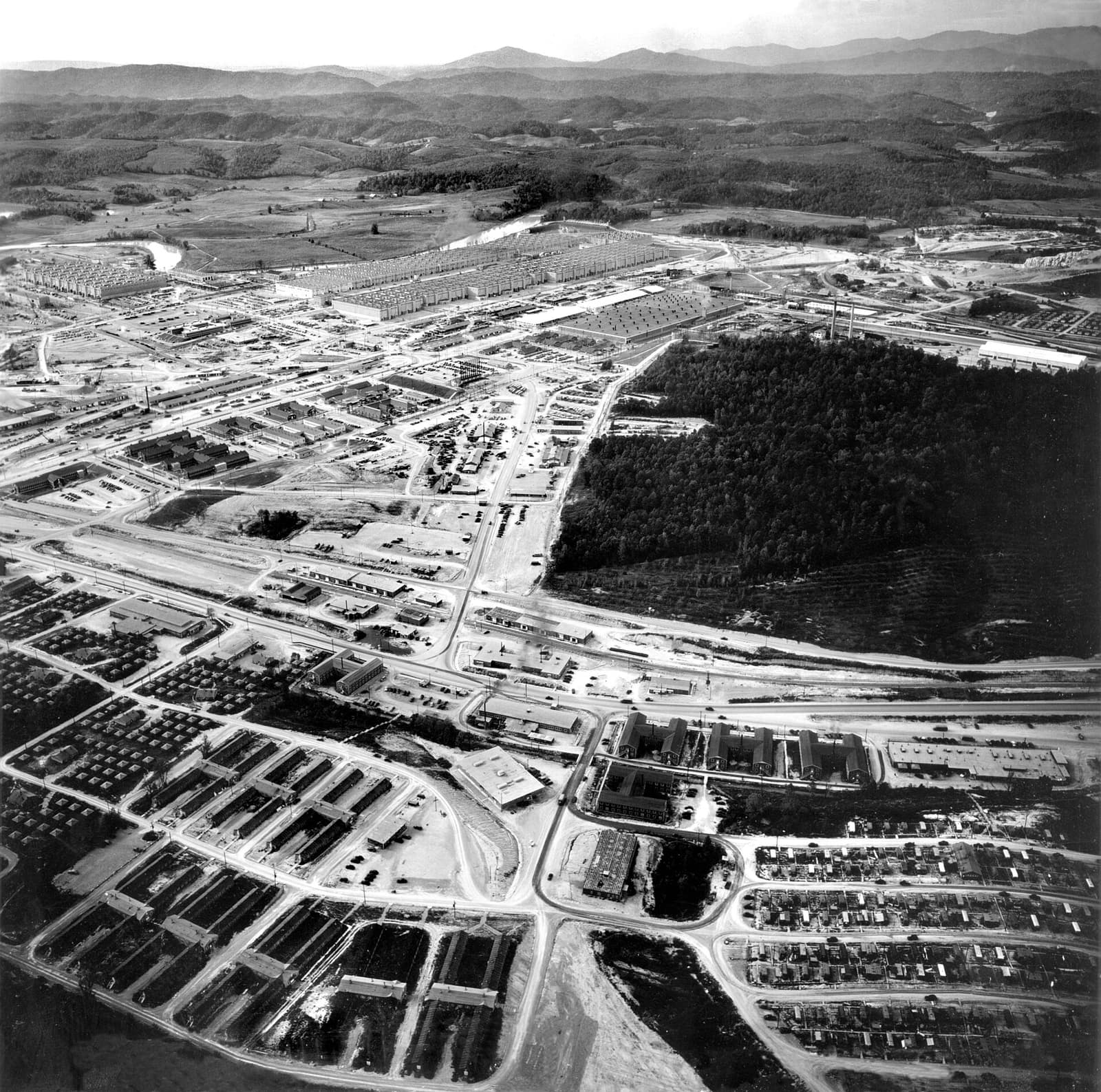
FBI / U.S. Department of Justice (1950). Stuart Adcock Unknown Object over Oak Ridge, Tennessee, March 1, 1950 (Vital Facilities / Internal Security). The UFO Files. https://the-ufo-files-site.netlify.app/dossier/stuart-adcock-oak-ridge-march-1950
"Stuart Adcock Unknown Object over Oak Ridge, Tennessee, March 1, 1950 (Vital Facilities / Internal Security)." FBI / U.S. Department of Justice. 1950. https://the-ufo-files-site.netlify.app/dossier/stuart-adcock-oak-ridge-march-1950.
Stuart Adcock Unknown Object over Oak Ridge, Tennessee, March 1, 1950 (Vital Facilities / Internal Security)
Case ID: FBI-62HQ-83894/stuart-adcock-oak-ridge-march-1950
Agency: FBI / U.S. Department of Justice
Date: 1950-03-01
Source: https://www.war.gov/medialink/ufo/release_1/65_hs1-834228961_62-hq-83894_section_5.pdf
Retrieved: Thu May 07 2026 20:00:00 GMT-0400 (Eastern Daylight Time)
Mirrored on The UFO Files, an archive by Dead Pixel Design. The file is the file. Anything in question is one click from the original.
Summary
Between 11:15 P.M. on March 1, 1950 and the morning of March 8, 1950, a Knoxville civilian radio-station owner named Stuart E. Adcock, operating an Army-surplus APN-7 radar set out of his home, reported five separate “pip” detections of an unidentified object circling at extreme altitude (40,000 ft, then 80,000 ft, then 100,000 ft) directly over the Oak Ridge atomic-energy installation. The case was given the formal Bureau caption “UNKNOWN OBJECT OVER OAK RIDGE, TENNESSEE, MARCH 1, 1950; STUART ADCOCK, COMPLAINANT; VITAL FACILITIES; INTERNAL SECURITY” and rode the Hoover routing list (Tolson, Ladd, Clegg, Glavin, Nichols, Rosen, Tracy, Harbo, Belmont, Mohr) for one full week.
The case is the Oak Ridge follow-up to the 1947 W. R. Presley flying-saucer photographs documented in oak-ridge-gasser-atomic-propulsion-1947-1949. Same installation. Same SAC office (Knoxville, with SA Charlton C. McSwain again as Bureau liaison). Same NEPA Project officer (Colonel C. D. Gasser, USAF Air Materiel Command Engineering Officer at the Nuclear Energy for the Propulsion of Aircraft site) called in to evaluate the technical claim. Twenty-eight months after Presley, Oak Ridge has now been formally categorized into the Vital Facilities / Internal Security framework — the same administrative bracket that wraps Los Alamos, Sandia, and Camp Hood in the Project Grudge / vital-installations correspondence (see project-grudge-vital-installations-1948-1949).
Operationally the case is a counter-mirror to Presley’s 1947–1949 file. In Presley, an off-the-record briefing by Gasser in the same office produced the Bureau’s first official Soviet atomic-propulsion theory of flying saucers and triggered the March 1949 reversal of Bureau Bulletin #57. In Adcock, the same Gasser, the same SA McSwain, and the same NEPA / AEC / 14th Air Force / 3rd Army CIC / 24th District OSI cast spend a week diluting an extreme-altitude radar contact into a discounted complainant. By March 6, 1950 SAC Robey of Knoxville teletypes the Director that Adcock’s reliability is “questioned due to some degree of inebriation,” that his APN-7 was “not too reliable,” and that CIC and OSI continue interest but do not contemplate further action (page 84). On March 14 Hoover sends Francis R. Hammack at AEC and the Inspector General of the Air Force a clean confirming letter that closes the file (page 86, page 89). No active Bureau investigation. Photo and radar set both deflated.
What makes the case worth a wiki page is not Adcock himself — by the file’s own assessment he was a competent radio-engineer with a degraded radar adaptation, observed by Gasser and Captain Robert Cross “in a much inebriated condition” at his home, and unreachable for two days afterward. What makes it worth a page is what it documents about the Vital Facilities / Internal Security framework as a working bureaucratic category by March 1950, and the cooperating-agency gridlock the SAC Knoxville report (pages 91–96) describes verbatim:
“Despite the fact that all agencies seemed to be operating in the manner prescribed by agreement, and although each was apprised of the action being taken by the other and cooperating in every respect, there nevertheless seemed to be an impressive lack of any agency actually taking the responsibility for the situation and taking any action to verify or disprove the threat. Had a similar incident occurred wherein an actual threat against the physical security of the AEC Installation had been experienced, it is not implausible to believe that a similar confused fixing of final authority would have been found.” (page 96)
SAC Knoxville reframes the Adcock incident as a “dry run” exposing a real procedural failure of the AEC / 3rd Army / 14th Air Force / OSI / CIC vital-installations protocol. The Bureau receives this as direct primary-source evidence that the Vital Facilities apparatus, twenty-eight months into formal operation, did not actually have a clear escalation chain.
What the Adcock Documents Document
The initial sighting and the AEC / 3rd Army / CIA escalation (page 80, A. H. Belmont memo to Ladd, March 3, 1950, FBI serial 62-83894-215)
Belmont’s contemporaneous Director-routed memo records the sighting chain in primary form:
“At 9:55 A.M. today, SAC Robey of Knoxville advised that Stuart E. Adcock, owner and operator of Radio Station WROL, Knoxville, had called the Knoxville Office at 11:15 P.M. on March 1. Adcock is a radio ham operator and has set up in his home in Knoxville an Army Surplus APN-7 radar set. Adcock advised that he had picked up on this set a ‘pip’ indicating that an object was circling at an altitude of about 40,000 feet over Oak Ridge.” — Belmont to Ladd, March 3, 1950 (page 80)
The escalation tree, as Belmont records it: Knoxville Office → AEC Security Section → CIC Agents (3rd Army) and OSI representatives (24th District) → Third Army Headquarters at Atlanta → Air Force probably to Washington → Army CIC informs FBI that CIA is sending a technician down from Washington to examine the set. Belmont notes: “Mr. Robey had no information as to how CIA had jurisdiction.” Naval Reserve at Knoxville is putting a radar set into operation that morning (March 3) “in an effort to identify this object.” Belmont’s instructions to Robey: “no investigation should be conducted by the Knoxville Office but that he should be kept advised of developments and should send a teletype to the Bureau tonight.”
The CIA-jurisdiction note is the most striking single line in the early file. The 1947 Presley case had passed through AMC Wright Field and AEC Security; the 1950 Adcock case has CIA technical interest by 9:55 A.M. on the morning after the second contact, with no documented chain of authority. The Director’s office in Washington learned this from SAC Knoxville, not from any inter-agency memorandum.
The Third Army TWX traffic (pages 57, 70, 72, 88)
The U.S. Third Army’s Communication Office TWX traffic from Fort McPherson, Georgia, runs in parallel. Three messages preserved in the Bureau file (transmitted FBI via Department of the Army Staff Communications Office):
AJACI 1-2 (March 2, 1950, page 57 / page 72) — duplicate copies, telephone call from Lt. Col. Nunamaker, Tennessee Military District, 1130 hours March 2:
“(B) On 1 March at 2135 hours the station picked up an object 340 degrees and 18 miles from Knoxville altitude 40,000 feet. Direction and distance put the object directly over Oak Ridge. AEC Security Division Chief at Oak Ridge checked with Smyrna Air Base Nashville which reported it had no flight plan for any plane being in that vicinity and altitude.
“(C) On 2 March at 1105 station picked up object at 335 degrees and 18 miles from Knoxville altitude 40,000 feet. AEC Security Div Chief checked with Smyrna Air Base with negative results.” — Third Army TWX AJACI 1-2, March 2, 1950 (pages 57, 72; FBI serials 62-83894-207, 62-83894-211)
The Third Army characterizes WROL as “a radar station near Knoxville which has been in operation about 3 weeks. This radar station is being operated by station WROL of Knoxville.” This is materially wrong — WROL is Adcock’s commercial broadcast station, the radar is his hobby APN-7 in his home — but the error is preserved in primary form in Army Director-of-Intelligence routing.
AJACI-3-3 3206 (March 3, 1950, page 70) — supplementary report:
“(A) At 2130 hours on 2nd Mar radar station picked up 2 objects 310 degrees, altitude 80000 feet, approximately 18 miles from Knoxville in general direction of Oak Ridge, moving in circular motion but in opposite directions.
“(B) At 2230 hours 2nd Mar and again at 0030 hours 3rd Mar station picked up object, moving same direction, locality and altitude.
“(C) Density of object similar to DC-3 airplane, speed not established but report as ‘terrific’.” — Third Army TWX AJACI-3-3 3206, March 3, 1950 (page 70; FBI serial 62-83894-210)
The supplementary report adds the first two-object detection (“moving in circular motion but in opposite directions”), the elevation jump from 40,000 to 80,000 feet, and the speed characterization “terrific.” It also confirms: “CIA Radar Technician reportedly arrives Knoxville today to check radar set and operation.” (The technician never arrived; subsequent memos correct the attribution from CIA to AEC. See page 93 below.)
AJACI-3-5 3206 (March 9, 1950, page 88) — closing report:
“Reour TWX AJACI-3-3 subject reported radar sightings over Oakridge, additional info indicates radar operator inexperienced and radar set has been modified so as to cast doubt on reliability of reading. Chief Tennessee Mil Dist recommends expeditious action be taken to determine whether an unknown object has reappeared over Oakridge in the past few days. Chief Security Div at Oakridge requested info as to channels of communication with Air Force in connection with radar sightings.” — Third Army TWX AJACI-3-5 3206, March 9, 1950 (page 88; FBI serial 62-83894-218)
The closing TWX is the key procedural finding: as of March 9, 1950, the Chief of the Security Division at Oak Ridge was still asking Third Army for “channels of communication with Air Force in connection with radar sightings.” Twenty-eight months after Presley, the AEC has no documented Air Force escalation channel for radar UAP detections at the country’s primary nuclear-weapons production site.
The Belmont follow-up of March 6 (page 82, A. H. Belmont memo to Ladd, FBI serial 62-83894-216)
Three days into the case, the Bureau’s working assessment has already collapsed:
“On the morning of March 6, 1950, I called SAC Robey to ascertain what he had found out concerning this matter. He advised that a teletype had been sent reflecting that there was some question of Adcock’s reliability and knowledge on radar theory; that CIC and OSI are continuing their interest in the matter; and that the CIA technician from Washington had not arrived.” — Belmont to Ladd, March 6, 1950 (page 82)
The CIA technician “had not arrived.” This is the last mention of a CIA technician anywhere in the Adcock file. SAC Knoxville’s report on page 93 below corrects the attribution: “It was erroneously reported that a CIA technician would come to Oak Ridge.” The Bureau spent three days believing the CIA had jurisdiction over a vital-installations radar contact based on a transmittal error.
The SAC Knoxville teletype of March 6 (page 84, FBI serial 62-83894-217 / 105-11996-2)
The deflationary close, urgent-priority teletype to the Director, attention Mr. A. H. Belmont:
“EXISTENCE OF OBJECT REPORTED BY ADCOCK AS BEING DIRECTLY OVER OAK RIDGE AT ONE HUNDRED THOUSAND FEET ALTITUDE NOT VERIFIED. ADCOCK REPUTEDLY CAPABLE RADIO TECHNICIAN. ADCOCK CLAIMS TO HAVE DETECTED OBJECT WITH HIS RADAR EQUIPMENT ON FIVE OCCASIONS OVER THREE DAYS. NAVAL RESERVE RADAR EQUIPMENT AT KNOXVILLE DID NOT DETECT OBJECT ON ANY OCCASION, BUT TECHNICIANS STATE IT IS NOT CONSIDERED EFFICIENT FOR AIRCRAFT AT EXTREME ALTITUDES. QUALIFIED PERSONS FROM USAF AT NEPA, OAK RIDGE, TALKED WITH ADCOCK AND EXAMINED HIS RADAR EQUIPMENT. FOUND HIS EQUIPMENT NOT TOO RELIABLE AND FELT ADCOCK TECHNICALLY WRONG ON SOME RADAR THEORY. RELIABILITY OF ADCOCK QUESTIONED DUE TO SOME DEGREE OF INEBRIATION. THESE PERSONS DISCOUNT PROBABILITY. CIC AND OSI CONTINUE INTEREST BUT DO NOT CONTEMPLATE FURTHER ACTION. AEC TOOK STEPS TO HAVE RADAR TECHNICIAN SENT FROM WASH., BELIEVED FROM CIA, BUT NOT YET ARRIVED.” — SAC Knoxville to Director, March 6, 1950 (page 84)
The note at the bottom of page 84 — “Letter to AEC 3-14-50 / cc-OSI / memo to Crim Div” — establishes the closing-out paper trail that produces page 86 and page 89.
The Hoover closing letter to AEC and the Air Force (pages 86 and 89, March 14, 1950)
Two clean-finish documents preserve identical narrative:
- Page 86 — Hoover to Francis R. Hammack, Acting Director, Division of Security, AEC, Building T-3, 16th and Constitution Avenue NW, with carbon copies to the Director of Special Investigations / Inspector General / Department of the Air Force and to the Director of Intelligence / General Staff / Department of the Army (Attention: Chief, Security and Training Group). FBI serial 62-83894-217 / 11-16-2. Marked CONFIDENTIAL / BY SPECIAL MESSENGER. Declassified 8/31/77.
- Page 89 — Hoover to Assistant Attorney General James M. McInerney, Criminal Division, on the same date with identical body text. FBI serial 62-83894-219 / 105-11996. Marked CONFIDENTIAL with classification struck through.
Both letters lay out Adcock’s two principal sightings (40,000 ft over Oak Ridge at 11:15 P.M. March 1; 100,000 ft and 18 miles from Knoxville at 11:15 A.M. March 2), the Naval Reserve radar’s failure to detect the object, the NEPA / Oak Ridge technical evaluation finding Adcock’s equipment “not too reliable” and Adcock himself “technically wrong on some of his radar theory,” and the inebriation finding. Both close with: “No investigation is being conducted by this Bureau but in the event additional information comes to our attention you will be promptly advised.” Pages 86 and 89 confirm in primary form that the Adcock disposition was: refer to AEC and Air Force, file copy to DOJ Criminal Division, no FBI active investigation.
The cc-line on page 86 is itself a finding. The Air Force destination is the Director of Special Investigations / Inspector General / Department of the Air Force / The Pentagon — i.e., the OSI cumulative-sighting-log apparatus that becomes the addressee of the Belmont master memo (see belmont-twinkle-master-memo-osi-log-1949-1950). The Adcock case is being routed into the same OSI cumulative log infrastructure that ingested the November 1949 Project TWINKLE establishment material.
The full SAC Knoxville report (pages 91–96)
The most substantive document in the Adcock file is the unsigned SAC Knoxville narrative report covering the full week’s activity, pages numbered “2” through “7” of an internal document (so pages 91 through 96 in the Section 5 PDF). Five named witnesses, five principal organizations, all preserved in primary form.
The cast (page 92, March 3, 1950 conference at NEPA Site, 3:30 P.M.):
- Colonel C. D. Gasser, Engineering Officer, U.S. Air Force Material Command, NEPA Site, Oak Ridge — same officer as the 1947 Presley case
- Captain Robert Cross, USAF, NEPA — termed “a radar expert” by Gasser
- Special Agent E. L. Seagraves, CIC, 3rd Army, stationed at Knoxville
- Special Agent W. M. Price, OSI, U.S. Air Forces (24th District based at Maxwell Field, Alabama)
- Mr. Gene Goedjen, U.S. Air Forces Security Officer
- Special Agent Charlton C. McSwain, FBI Knoxville (the same SA who took Gasser’s 1948 off-the-record briefing on Soviet atomic-propulsion missiles)
Adcock’s own claims to radar competence (page 92):
“ADCOCK claimed familiarity with the equipment being used by the Navy and spoke of having assisted in its development at Harvard University during the early stages of the war. ADCOCK also made statements to the effect that he had traveled extensively for the Army during the war in adapting radar for specialized services.”
The Knoxville office gives weight to the resume: “STUART ADCOCK is generally recognized in this vicinity as a reputable and substantial citizen in Knoxville and, in addition thereto, is recognized as somewhat of a radio authority. It was found that he is credited with being a skilled radio technician and has done considerable development and research work in the field of radio.” (page 91)
Gasser’s initial position (page 93):
“Stated that while it was highly improbable that aircraft could sustain flight at an altitude of 100,000 feet, it was absolutely possible from a scientific and engineering standpoint. Therefore, it was his opinion that the matter should be followed closely. He arranged for Captain CROSS, whom he termed a radar expert, to observe with ADCOCK during the evening of March 3, 1950 the radar equipment on which ADCOCK had detected the object.” — page 93
This is a notable position from the same officer who in 1948 told McSwain “there is no known chemical fuel” capable of propelling such craft. Gasser in March 1950 is willing to keep the 100,000-foot detection in play “from a scientific and engineering standpoint” while the rest of the room moves toward dismissal.
The CIA / AEC attribution correction (page 93):
“Both WHITE and CALLAGHAN advised that the matter had been referred to 3rd Army authorities and that beyond this, no steps had been taken. It was their belief, however, that a radar technician was being sent down, probably from Washington, to inspect the equipment owned by ADCOCK. It was erroneously reported that a CIA technician would come to Oak Ridge.” — page 93
The original CIA-jurisdiction line in Belmont’s March 3 memo (page 80) traces to a misunderstanding in the Knoxville Office about the AEC-Washington technician request. The corrected reading: AEC was attempting to procure a federal radar technician through Washington channels, and the chain misidentified the source agency. The CIA never had jurisdiction.
The inebriation finding (page 94):
“Colonel GASSER advised they had found ADCOCK in a much inebriated condition and that they had had difficulty in making any determination as to his abilities in the field of radar. It was their belief that his equipment was haphazard at best and that no great degree of reliability could be placed therein.” — page 94, Gasser and Cross at Adcock’s home, March 4, 1950 afternoon
Adcock then becomes unreachable: “On the morning of March 5, 1950, Colonel GASSER and Captain CROSS went to the home of Mr. ADCOCK and were unable to gain entry or to find anyone at the residence.” (page 94). And later: “During the afternoon of March 6, 1950, all day of March 7, and the morning of March 8, 1950, attempts were made by Special Agent PRICE, OSI, to get in touch with ADCOCK to make an appointment with Colonel GASSER and Captain CROSS, and ADCOCK could not be located. According to his office at Station WROL, he had left town and it was not known when he would return.” (page 95)
The 14th Air Force resolution (page 95):
“On the afternoon of March 8, 1950, Special Agent SEAGRAVES telephoned Special Agent McSWAIN of this office and advised that two representatives of the 14th Air Forces with headquarters at Greenville, South Carolina, had arrived in Knoxville and contacted him with regard to making an appointment with ADCOCK to inspect his equipment. These representatives advised they did not feel it sufficiently important for them to remain or to make a return trip inasmuch as ADCOCK was unavailable.” — page 95
Gasser’s complaint to Wright Field (page 95):
“This information is being furnished to the Bureau in detail inasmuch as it is the understanding of this office that Colonel C. D. GASSER was much perturbed in the manner in which this matter was handled and has written letters to his Commanding Officer, U. S. Air Forces Material Command, Wright Field, concerning it. These letters by Colonel GASSER apparently were prompted from the fact that the 3rd Army Intelligence representative and the Air Force Intelligence representative have both been instructed to act as observers only, with no authority to act in the situation. In addition thereto, AEC felt that their responsibility had been discharged upon notifying the 3rd Army. The Bureau was obviously interested only from an observer’s viewpoint and no question of jurisdiction in this regard was raised.” — page 95
This is Gasser, the principal NEPA Project officer, formally complaining up his Air Materiel Command chain to Wright Field about the cooperating-agency gridlock at his own installation. The Gasser-to-Wright-Field letters are not in this archive, but their existence is recorded in primary form by SAC Knoxville.
The “dry run” finding (page 96):
“Mr. WOODSIDE stated that immediately upon receiving the report from me, he had made the matter known to the proper authorities at AEC and early the following morning he had conversed with Colonel JOHN MEADE, 3rd Army Headquarters, Atlanta, Georgia, and apprised him of the matter. Mr. WOODSIDE stated he also conversed with 14th Air Force Headquarters at Greenville, South Carolina and advised them of the matter. He stated that this was strictly in accordance with the plans drawn up between AEC and the armed forces for protection against air or land assault. He continued that the AEC has neither the facilities nor the equipment with which to defend itself in such emergencies and that such responsibility had been assumed by these agencies of the military forces.
“It would appear from the manner in which this incident was handled that despite the fact that all agencies seemed to be operating in the manner prescribed by agreement, and although each was apprised of the action being taken by the other and cooperating in every respect, there nevertheless seemed to be an impressive lack of any agency actually taking the responsibility for the situation and taking any action to verify or disprove the threat. Had a similar incident occurred wherein an actual threat against the physical security of the AEC Installation had been experienced, it is not implausible to believe that a similar confused fixing of final authority would have been found. It should be noted that many hours elapsed from the receiving of the first report until such time as any reasonable conclusion could be reached concerning the matter and nothing of a positive nature with regard to any action being taken had been had during all that time. While it is now felt that this entire matter was in a manner of speaking ‘dry run’, it nevertheless warrants some consideration from a procedural standpoint and might be worthy of discussion at some liaison meeting in the future.” — SAC Knoxville report, page 96
The single most consequential paragraph in the file. The Knoxville office is not assessing Adcock; it is assessing the Vital Facilities / Internal Security framework’s ability to respond to a real attack on Oak Ridge, and finding it broken. The framing is a “dry run” — i.e., a planning rehearsal that produced an unintentional failure-mode discovery — and the office recommends raising it at “some liaison meeting in the future.”
Why This Matters
- The Vital Facilities / Internal Security caption is itself a primary-source finding. By March 1950, Oak Ridge has been formally administratively bracketed into the same vital-installations framework as Los Alamos, Sandia, and Camp Hood (see project-grudge-vital-installations-1948-1949). The 1947 Presley file used “flying disc” / “flying saucer” subject lines; the 1950 Adcock file uses “VITAL FACILITIES; INTERNAL SECURITY.” The category change between 1947 and 1950 is documented in the file’s own caption form.
- Stuart Adcock was a civilian radio-station owner running a hobby APN-7 radar adaptation, not an AEC employee or military. This matters because the Vital Facilities framework treats Adcock’s hobby radar contact with the same urgency it would treat a sworn AEC physical-security report. Twenty-eight months after Presley, the framework has expanded to ingest civilian-owned-and-operated detection equipment as a vital-installations input.
- The Bureau’s first encounter with CIA jurisdictional language on a UAP / radar case appears here, and is then retracted as a transmittal error. Belmont’s March 3 memo (page 80) documents Army CIC informing FBI that “CIA is going to send a technician down from Washington.” SAC Knoxville’s narrative on page 93 corrects this: “It was erroneously reported that a CIA technician would come to Oak Ridge.” Whether the original misunderstanding came from AEC, from 3rd Army, or from the Knoxville Office is not resolved in the file. But the line appears at Director-of-the-Bureau routing distribution and is therefore part of the Bureau’s working assumption for three days.
- The “dry run” finding (page 96) is the most operationally significant paragraph in the Adcock file. SAC Knoxville does not conclude that Oak Ridge had a flying-disc sighting. SAC Knoxville concludes that the AEC / 3rd Army / 14th Air Force / OSI / CIC vital-installations protocol does not have a clear escalation chain in 1950. “Many hours elapsed from the receiving of the first report until such time as any reasonable conclusion could be reached concerning the matter and nothing of a positive nature with regard to any action being taken had been had during all that time.” (page 96) This is FBI primary documentary evidence of a procedural failure in the actual physical-security protocol of the country’s primary nuclear-weapons production site, four years and seven months after Trinity.
- Gasser keeps a 100,000-foot scientific possibility open (page 93). The same officer who in 1948 wrote off chemical-fuel propulsion now states that 100,000-ft sustained flight is “highly improbable” but “absolutely possible from a scientific and engineering standpoint” and “should be followed closely.” Gasser commits Captain Cross to overnight observation at Adcock’s home before the inebriation finding closes the matter. The Gasser-1948 / Gasser-1950 continuity is documentary: the principal NEPA technician treats high-altitude flight as a real engineering possibility, not a rule-out.
- Gasser formally complains up his AMC chain to Wright Field about the cooperating-agency gridlock (page 95). The Gasser-to-Wright-Field correspondence is not in this archive, but the SAC Knoxville report records its existence. This is documentary evidence that the Vital Facilities framework’s procedural failure was raised inside Air Materiel Command at the engineering-officer level in March 1950, independent of the FBI.
- The Hoover closing letter (page 86) routes the Adcock disposition into the OSI cumulative-sighting-log apparatus. Carbon copies go to the Director of Special Investigations / Inspector General / Department of the Air Force / The Pentagon — the same OSI receiving address that the November 1949 Belmont master memo (see belmont-twinkle-master-memo-osi-log-1949-1950) feeds into. The Adcock case is therefore on file in the OSI cumulative log alongside the Project TWINKLE inception material and the LaPaz Seventh Report (la-paz-seventh-report-cabell-directive-twinkle).
- Same SAC office, same liaison agent, same NEPA officer as Presley 1947–1949. SA McSwain handles both files. Col. Gasser is the AMC technical assessor for both. SAC Knoxville’s office is the Bureau’s nuclear-installations interface throughout 1947–1950. The Adcock case is in primary-source continuity with Presley/Gasser; whether the same handling pattern produces the same kinds of off-the-record technical briefings here is not documented (no Gasser-to-McSwain confidential analysis appears in the Adcock file).
Connections
- PURSUE full inventory
- PURSUE master report (master synthesis)
- oak-ridge-gasser-atomic-propulsion-1947-1949 (the 1947 Presley case — direct comparison)
- project-grudge-vital-installations-1948-1949
- la-paz-seventh-report-cabell-directive-twinkle
- belmont-twinkle-master-memo-osi-log-1949-1950
- UAP disclosure (concept)
Open Questions
- The Gasser-to-Wright-Field letters complaining of cooperating-agency gridlock at Oak Ridge. Referenced in primary form on page 95 but not in this PURSUE release. Likely in Air Materiel Command Engineering Field Officer correspondence files at NARA, March 1950.
- The “channels of communication with Air Force in connection with radar sightings” that the AEC Chief of the Security Division at Oak Ridge was still asking 3rd Army about on March 9, 1950 (TWX AJACI-3-5 3206, page 88). Whether such channels were formalized in the months after the Adcock dry run is not in this archive.
- Whether Adcock himself was ever interviewed again after disappearing from his home and station WROL on March 5–8, 1950. No follow-up appears in the file. Whether the 14th Air Force, AEC, or CIC made a return trip is not documented.
- The “liaison meeting in the future” that SAC Knoxville recommended on page 96. Whether the Adcock dry run was raised in the FBI / AEC / Army / Air Force liaison meetings in 1950 is not in the file.
- The CIA-jurisdiction misattribution. Page 93 corrects it as erroneous, but does not name who originated the error. The chain runs Knoxville Office → CIC 3rd Army → Belmont’s memo to Ladd (page 80). The actual source of the CIA attribution is not documented.
- Whether the Adcock case appears in the OSI cumulative sighting log referenced in the Belmont master memo (see belmont-twinkle-master-memo-osi-log-1949-1950). The Hoover closing letter (page 86) is cc’d to the OSI Inspector General with the case caption preserved, so the routing is in place; but whether the OSI log entry survives in the OSI / AFOSI archives is unverified.
- The Smyrna Air Base coordination. The Third Army TWX (pages 57, 72) records that the AEC Security Division Chief at Oak Ridge checked with Smyrna Air Base Nashville on both March 1 and March 2 — which “reported it had no flight plan for any plane being in that vicinity and altitude.” The Smyrna logs for March 1–2, 1950, would be a useful air-traffic-control cross-reference if those records survive at NARA.
- Captain Robert Cross’s actual technical assessment of the APN-7. Page 94 records Cross stating “he had insufficient opportunity to observe the set in practice or to examine the radio equipment connected with the set to make any definite statements as to whether or not the detection of the unknown object would be possible with said equipment. He said, however, he did feel that ADCOCK was a capable person with pure radio techniques.” Whether NEPA produced a written technical evaluation of Adcock’s modified APN-7 is not in this file.
Quotes Worth Keeping
“At 9:55 A.M. today, SAC Robey of Knoxville advised that Stuart E. Adcock, owner and operator of Radio Station WROL, Knoxville, had called the Knoxville Office at 11:15 P.M. on March 1. Adcock is a radio ham operator and has set up in his home in Knoxville an Army Surplus APN-7 radar set. Adcock advised that he had picked up on this set a ‘pip’ indicating that an object was circling at an altitude of about 40,000 feet over Oak Ridge.” — A. H. Belmont to D. M. Ladd, March 3, 1950 (Section 5 page 80, FBI serial 62-83894-215). The opening primary-source detection record. The case caption was assigned in the same memo: “VITAL FACILITIES; INTERNAL SECURITY.”
“Army CIC has now informed that CIA is going to send a technician down from Washington to examine the set. Mr. Robey had no information as to how CIA had jurisdiction.” — Belmont to Ladd, March 3, 1950 (Section 5 page 80). The Bureau’s first encounter with claimed CIA jurisdiction over a UAP / radar / vital-installations case, recorded with the Director’s office’s own uncertainty about the chain. Subsequently corrected on Section 5 page 93 as “erroneously reported.”
“Stated that while it was highly improbable that aircraft could sustain flight at an altitude of 100,000 feet, it was absolutely possible from a scientific and engineering standpoint. Therefore, it was his opinion that the matter should be followed closely.” — Col. C. D. Gasser, Engineering Officer, USAF Air Materiel Command, NEPA Site, Oak Ridge, in 3:30 P.M. conference of March 3, 1950 (Section 5 page 93). The same NEPA officer who in 1948 told McSwain that no chemical fuel could sustain flying-saucer flight is in 1950 keeping the 100,000-ft engineering possibility open.
“Colonel GASSER advised they had found ADCOCK in a much inebriated condition and that they had had difficulty in making any determination as to his abilities in the field of radar. It was their belief that his equipment was haphazard at best and that no great degree of reliability could be placed therein.” — SAC Knoxville report, Section 5 page 94. The disqualifying technical / character finding on Adcock himself, recorded at Bureau internal-record level.
“Despite the fact that all agencies seemed to be operating in the manner prescribed by agreement, and although each was apprised of the action being taken by the other and cooperating in every respect, there nevertheless seemed to be an impressive lack of any agency actually taking the responsibility for the situation and taking any action to verify or disprove the threat. Had a similar incident occurred wherein an actual threat against the physical security of the AEC Installation had been experienced, it is not implausible to believe that a similar confused fixing of final authority would have been found.” — SAC Knoxville report, Section 5 page 96. The “dry run” procedural finding. The single most consequential paragraph in the Adcock file.
“While it is now felt that this entire matter was in a manner of speaking ‘dry run’, it nevertheless warrants some consideration from a procedural standpoint and might be worthy of discussion at some liaison meeting in the future.” — SAC Knoxville report, Section 5 page 96. The Bureau-level recommendation that the cooperating-agency gridlock be raised at a future inter-agency liaison meeting. Whether this happened is not documented in the archive.
“It is the understanding of this office that Colonel C. D. GASSER was much perturbed in the manner in which this matter was handled and has written letters to his Commanding Officer, U. S. Air Forces Material Command, Wright Field, concerning it. These letters by Colonel GASSER apparently were prompted from the fact that the 3rd Army Intelligence representative and the Air Force Intelligence representative have both been instructed to act as observers only, with no authority to act in the situation.” — SAC Knoxville report, Section 5 page 95. The Gasser-up-the-AMC-chain complaint, in primary form. The Gasser-to-Wright-Field letters themselves are not in this archive.