FBI-62HQ-83894/davidson-brown-crash-mission-report / 1947-08-04 / FBI
Davidson-Brown B-25 Crash, Final Mission Report (4 August 1947)
On August 1, 1947, at 02:36 PST, a B-25 numbered #1316 left Tacoma's McChord Field bound for Hamilton Field, California. Twenty-four minutes later it crashed in the hills 20 miles east of Kelso, Washington, in the vicinity of Goble Creek (46°09'N, 122°43'W). The pilot and co-pilot were killed.
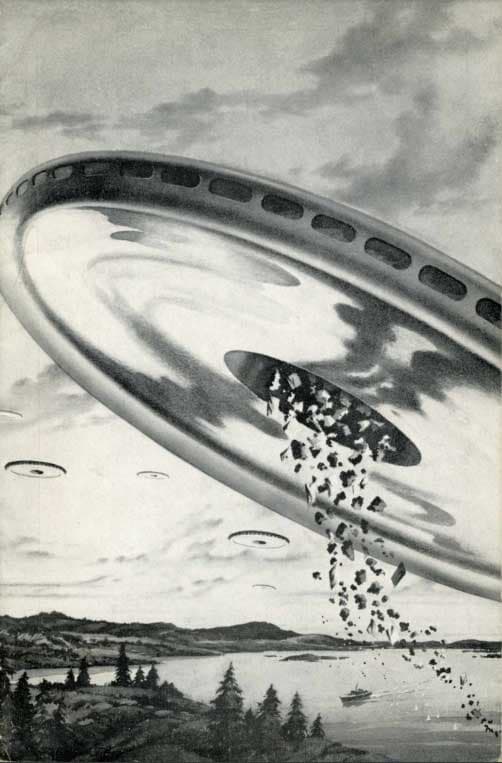
AAF Air Rescue Service Detachment 8 / 62d AAF Base Unit, McChord Field (1947). Davidson-Brown B-25 Crash, Final Mission Report (4 August 1947). The UFO Files. https://the-ufo-files-site.netlify.app/dossier/davidson-brown-crash-mission-report
"Davidson-Brown B-25 Crash, Final Mission Report (4 August 1947)." AAF Air Rescue Service Detachment 8 / 62d AAF Base Unit, McChord Field. 1947. https://the-ufo-files-site.netlify.app/dossier/davidson-brown-crash-mission-report.
Davidson-Brown B-25 Crash, Final Mission Report (4 August 1947)
Case ID: FBI-62HQ-83894/davidson-brown-crash-mission-report
Agency: AAF Air Rescue Service Detachment 8 / 62d AAF Base Unit, McChord Field
Date: 1947-08-04
Source: https://www.war.gov/medialink/ufo/release_1/65_hs1-834228961_62-hq-83894_section_3.pdf
Retrieved: Thu May 07 2026 20:00:00 GMT-0400 (Eastern Daylight Time)
Mirrored on The UFO Files, an archive by Dead Pixel Design. The file is the file. Anything in question is one click from the original.
Summary
On August 1, 1947, at 02:36 PST, a B-25 numbered #1316 left Tacoma’s McChord Field bound for Hamilton Field, California. Twenty-four minutes later it crashed in the hills 20 miles east of Kelso, Washington, in the vicinity of Goble Creek (46°09’N, 122°43’W). The pilot and co-pilot were killed. The aircraft was carrying Captain William L. Davidson and Lieutenant Frank M. Brown of Fourth AAF Headquarters intelligence (A-2), San Francisco, who had spent the prior night in Tacoma investigating the Maury Island flying-disc story with Fred Crisman, Harold Dahl, Kenneth Arnold, and Emil J. Smith.
That much has been in the historical record. What the AAF’s own Air Rescue Service operational report adds — now in primary-source form inside FBI 62-HQ-83894 Section 3 (pages 10, 12, 13) — substantively reframes the case:
- Four people were on the plane, not two. Davidson, Brown, plus passengers MATHEWS and TAFF.
- Two survived. Both passengers bailed out before impact. MATHEWS was injured (parachuted out, flares going off near him on the ground). TAFF was uninjured, walked to a house, then led the ambulance back.
- TOP SECRET material was aboard. A 0930 PST message from “Sq B” instructed McChord Field to expedite recovery of “top secret material in the navigator’s kit” to Hamilton Field.
- CIC took custody of all recovered documents. A Counter Intelligence Corps agent arrived at the wreckage scene at approximately 1800 PST on August 1 and “relieved [the ground party] of responsibility of all recovered documents.”
- The wing tore off in flight. Mechanical analysis at the scene: the left wing separated outboard of the engine before impact. The flap section was crushed (suggesting wing struck tail). The leading edge was undamaged. The aileron was undamaged. Navigation and landing lights were unbroken on the severed wing.
- The co-pilot may have been on fire when leaving the plane. “Indications led to the belief that the co-pilot was afire when he left the plane an instant before impact.”
This is the AAF’s own operational paperwork, signed by Captain Robert H. Masonheimer, Commanding Officer, Air Rescue Service Detachment 8 (62d AAF Base Unit), McChord Field, dated 4 August 1947 — three days after the crash, classified CONFIDENTIAL. It was filed inside 62-HQ-83894 as part of Lt. Col. Donald L. Springer’s Aug 27, 1947 transmittal to FBI San Francisco of the AAF Investigation of Flying Disc materials. File serial 62-83894-102.
What the Mission Report Documents
Crash sequence (Section 3 page 10)
- 0212 PST, 1 Aug 47: B-25 #1316 departs McChord Field for Hamilton Field. Pilot Capt. W. C. [sic — should read W. L.] Davidson plus three additional persons. Weather CFR. Full moon, “exceptionally good” visibility.
- ~0236 PST: Kelso Chief of Police observes an aircraft fly low over the town, then crash and burn to the east.
- 0400 PST: Army Flight Service notifies ARS Detachment 8 that a plane crashed and burned 13 miles south of Kelso (initial coordinate report 46°08’N, 122°55’W — later revised east).
- 0430 PST: AFS receives information from O. C. Clark, local sheriff of Kelso, that the actual crash site is 15-20 miles east of Kelso, in the vicinity of Goble Creek.
- 0500 PST: Ground fog in valleys at the crash scene prevents ground party from locating the plane.
- 0600 PST: KELSO Chief of Police notifies AFS that “a passenger of the crashed airplane was in his office and had confirmed” — the OCR cuts off mid-sentence here, picked up on page 12.
Survivor accounts (page 12)
The narrative continues on page 12 with what is clearly the testimony of either MATHEWS or TAFF, describing the immediate post-bailout environment:
“Flares were going off and he thought best to leave the scene. He heard a stream nearby and followed it until he came to a house and aroused the occupants. Soon TAFF arrived at the same house and, being un-injured, was driven into town. Then he led an ambulance to effect transportation of MATHEWS to a hospital.”
Reading order (the OCR truncation makes this inferential but the structure is clear): MATHEWS bailed out, was injured, hid out near a stream while flares went off (the report does not specify whose flares — flares were standard B-25 emergency equipment, but “flares going off” near a downed plane could also indicate ammunition cooking off in the burning wreckage). MATHEWS walked to a house, was joined by TAFF (who was uninjured and presumably bailed out earlier or shortly after). TAFF was driven into Kelso and led an ambulance back for MATHEWS.
Top-secret material aboard (page 12)
“At 0930 PST, a message from Sq B informed that top secret material was in the navigator’s kit and to request Commanding Officer MCCHORD FIELD to expedite all available information to Commanding Officer HAMILTON FIELD.”
This is the only contemporaneous AAF document I have located that explicitly calls the recovered materials TOP SECRET. The FBI memos in 62-HQ-83894 do not use this classification. Whatever Davidson and Brown were carrying — separate from the box of “alleged disc fragments” Crisman had given them, which the FBI’s August 14 1947 Ladd-to-Hoover memo concluded “this plane was definitely not carrying parts of a disc and there appears to be no substantiation of a sabotage charge” — the navigator’s kit had its own classified contents.
Wreckage analysis at scene (page 12)
CAPT FORSBERG and four enlisted men, transported by Washington State Police to the exact crash coordinates (46°09’N - 122°43’W), conducted preliminary wreckage analysis at 0830 PST:
- Two bodies in the wreckage — Davidson (pilot) and Brown (co-pilot). Davidson’s remains in the wreckage proper. Brown was apparently on fire and exited the plane “an instant before impact.”
- Left wing separated in flight, ~125 yards from main scattered wreckage. Wing torn off “outboard of the left engine” before impact.
- Forward portion of wing stub melted; rear two thirds ripped from inboard section.
- Leading edge undamaged. Navigation and landing lights unbroken. Aileron undamaged.
- Flap section crushed — investigator’s inference: “the wing struck the tail section.”
- From these indications: “the wing ripped from the airplane just after MATHEWS abandoned the plane. The resulting spin thus prevented the remaining crew members from bailing out although the co-pilot may have been in the hatch.”
Document custody (page 12)
“They were relieved of responsibility of all recovered documents by a CIC agent who had arrived about 1800 PST.”
Counter Intelligence Corps custody at ~1800 PST on August 1, the same day as the crash. CIC handling of recovered documents from a crashed plane carrying TOP SECRET navigator’s-kit material plus alleged flying-disc fragments is the operationally significant disposition point. The materials disappear from the AAF Air Rescue Service paper trail at this hand-off.
Conclusion (page 13)
Final Mission Report signed by ROBERT H. MASONHEIMER, Captain, Air Corps, Commanding Officer, Air Rescue Service Detachment 8 (62d AAF Base Unit), McChord Field, Tacoma, Washington. Statistical summary: 72 ARS man-hours in field, ~300 other Army man-hours, ~150 civilian man-hours, 500 miles driven by Army vehicles, 3 sorties flown, 6 hours flown by Army aircraft. Comments: “Cooperation received from all civilian agencies concerned was complete and excellent.” Recommendations: “None.” 1 enclosure: photographs.
Why This Matters
-
The standard Maury Island narrative says two officers died on the flight. The AAF’s own operational report says four people were aboard and two survived. MATHEWS and TAFF (no first names or ranks given in the OCR’d portion) are the missing figures from 70+ years of public Maury Island writing.
-
TOP SECRET material in the navigator’s kit, separate from the disc-fragment box. The historical conversation around the Davidson-Brown crash has focused entirely on whether the plane carried the Crisman/Dahl flying-disc fragments and whether the crash was sabotage (FBI internally concluded “no” on both counts in the Ladd-to-Hoover memo). The Final Mission Report opens a separate question: what TOP SECRET navigator’s-kit material was Davidson carrying that warranted same-day CIC custody?
-
The mechanical analysis is unusually detailed for a 1947 ARS report. Wing separated outboard of left engine, leading edge undamaged, aileron and flap intact, flap crushed by tail strike. This wreckage signature is consistent with structural failure or violent control loss in flight — neither of which is incompatible with the FBI’s “no substantiation of a sabotage charge” finding, but neither does the FBI memo address the wreckage condition itself. The AAF report is the technical document the FBI memo presumably relied on.
-
CIC took custody at 18:00 the same day. The CIC chain of custody is the place to look for any further classified material disposition. CIC hand-off precedes the FBI’s own paper trail by weeks. Whatever was in the navigator’s kit went to CIC, not to the FBI Bureau file.
-
The “flares going off” detail. A surviving passenger describes flares going off as he walked away from the wreckage. Standard interpretation: B-25 emergency flares ignited in the burning aircraft, or .50 cal ammunition cooking off. Less standard interpretation worth flagging: anyone tracking the broader sabotage allegation (the five anonymous calls to Tacoma reporters) will note that “flares going off” near a downed plane is also consistent with deliberate signal activity. The Final Mission Report does not investigate this distinction.
Connections
- PURSUE full inventory
- PURSUE master report
- maury-island-1947
- philadelphia-1950-soap-suds-disc
- PURSUE program
- AARO
- Department of War
- UAP disclosure (concept)
Open Questions
- Who are MATHEWS and TAFF? Their full ranks, units, and reason for being aboard B-25 #1316 are not in the OCR’d Mission Report pages I have read. Likely identified elsewhere in 62-HQ-83894.
Section 3 page 11 is a 192K-char content blob that may contain their interview transcripts or related newspaper coverage. Worth a follow-up read with section-aware tooling.Resolved on pass 25. Section 3 page 11 is the near-blank cover sheet for the Final Mission Report — Gemini OCR encountered a page with only the classification stamp (“CONFIDENTIAL”) and the subject line (“Subject: Final Mission Report”) and padded the spatial gaps with thousands of HTML entities to preserve visual layout. After stripping , the entire 192,942-char file collapses to 553 chars of frontmatter + heading + the two structural lines. The blob is content-empty. MATHEWS and TAFF identification will need to come from a different cross-archive source, not this page. - What was the TOP SECRET navigator’s-kit material? The Final Mission Report flags it but does not describe it. Cross-reference candidates: AAF Air Materiel Command at Wright Field (the destination intelligence agency for flying-disc material at this time), or any contemporaneous SAC/A-2 Hamilton Field document referencing the Davidson-Brown investigation.
- Where did CIC route the recovered documents? CIC chain of custody after 1800 PST August 1, 1947 is the missing operational link. CIC reported into Army G-2 in this era; a follow-up grep for “Counter Intelligence Corps” or “G-2” through the rest of 62-HQ-83894 may surface the receiving paper.
- The wreckage was photographed. The Final Mission Report’s enclosure list includes “1-Photographs.” Are those photographs anywhere in PURSUE Release 01? The release contains 14 images total (8 FBI A-series, Apollo 11/12/17 archival, the VM6 triangular-formation photo) — none of those obviously correspond. If the McChord Field crash photographs survive in another file, they would be the only visual primary source on this case.
- Why was the wing recovered intact 125 yards from the main wreckage? The Mission Report’s mechanical inference (flap struck tail, wing ripped off in spin) is one explanation. Other explanations consistent with the same evidence include in-flight structural failure unrelated to combat or sabotage. A 1947 B-25, 24 minutes into a routine night flight under CFR conditions and full-moon visibility, losing a wing is unusual enough to warrant the explicit attention it gets in this report.
Quotes Worth Keeping
“B-25 #1316 had departed MCCHORD FIELD at 0212 PST for HAMILTON FIELD, California. The weather was reported as CFR. A full moon made visibility exceptionally good. The pilot’s name was CAPT. W. C. DAVIDSON; the plane carried three (3) additional persons.” — Final Mission Report, 4 Aug 1947, Section 3 page 10. ARS Detachment 8 / 62d AAF Base Unit, McChord Field. Confirms four persons aboard, contradicting the popular two-person Maury Island narrative.
“At 0930 PST, a message from Sq B informed that top secret material was in the navigators kit and to request Commanding Officer MCCHORD FIELD to expedite all available information to Commanding Officer HAMILTON FIELD.” — Final Mission Report, Section 3 page 12. The TOP SECRET navigator’s-kit material is a separate item from the alleged disc fragments and has not been documented elsewhere in the Maury Island public record.
“From these indications it is believed the wing ripped from the airplane just after MATHEWS abandoned the plane. The resulting spin thus prevented the remaining crew members from bailing out although the co-pilot may have been in the hatch.” — Final Mission Report, Section 3 page 12. Mechanical reconstruction of the crash sequence by CAPT FORSBERG at the wreckage scene.
“They were relieved of responsibility of all recovered documents by a CIC agent who had arrived about 1800 PST.” — Final Mission Report, Section 3 page 12. The Counter Intelligence Corps custody hand-off, same day as the crash.
“Cooperation received from all civilian agencies concerned was complete and excellent.” — ROBERT H. MASONHEIMER, Captain, Commanding Officer, ARS Detachment 8, signing off the Final Mission Report. The only “comment” in the report.