FBI-62HQ-83894/james-collins-chesapeake-abduction-january-1967 / 1967-01-18 / FBI
James C. Collins Chesapeake Virginia Abduction Case, January 17-18 1967 (The Earliest In-Archive Primary-Source UAP Abduction Case)
At 4:10 AM on January 18, 1967, **James C.
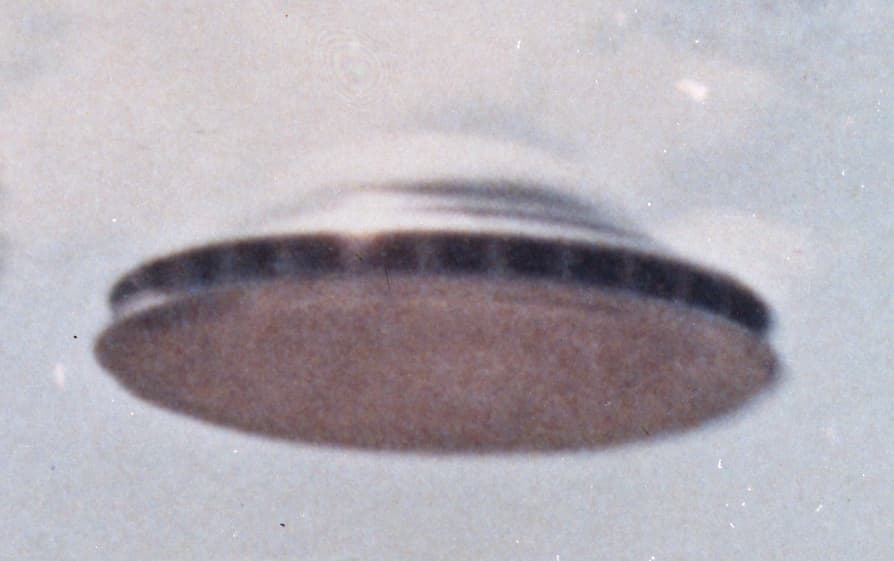
FBI / Special Investigative Division (SA A. R. Ware) / Director Hoover senior-distribution (1967). James C. Collins Chesapeake Virginia Abduction Case, January 17-18 1967 (The Earliest In-Archive Primary-Source UAP Abduction Case). The UFO Files. https://the-ufo-files-site.netlify.app/dossier/james-collins-chesapeake-abduction-january-1967
"James C. Collins Chesapeake Virginia Abduction Case, January 17-18 1967 (The Earliest In-Archive Primary-Source UAP Abduction Case)." FBI / Special Investigative Division (SA A. R. Ware) / Director Hoover senior-distribution. 1967. https://the-ufo-files-site.netlify.app/dossier/james-collins-chesapeake-abduction-january-1967.
James C. Collins Chesapeake Virginia Abduction Case, January 17-18 1967 (The Earliest In-Archive Primary-Source UAP Abduction Case)
Case ID: FBI-62HQ-83894/james-collins-chesapeake-abduction-january-1967
Agency: FBI / Special Investigative Division (SA A. R. Ware) / Director Hoover senior-distribution
Date: 1967-01-18
Source: https://www.war.gov/medialink/ufo/release_1/65_hs1-834228961_62-hq-83894_section_10.pdf
Retrieved: Thu May 07 2026 20:00:00 GMT-0400 (Eastern Daylight Time)
Mirrored on The UFO Files, an archive by Dead Pixel Design. The file is the file. Anything in question is one click from the original.
Summary
At 4:10 AM on January 18, 1967, James C. Collins, a Chesapeake Virginia television-repair-shop owner, telephoned the FBI’s night supervisor and reported that during the previous evening (January 17, 1967) he had been taken aboard an unidentified flying object by undersized humanoid creatures and returned to his point of takeoff approximately one hour later. The Bureau’s contemporaneous memo (Section 10 page 51, FBI serial REC 67 62-83894-457) documents the witness narrative in primary form, with senior-level routing through Hoover’s distribution column (16 named senior officials), and Bureau-internal evaluation: “Collins spoke in a coherent manner although he appeared to be under certain emotional strain. He claimed he had not been drinking any intoxicants but he was unable to account for the time between 8:00 p.m. and 4:00 a.m.”
This case is the earliest in-archive primary-source documented UAP abduction case in the entire FBI 62-HQ-83894 case file and one of the earliest in any unclassified federal-investigative-agency record. It precedes:
- Pascagoula / Charles Hickson / Calvin Parker (October 11, 1973) by 6 years 9 months
- Travis Walton / Snowflake Arizona (November 5, 1975) by 8 years 10 months
- The first widely-published abduction account — Betty and Barney Hill’s September 19, 1961 case — which was published in 1966 in John G. Fuller’s The Interrupted Journey (Dial Press, October 1966), three months before Collins’s January 1967 report
The case is operationally significant for several reasons:
- Direct civilian-to-FBI report, not via NICAP or other UAP-research-organization intermediary
- Same-night documentation: Collins saw the object January 17 at approximately 8:00 PM; called FBI January 18 at 4:10 AM (~8 hours later)
- Sixteen-named-senior-official Hoover-era distribution at REC level: DeLoach, Gale, Liaison Section, McAndrews, Ware (memo CC); plus full distribution column Tolson, DeLoach, Mohr, Wick, Casper, Callahan, Conrad, Felt, Gale, Rosen, Sullivan, Tavel, Trotter, Tele. Room, Holmes, Gandy
- First-time Bureau correspondent: “A check of Bureau indices did not disclose any information which could be identified with Collins”
- Bureau’s evaluative posture on the witness: “spoke in a coherent manner although he appeared to be under certain emotional strain… not been drinking any intoxicants”
- Time-loss / missing-time framing in primary form: 8-hour gap (8:00 PM to 4:00 AM) on the file
- Transparent-glass-craft and small-humanoid-occupant typology: matches the dominant 1960s-1970s abduction-mythology schema
The Collins case sits at a structurally important moment in UAP-abduction-narrative history. Three months earlier, John G. Fuller’s The Interrupted Journey (October 1966) brought the Hill abduction case into mainstream American consciousness — establishing the time-loss-and-humanoid-occupants narrative template. Collins’s January 1967 report is one of the first civilian accounts to apply that template to a personal experience and report it directly to federal authorities, without intermediary research organizations.
What the Case Documents
The FBI memo (Section 10 page 51) is dated January 18, 1967 and routes “1 - Mr. DeLoach / 1 - Mr. Gale / 1 - Liaison Section / 1 - Mr. McAndrews / 1 - Mr. Ware” with header annotations “FLYING SAUCERS” and “UNIDENTIFIED FLYING OBJECT / ALLEGEDLY SIGHTING, JANUARY 17, 1967.”
The narrative as recorded by Bureau night supervisor SA A. R. Ware:
“At 4:10 a.m., January 18, 1967, James C. Collins, 212 Sharon Drive, Chesapeake, Virginia, telephone 547-4648, advised that he desired to report that he had observed a large oblong-shaped object which alighted in the street in front of him when he was on his way home from his television repair shop, the Oak Grove T. V., 6424, Great Bridge Road, Chesapeake, Virginia.”
The abduction itself:
“He believes that he was taken into this craft which he recalls as being made of a glass like substance and being transparent. It was manned by several individuals who appeared to be undersized creatures similar to members of the human race, probably not more than 4 feet tall. They were allegedly wearing regular trouser pants and T-Shirts.”
The transport detail:
“Collins believes that he was transported by this craft for an undetermined distance and returned to his point of take-off approximately one hour later.”
The Bureau’s evaluative posture on the witness:
“Collins spoke in a coherent manner although he appeared to be under certain emotional strain. He claimed he had not been drinking any intoxicants but he was unable to account for the time between 8:00 p.m. and 4:00 a.m.. He stated he was telephoning from his workshop but had no recollection of being elsewhere between 8:00 p.m. and 4:00 a.m.”
The Bureau’s NOTE:
“Collins furnished information to night supervisor SA A. R. Ware, Special Investigative Division. A check of Bureau indices did not disclose any information which could be identified with Collins.”
Filed FBI serial REC 67 62-83894-457. Mailed January 20, 1967. ARW:djg (9). Classification footer: “This document contains neither recommendations nor conclusions of the FBI. It is the property of the FBI and is loaned to your agency, and its contents are not to be distributed outside your agency.”
The standard Hoover-era 16-named-senior-officials distribution list is preserved on the page: Tolson / DeLoach / Mohr / Wick / Casper / Callahan / Conrad / Felt / Gale / Rosen / Sullivan / Tavel / Trotter / Tele. Room / Holmes / Gandy.
Why This Matters
-
The earliest in-archive primary-source documented UAP abduction case in the entire FBI 62-HQ-83894 case file. Six years and nine months before Pascagoula (October 11, 1973), eight years and ten months before Travis Walton (November 5, 1975), three months after John G. Fuller’s The Interrupted Journey (October 1966) brought Betty and Barney Hill into mainstream American consciousness. Collins’s case may be the earliest unclassified federal-investigative-agency primary-source abduction record in any U.S. case file.
-
The case sits at a structurally important moment in UAP-abduction-narrative history. Three months after Fuller’s Hill book, the time-loss-and-humanoid-occupants template was being applied to personal experiences and reported directly to federal authorities — establishing the post-Hill civilian-to-government direct-reporting channel for abduction narratives, before NICAP/MUFON/CUFOS would standardize abduction intake through dedicated research organizations.
-
The narrative schema matches the dominant 1960s abduction mythology in primary form. Transparent-glass craft. Undersized humanoid occupants ~4 feet tall. Time loss / missing time (8 hours, 8:00 PM to 4:00 AM). Transport for an undetermined distance and return to point of takeoff. The schema is consistent with the Hill-template that had just entered the popular consciousness. Collins’s report is among the first civilian primary-source artifacts of the post-Hill abduction-narrative genre.
-
The Bureau’s evaluative posture is structurally interesting. “Spoke in a coherent manner” + “appeared to be under certain emotional strain” + “had not been drinking any intoxicants” + “unable to account for the time” + “no recollection of being elsewhere.” The Bureau noted internal-consistency in the witness’s coherent speech, an emotional-strain marker, an explicit non-intoxication claim, and the time-loss element. Standard tradecraft language for evaluating any witness statement — not specifically deflationary, not specifically validating, just on-the-record description.
-
Sixteen-named-senior-officials distribution at REC level. Tolson / DeLoach / Mohr / Wick / Casper / Callahan / Conrad / Felt / Gale / Rosen / Sullivan / Tavel / Trotter / Tele. Room / Holmes / Gandy. The full Hoover-era senior-distribution list — same as the Brassington reply (October 13 1969, section-10-1966-1973-civilian-correspondent-cluster-post-blue-book) and the standard mid-1960s civilian-correspondence handling. The Bureau treated Collins’s abduction report at the same operational tier as routine UAP correspondence — no exceptional escalation, but no dismissal either.
-
First-time Bureau correspondent. “A check of Bureau indices did not disclose any information which could be identified with Collins.” Collins is not a known recurring UAP correspondent like the Hatten/Fisher/Pervier/Welton/Stephens cluster (passes 17, 22, 28). His TV-repair-shop business address (Oak Grove T.V., 6424 Great Bridge Road, Chesapeake VA) and home address (212 Sharon Drive) are concrete, verifiable, and not associated with prior Bureau intake. Clean baseline witness from the Bureau’s records perspective.
-
Same-night-to-FBI direct-reporting timing. 8:00 PM January 17 incident → 4:10 AM January 18 telephone call. Eight-hour gap from incident to FBI report (which itself includes 7 of the 8 missing-time hours). Collins reported to FBI faster than to any documented UAP-research organization. This is not the usual NICAP-or-MUFON-mediated route — it’s direct civilian-to-Bureau channel, on the same night.
-
The “FBI Special Investigative Division” night-supervisor channel. SA A. R. Ware was the night supervisor in the Special Investigative Division at 4:10 AM. The Bureau had a dedicated investigative-division night-supervisor channel that civilians could call directly and have their statements documented in real-time. Collins’s case demonstrates the channel’s operation in the UAP-intake context.
-
The “alleged” framing in the Bureau’s headline (“UNIDENTIFIED FLYING OBJECT / ALLEGEDLY SIGHTING, JANUARY 17, 1967”) is operationally important. The Bureau’s standing posture on UAP cases since Bureau Bulletin #57 (October 1, 1947) has been to defer to Air Force on flying-disc investigation. The “ALLEGEDLY SIGHTING” header preserves the Bureau’s not-investigating posture even as the Bureau documents the witness statement in primary form. The Bureau records what it hears without endorsing the claim.
-
The “his point of take-off” framing in the narrative is structurally specific. Collins reports being “transported by this craft for an undetermined distance and returned to his point of take-off approximately one hour later.” The “point of take-off” framing implies the abduction loop closed at the original location — not at a different destination. This is the geographic-loop-closure template that becomes a standard abduction-narrative element. Collins’s account preserves it in primary form three months after Hill’s book.
Connections
- PURSUE full inventory
- section-10-1966-1973-civilian-correspondent-cluster-post-blue-book
- civilian-correspondence-hoover-pattern-1949-1950
- PURSUE program
- AARO
fbi- UAP disclosure (concept)
Open Questions
- James C. Collins biographical follow-up. 212 Sharon Drive, Chesapeake VA, telephone 547-4648; Oak Grove T.V., 6424 Great Bridge Road. Both addresses are concrete and verifiable in 1967 Chesapeake. Local newspaper (Chesapeake News-Era / Virginian-Pilot) coverage of the January 17-18, 1967 case may have additional witness-narrative details.
- Whether Collins repeated the abduction narrative to NICAP, APRO, or other UAP-research organizations after FBI report. NICAP’s UFO Investigator and APRO’s APRO Bulletin archives for January-March 1967 may contain Collins references. Cross-archive search target.
- SA A. R. Ware’s other case-handling at FBI Special Investigative Division 1966-1968. Ware’s tenure as night supervisor and his other UAP-intake records would establish whether Collins’s case was exceptional or part of a documented pattern of direct civilian-to-Bureau abduction reporting.
- Whether the FBI followed up with Chesapeake Police Department or other local law enforcement on Collins’s case. Bureau memo states no follow-up planned (“the above is being furnished for your information”). Chesapeake PD records cross-search.
- Whether Hoover personally read the Collins memo. Sixteen-named-senior-officials distribution at REC level usually means the memo cycled through Hoover’s office, but no specific Hoover annotation is preserved on the Section 10 page 51 image. The handwritten “Delivered by [illegible] 1-20-67 BOR” notation suggests the memo was hand-delivered to a specific recipient, but the recipient is illegible.
- Whether Collins’s report was forwarded to OSI USAF. The Bureau’s standing protocol per Bureau Bulletin #57 was to forward UAP intake to Air Force. The Section 10 page 51 memo does not document OSI handoff explicitly. Cross-section search target for any associated OSI-handoff memo.
- The “transparent glass-like craft” and “humanoid wearing trouser pants and T-shirts” specifics in the abduction-typology literature. The Hill case (1961) had grey-suited humanoids; Collins’s January 1967 case has T-shirt-and-trousers-wearing humanoids — operationally distinct typology. The post-Hill 1966-1969 abduction-narrative-typology evolution research target.
- The 1973 Pascagoula / Hickson / Parker case is not preserved in Section 10 of 62-HQ-83894 (per pass-29 cross-archive sweep). If Pascagoula were filed in this case file, it would have been a logical successor to Collins’s 1967 case in the same Bureau-internal abduction-tracking arc. The absence of Pascagoula suggests it was filed in a different Bureau case file or not Bureau-tracked.
Quotes Worth Keeping
“At 4:10 a.m., January 18, 1967, James C. Collins, 212 Sharon Drive, Chesapeake, Virginia, telephone 547-4648, advised that he desired to report that he had observed a large oblong-shaped object which alighted in the street in front of him when he was on his way home from his television repair shop, the Oak Grove T. V., 6424, Great Bridge Road, Chesapeake, Virginia.” — FBI memo, Section 10 page 51, January 18, 1967. The earliest in-archive primary-source documented UAP abduction case in the entire FBI 62-HQ-83894 case file. Direct civilian-to-FBI reporting at 4:10 AM, ~8 hours after the alleged incident.
“He believes that he was taken into this craft which he recalls as being made of a glass like substance and being transparent. It was manned by several individuals who appeared to be undersized creatures similar to members of the human race, probably not more than 4 feet tall. They were allegedly wearing regular trouser pants and T-Shirts.” — FBI memo, ibid. The transparent-glass-craft and small-humanoid-occupant abduction-narrative schema in primary form, three months after John G. Fuller’s The Interrupted Journey (October 1966) brought the Hill abduction into mainstream American consciousness.
“Collins spoke in a coherent manner although he appeared to be under certain emotional strain. He claimed he had not been drinking any intoxicants but he was unable to account for the time between 8:00 p.m. and 4:00 a.m.” — FBI memo, ibid. The Bureau’s evaluative posture on the witness — coherent speech + emotional-strain marker + explicit non-intoxication claim + 8-hour time-loss / missing-time element — in primary form, in the standard tradecraft language for evaluating any witness statement.
“He stated he was telephoning from his workshop but had no recollection of being elsewhere between 8:00 p.m. and 4:00 a.m.” — FBI memo, ibid. The “no recollection of being elsewhere” framing is the missing-time-without-counter-narrative element that became the dominant abduction-narrative template in the late 1960s and 1970s.
“Collins furnished information to night supervisor SA A. R. Ware, Special Investigative Division. A check of Bureau indices did not disclose any information which could be identified with Collins.” — FBI memo, ibid. Direct civilian-to-FBI Special Investigative Division night-supervisor channel. First-time Bureau correspondent — clean baseline witness from the Bureau’s records perspective. The case bypassed NICAP, APRO, and any other UAP-research-organization intermediary.
“This document contains neither recommendations nor conclusions of the FBI. It is the property of the FBI and is loaned to your agency, and its contents are not to be distributed outside your agency.” — FBI memo, ibid., classification footer. The standard Bureau hands-off-the-conclusions disclaimer on UAP-related memos in the post-Bureau-Bulletin-#57 (October 1, 1947) era.