FBI-62HQ-83894/cabell-afoic-cc-1-multi-agency-protocol-september-1950 / 1950-09-08 / FBI
Major General C. P. Cabell AFOIC-CC-1 'Reporting of Information on Unconventional Aircraft' Multi-Agency Protocol Directive, September 8, 1950 (Institutional Formalization, Multi-Agency Coordination, Reporting Requirements Standardization)
On September 8, 1950, Major General C. P. S.
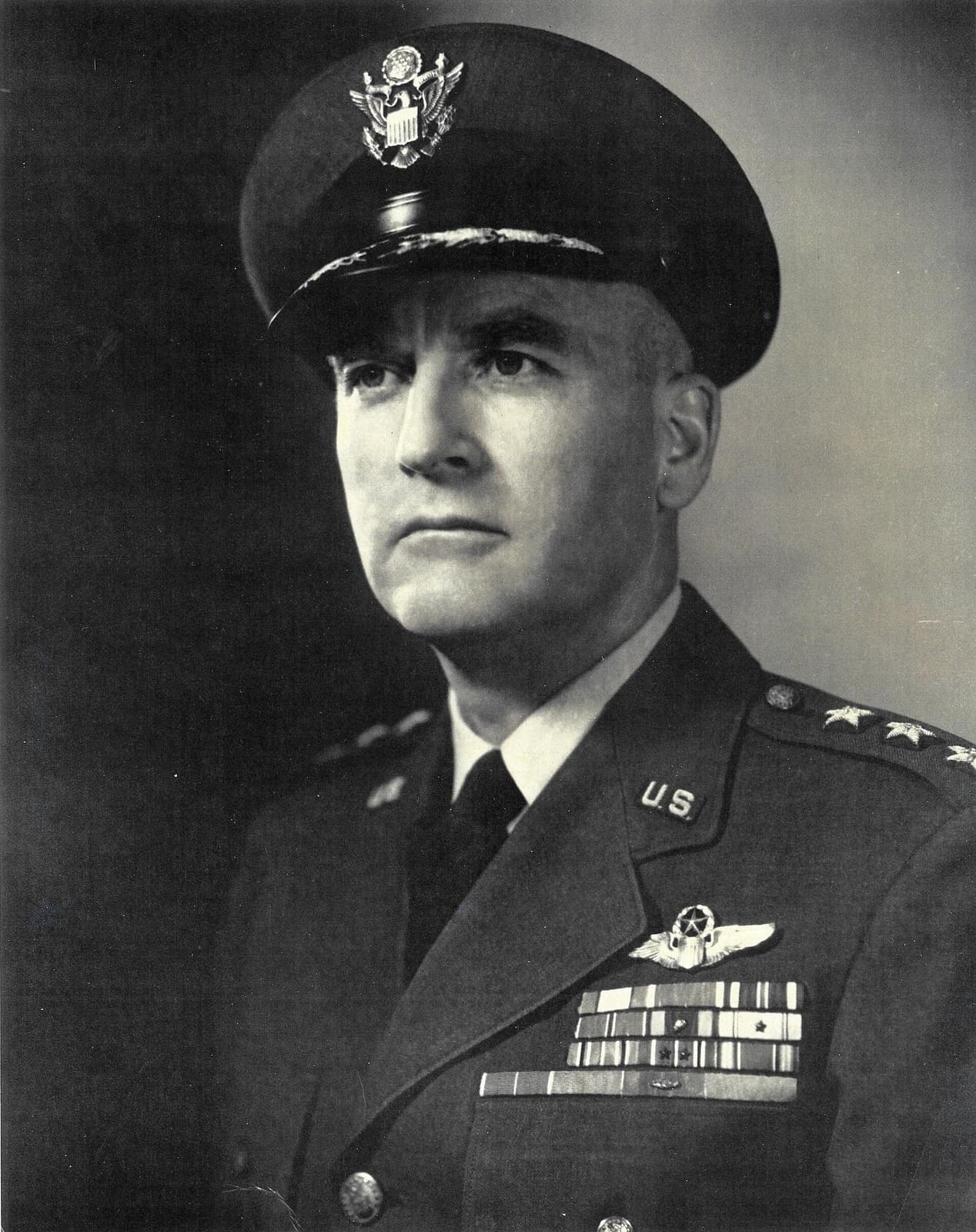
Director of Intelligence, Air Force / Major General C. P. Cabell / Federal Bureau of Investigation (1950). Major General C. P. Cabell AFOIC-CC-1 'Reporting of Information on Unconventional Aircraft' Multi-Agency Protocol Directive, September 8, 1950 (Institutional Formalization, Multi-Agency Coordination, Reporting Requirements Standardization). The UFO Files. https://the-ufo-files-site.netlify.app/dossier/cabell-afoic-cc-1-multi-agency-protocol-september-1950
"Major General C. P. Cabell AFOIC-CC-1 'Reporting of Information on Unconventional Aircraft' Multi-Agency Protocol Directive, September 8, 1950 (Institutional Formalization, Multi-Agency Coordination, Reporting Requirements Standardization)." Director of Intelligence, Air Force / Major General C. P. Cabell / Federal Bureau of Investigation. 1950. https://the-ufo-files-site.netlify.app/dossier/cabell-afoic-cc-1-multi-agency-protocol-september-1950.
Major General C. P. Cabell AFOIC-CC-1 'Reporting of Information on Unconventional Aircraft' Multi-Agency Protocol Directive, September 8, 1950 (Institutional Formalization, Multi-Agency Coordination, Reporting Requirements Standardization)
Case ID: FBI-62HQ-83894/cabell-afoic-cc-1-multi-agency-protocol-september-1950
Agency: Director of Intelligence, Air Force / Major General C. P. Cabell / Federal Bureau of Investigation
Date: 1950-09-08
Source: https://www.war.gov/medialink/ufo/release_1/65_hs1-834228961_62-hq-83894_section_6.pdf
Retrieved: Fri May 08 2026 20:00:00 GMT-0400 (Eastern Daylight Time)
Mirrored on The UFO Files, an archive by Dead Pixel Design. The file is the file. Anything in question is one click from the original.
Summary
On September 8, 1950, Major General C. P. Cabell, Director of Intelligence of the Air Force, issued AFOIC-CC-1 directive “Reporting of Information on Unconventional Aircraft” establishing the first formal, multi-agency institutional protocol for UAP reporting across the U.S. military and intelligence community. The directive defined “unconventional aircraft” as unidentified objects of interest to Air Force, established reporting chain (all observations to Air Materiel Command, Materiel Control Intelligence Service), set 10-day electrical-transmission deadline with written AF Form 112 follow-up, required nine-category standardized reporting (description, timing, observation method, location, observer reliability, weather, possible explanations, physical evidence, interception action), and mandated no publicity on reporting activity. Recipients included Commanding Generals of all Major Air Commands (ZI and Overseas), all U.S. Air Attaches, with information copies to Director Army G-2, Director Naval Intelligence, Commandant (INT) Coast Guard, Special Assistant State Department, Director FBI, and Director CIA. The directive was received by FBI on October 2, 1950 (logged as serial 62-83894-249), with handwritten notation by Hoover’s office staff. This document represents the institutional endpoint of the green fireball investigation arc: federal government formal acknowledgment that “unconventional aircraft” warranted systematic, multi-agency coordination and standardized reporting procedures.
What the Air Force Directive Documents Show
Cabell’s Definition and Institutional Scope (Section 6, Pages 10-11)
Major General C. P. Cabell’s directive opened with institutional definition:
“It is requested that any information obtained regarding unconventional aircraft, or anything of this nature which could be considered as being of military significance, be reported to the Air Materiel Command, Materiel Control Intelligence Service.”
Critical framing: The phrase “unconventional aircraft” — not UFO, not flying saucer, not anomalous phenomenon. The definition is institutional and deliberately vague: “anything of this nature which could be considered as being of military significance.” This formulation allowed subordinate commands to interpret the category expansively while maintaining deniability about scope.
Reporting Requirements and Standardized Categories (Section 6, Pages 11-12)
The directive established nine mandatory reporting categories:
- Description: “A detailed description of the aircraft or object.”
- Timing: “The date and time of sighting.”
- Observation method: “The method of observation (radar, visual, or both).”
- Location: “The location where the aircraft or object was sighted.”
- Observer reliability: “Information regarding the reliability of the observer(s).”
- Weather conditions: “Weather conditions (clouds, visibility, wind direction, wind speed, temperature).”
- Possible explanations: “Such possible explanations as weather balloons, aircraft, optical illusions, or phenomena of interest to the weather bureau.”
- Physical evidence: “In the event that physical evidence is collected, the information should be forwarded by the most expeditious means.”
- Interception action: “Any action taken to intercept the aircraft or object.”
Methodological implication: The inclusion of “possible explanations” alongside physical evidence requirements signals dual framing — investigators were instructed to simultaneously seek conventional interpretations and document material evidence. Observer reliability assessment (category 5) applied explicit credibility criteria to all reports.
Reporting Chain and Electrical Transmission Deadline (Section 6, Page 11)
The directive mandated specific routing and timing:
“All reports should be transmitted by electrical transmission to the Materiel Control Intelligence Service, Air Materiel Command, Wright-Patterson Air Force Base, Ohio, within ten (10) days of receipt of the information.”
And:
“A detailed written report should be forwarded on Air Force Form 112, including all information concerning the unconventional aircraft.”
Institutional protocol: Electrical (radio/telephone) notification within 10 days, followed by written AF Form 112. The 10-day window allowed for preliminary investigation before federal notification. Form 112 was Air Force’s standard intelligence report vehicle.
Multi-Agency Distribution and Recipient List (Section 6, Pages 10, 12)
The directive specified distribution to six federal agencies plus military commands:
Primary recipients (active reporting responsibility):
- Commanding Generals of Major Air Commands, ZI (Zone of Interior — continental US)
- Commanding Generals of Major Air Commands, Overseas
Information copy recipients (intelligence briefing):
- Director of G-2 (Army Intelligence)
- Director of Naval Intelligence
- Commandant (INT) U.S. Coast Guard Intelligence
- Special Assistant, Research and Intelligence, State Department
- Director, Federal Bureau of Investigation
- Director, Central Intelligence Agency
FBI receipt and handling: The FBI Director received the directive as information copy on October 2, 1950, with FBI serial number assignment 62-83894-249. Handwritten notations by Hoover’s office staff indicate institutional acknowledgment of Cabell’s authority.
Institutional cascade: Eight federal agencies received either active reporting responsibility or intelligence briefing on “unconventional aircraft” observations. This represented the first formal government-wide UAP reporting infrastructure.
Publicity Prohibition (Section 6, Page 12)
The directive included explicit restriction on public communication:
“It is requested that no publicity be released concerning the reporting of information on unconventional aircraft.”
Containment framing: The phrase “no publicity be released” did not prohibit observation, investigation, or analysis. It prohibited public announcement of the reporting activity itself. Civilian observers could report through military channels, but the existence of the reporting protocol was to remain classified/restricted.
Why This Matters
-
Institutional formalization of UAP as federal intelligence category. The Cabell directive did not speculate on UAP origins or validity. It simply codified that “unconventional aircraft” constituted military intelligence concern warranting standardized reporting across all Major Air Commands and intra-governmental intelligence coordination. The mere existence of this directive establishes that federal military leadership, by September 1950, deemed systematic observation mandatory.
-
Multi-agency acknowledgment of shared intelligence interest. The information-copy distribution to Army G-2, Naval Intelligence, Coast Guard, State Department, FBI, and CIA documents government-wide institutional acknowledgment that aircraft-identification failures (the core of UAP problem) affected multiple agencies and required shared situational awareness. No agency was tasked with UAP investigation, but all were tasked with receiving UAP intelligence.
-
Nine-category reporting structure as institutionalization of scientific method. The standardized categories (description, timing, method, location, observer reliability, weather, possible explanations, physical evidence, interception action) reflect scientific observation protocol: baseline data (what/when/where), methodological rigor (how observed), context (weather, observer credibility), analysis (possible explanations), and material validation (physical evidence). This structure was applied to all “unconventional aircraft” observations regardless of apparent plausibility.
-
“Unconventional aircraft” as deliberately vague institutional category. The term “unconventional” does not presume origin (foreign, domestic, unidentifiable), nature (manned, unmanned, natural phenomenon), or explainability. It allowed subordinate commands to report observations without making explanatory commitments. “Anything of this nature which could be considered as being of military significance” provided deniable scope expansion.
-
Publicity prohibition signals institutional containment strategy distinct from investigation. The requirement that “no publicity be released concerning the reporting of information” was not a truth-suppression directive (observations were investigated, analyzed, forwarded). It was a containment directive: federal government would internally investigate UAP without public acknowledgment of the reporting system itself. This suggests leadership anticipated public interest and chose institutional non-acknowledgment as strategy.
-
10-day electrical transmission deadline operationalizes rapid federal notification. The 10-day window for electrical transmission (radio/phone notification to Air Materiel Command) established rapid-escalation protocol. Observations that warranted immediate investigation (e.g., near sensitive installations, with physical evidence, with multiple witnesses) would be flagged within days of occurrence. The written AF Form 112 follow-up allowed detailed documentation without delaying initial federal notification.
-
Physical evidence forwarding mandate establishes material evidence protocols. The directive’s explicit requirement that “physical evidence be forwarded by the most expeditious means” established legal chain-of-custody principle for any recovered material. This suggests Cabell’s office anticipated that some “unconventional aircraft” reports would involve physical objects, not just sightings.
-
Endpoint of institutional arc: from dismissal baseline to formal coordination. The Cabell directive represents the culmination of 28 months of institutional evolution: Air Defense Command February 1948 dismissal policy → field-office filtering operationalization (Merchant case, August 1948) → military-scientist escalation (Stanfield/LaPaz, February-May 1950) → multi-agency protocol formalization (Cabell directive, September 1950). By September 1950, the federal government had institutionalized systematic UAP reporting across military and intelligence community. This was not speculation or research initiative — it was operational intelligence protocol.
Connections
- PURSUE full inventory
- air-defense-command-institutional-baseline-policy-february-1948 — dismissal baseline policy that Cabell directive formalizes into operational protocol
- stanfield-lapaz-holloman-february-1950 — military-scientist escalation pathway that prompted institutional protocol response
- merchant-wichita-falls-patriotic-civilian-august-1948 — field-office filtering operationalization that Cabell directive attempts to systematize
Entity: Air Materiel CommandEntity: Major General C. P. CabellConcept: Institutional Containment vs. Investigation ProtocolsConcept: Multi-Agency Intelligence Coordination on UAP, 1947-1950
Open Questions
-
Who drafted the Cabell directive and what was the decision process? The directive is signed by Cabell but does not indicate whether it was drafted by Cabell’s own intelligence staff, by response to Air Materiel Command request, or by higher Air Force leadership directive. Is there draft correspondence or decision memo in the archive?
-
What prompted the September 8, 1950 directive date specifically? The Stanfield/LaPaz case and Project Twinkle were operational by May 1950. What event in August-September 1950 triggered the formalization directive? Was there a specific sighting, a case surge, or a meeting that prompted Cabell to institute formal protocol?
-
Why was “no publicity” phrased as request rather than order? The directive states “It is requested that no publicity be released” — deferential framing rather than command. To whom was this request issued? Who had authority to violate the publicity prohibition, and what consequences applied?
-
Did any Major Air Command report unconventional aircraft observations before or after the directive? The archive shows green fireball observations near Holloman, Sandia, Los Alamos, Kirtland through early 1950. Did these observations flow through the Cabell protocol, or did the directive represent a fresh institutional mechanism with no prior reports?
-
How was “observer reliability” assessed operationally? The directive mandates documentation of observer reliability (category 5) but provides no criteria. Were military observers presumed reliable? Were civilians rated differently? Was “observer reliability” code for military vs. civilian status?
-
What was the enforcement mechanism if Major Air Commands failed to report within 10 days? The directive states 10-day transmission requirement but does not specify penalties for non-compliance. Did Air Materiel Command track reporting latency? Did any command face consequences for missed deadlines?
-
FBI as information-copy recipient — what was the FBI’s operational role? The Director received information copies of “unconventional aircraft” reports. Did the FBI conduct independent investigations of any Cabell-protocol reports, or was FBI role limited to intelligence briefing and archive?
-
State Department “Special Assistant, Research and Intelligence” — what was this official’s UAP role? The inclusion of State Department as UAP-report recipient suggests diplomatic implications (foreign overflight concerns, international implications of unexplained aircraft). Who was the Special Assistant in September 1950, and what role did State play in UAP analysis?
-
Did the Cabell directive remain in force after 1950, and if so, for how long? The archive documents show the directive’s issuance and FBI receipt in 1950. Did subsequent Air Force directives supersede Cabell’s protocol? When did formal “unconventional aircraft” reporting cease as an operational requirement?
-
Physical evidence forwarding mandate — what was the intended destination? The directive requires physical evidence to be “forwarded by the most expeditious means” but does not specify receiving organization. Was evidence to go to Air Materiel Command, FBI, or Air Force Intelligence? What chain-of-custody procedures were established?
Quotes Worth Keeping
“It is requested that any information obtained regarding unconventional aircraft, or anything of this nature which could be considered as being of military significance, be reported to the Air Materiel Command, Materiel Control Intelligence Service.” — Major General C. P. Cabell, AFOIC-CC-1 directive, September 8, 1950. Institutional definition and reporting authority.
“A detailed description of the aircraft or object. The date and time of sighting. The method of observation (radar, visual, or both). The location where the aircraft or object was sighted. Information regarding the reliability of the observer(s). Weather conditions (clouds, visibility, wind direction, wind speed, temperature). Such possible explanations as weather balloons, aircraft, optical illusions, or phenomena of interest to the weather bureau. In the event that physical evidence is collected, the information should be forwarded by the most expeditious means. Any action taken to intercept the aircraft or object.” — Major General C. P. Cabell, AFOIC-CC-1 directive, September 8, 1950. Nine-category standardized reporting structure.
“All reports should be transmitted by electrical transmission to the Materiel Control Intelligence Service, Air Materiel Command, Wright-Patterson Air Force Base, Ohio, within ten (10) days of receipt of the information.” — Major General C. P. Cabell, AFOIC-CC-1 directive, September 8, 1950. 10-day electrical transmission protocol.
“A detailed written report should be forwarded on Air Force Form 112, including all information concerning the unconventional aircraft.” — Major General C. P. Cabell, AFOIC-CC-1 directive, September 8, 1950. Written follow-up documentation requirement.
“It is requested that no publicity be released concerning the reporting of information on unconventional aircraft.” — Major General C. P. Cabell, AFOIC-CC-1 directive, September 8, 1950. Publicity containment protocol.