FBI-62HQ-83894/peyerl-1944-german-aircraft / 1967-06-08 / FBI
Paul L. Peyerl 1944 German WWII Saucer-Shaped Aircraft, June 1967 Miami Office Report
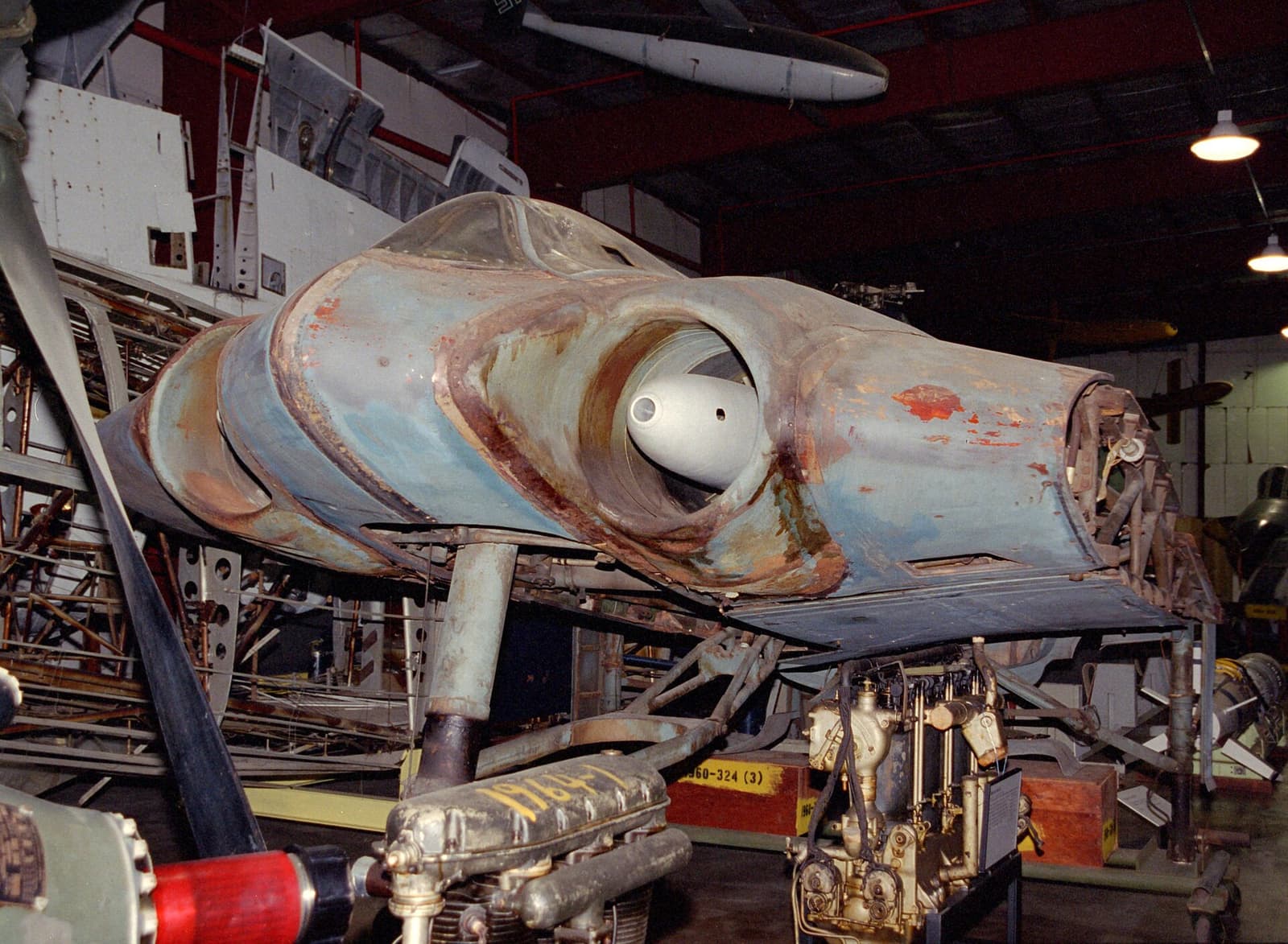
FBI Miami Office report (June 8, 1967; FBI serial 62-0-11328) documenting the statement of PAUL L. PEYERL, a German Luftwaffe test pilot who claims to have photographed a saucer-shaped aircraft during a secret test program in the Black Forest of Austria in November 1944.
Federal Bureau of Investigation / Miami Office (1967). Paul L. Peyerl 1944 German WWII Saucer-Shaped Aircraft, June 1967 Miami Office Report. The UFO Files. https://the-ufo-files-site.netlify.app/dossier/peyerl-1944-german-aircraft
"Paul L. Peyerl 1944 German WWII Saucer-Shaped Aircraft, June 1967 Miami Office Report." Federal Bureau of Investigation / Miami Office. 1967. https://the-ufo-files-site.netlify.app/dossier/peyerl-1944-german-aircraft.
Paul L. Peyerl 1944 German WWII Saucer-Shaped Aircraft, June 1967 Miami Office Report
Case ID: FBI-62HQ-83894/peyerl-1944-german-aircraft
Agency: Federal Bureau of Investigation / Miami Office
Date: 1967-06-08
Source: https://www.war.gov/medialink/ufo/release_1/65_hs1-834228961_62-hq-83894_section_10.pdf
Retrieved: Fri May 08 2026 20:00:00 GMT-0400 (Eastern Daylight Time)
Mirrored on The UFO Files, an archive by Dead Pixel Design. The file is the file. Anything in question is one click from the original.
Summary
FBI Miami Office report (June 8, 1967; FBI serial 62-0-11328) documenting the statement of PAUL L. PEYERL, a German Luftwaffe test pilot who claims to have photographed a saucer-shaped aircraft during a secret test program in the Black Forest of Austria in November 1944. The object, described as 21 feet in diameter with a revolving exterior and stationary central dome, was allegedly designed and engineered by a German engineer named KUEHR. Peyerl provided a Xerox copy of the photographic negative and a still photograph purporting to show the craft in a hangar. This is among the earliest documented primary-source claims of a WWII-era German saucer-shaped aircraft, preserved in the FBI’s flying-disc case file at the time of maximum media focus on the UFO phenomenon (1966-1967, post-Condon Study launch, immediate post-Blue Book).
What the FBI Report Documents
Peyerl’s Statement and Military Background
PAUL L. PEYERL, resident at 1430 Southwest 76th Street, Miami, Florida, appeared at the Miami FBI Office on April 26, 1967 and provided a structured narrative of his wartime assignment and alleged aircraft observation.
Military Service History:
- Graduated from German Air Academy circa 1943
- Assigned as Luftwaffe pilot on the Russian Front
- Released from Russian Front duty near end of 1944
- Reassigned as test pilot to “a top secret project in the Black Forest of Austria”
Aircraft Description
The object described by Peyerl carries these specific technical parameters:
“Saucer shaped, about twenty-one feet in diameter, radio controlled, and mounted several jet engines around the exterior portion of the craft.”
Structural Configuration:
- Exterior portion revolved around a stationary central dome
- Multiple jet engines mounted around the outer perimeter
- Estimated altitude during photography: 7,000 meters (20,000 feet)
Photography Claim: Peyerl asserted he retained a negative of a photograph made while the craft was in flight at altitude. He provided to the FBI:
- A Xerox copy of the photographic negative
- A still photograph purporting to show the object parked in a hangar, allegedly taken “at the risk of my life”
Designer / Engineer
According to Peyerl’s statement:
“the above aircraft was designed and engineered by (First Name Unknown) KUEHR, a German engineer whose present whereabouts is unknown to him.”
Peyerl’s assessment: KUEHR was apprehended by Allied Forces upon the termination of hostilities (May 1945). Peyerl stated KUEHR had unsuccessfully attempted to avoid German conscription but was apprehended by the Gestapo.
Why This Matters
-
Temporal Distance and Memory Integrity: This is a 23-year-delayed report — Peyerl made the claim in April 1967 about an event allegedly occurring in November 1944. The FBI’s institutional handling of claims with this degree of temporal distance (especially Cold War era) is operationally relevant to understanding the Bureau’s UAP-evidence vetting procedures post-Project-Blue-Book launch (1952).
-
Photographic Evidence Preservation: Unlike most 1940s sighting claims that exist only in narrative form, Peyerl purported to have tangible photographic artifacts — both a flight photograph (negative) and a ground photograph (hangar). The FBI’s response to documentary claims versus narrative-only claims is a methodological baseline worth tracking.
-
WWII German Aircraft Attribution Network: This case connects to a broader post-war intelligence concern — the systematic recovery and assessment of German advanced-aircraft claims, Nazi survival narratives, and the Cold War intelligence gaps regarding German wartime R&D. The KUEHR figure is otherwise undocumented in the archive.
-
Test Pilot Credibility: Peyerl identified himself as a Luftwaffe test pilot — a credentialed occupational position. His occupational background (compared to civilian-only reporters) places this claim in the same category as later U.S. military pilot cases (Smith, Armstrong, Mantell, etc.).
-
FBI Miami Office Routing (1967): The FBI’s institutional decision to document and route this claim through normal channels in June 1967 (post-Blue Book, during peak media attention driven by the Condon Study and pending Project Blue Book closure) signals the Bureau’s continued intake of secondary-source WWII claims despite the stated wind-down of active flying-disc investigations.
-
Interagency Intelligence Implications: The KUEHR designer-engineer claim, if taken seriously, represents a missing-persons post-war intelligence lead — potentially connecting to OSS, CIC, or USAF Special Investigations’ personnel-location efforts during the denazification and technology-seizure period (1945-1947).
Connections
- PURSUE full inventory — full PURSUE Release 01 file inventory
fbi-62hq83894-full-inventory— complete FBI 62-HQ-83894 case-mining index- davidson-brown-crash-mission-report — WWII-era aircraft investigation baseline (1947 B-25 crash during Maury Island investigation)
2026-05-08-fbi-62hq83894-spring-brown-cic-cluster-pre-maury-island-1947— 4AF CIC investigation protocol operational context- section-10-1966-1973-civilian-correspondent-cluster-post-blue-book — post-Blue Book civilian correspondence handling
- AARO
- PURSUE program
Open Questions
-
Photographic Artifacts: The FBI report states the Xerox copy and still photograph “appear on the last page of this communication.” The full page-0065.md text cuts off mid-sentence after the KUEHR paragraph. Unresolved: Whether the OCR’d archive contains the final page of this memo with the photographs, or whether the final page exists in the source PDF at war.gov/UFO/ with photograph reproductions intact.
-
KUEHR Identification: The designer is identified as “(First Name Unknown) KUEHR, a German engineer.” No surname-only technical records, Nazi aircraft design logs, or postwar Alsos Mission / CIOS intelligence summaries appear in the 62-HQ-83894 case file cross-referenced to “KUEHR.” Unresolved: Whether subsequent intelligence agencies (OSI, USAF Technical Intelligence, CIC) maintained separate files on KUEHR’s identity or location status.
-
Peyerl’s Later Life / Verification: The FBI memo provides Peyerl’s April 26, 1967 address (1430 Southwest 76th Street, Miami, Florida) and documents his appearance at the Miami Office with the photograph materials. Unresolved: Whether field-agent interviews occurred after the initial intake, or whether the case was closed as low-priority following the photograph examination and no further action notation.
-
Photographic Authentication: No mention is made of whether the FBI Lab, OSI, or any technical intelligence office examined the negative and still photograph for authentication, dating, or technical specifications assessment. Unresolved: Whether examination reports exist in a separate OSI case file or whether the photographs were simply filed without technical evaluation.
Quotes Worth Keeping
“Saucer shaped, about twenty-one feet in diameter, radio controlled, and mounted several jet engines around the exterior portion of the craft. He further described the exterior portion as revolving around the dome in the center which remained stationary.” — PAUL L. PEYERL, Luftwaffe test pilot, in statement to FBI Miami Office, April 26, 1967; FBI serial 62-0-11328. Description of alleged 1944 Austrian test aircraft.
“It was PEYERL’s responsibility to photograph the object while in flight. He asserted he was able to retain a negative of a photograph he made at 7,000 meters (20,000 feet).” — FBI Miami Office report, June 8, 1967, FBI serial 62-0-11328. Documentation of Peyerl’s operational role and photographic artifact claim.
“According to PEYERL, the above aircraft was designed and engineered by (First Name Unknown) KUEHR, a German engineer whose present whereabouts is unknown to him. He assumed KUEHR was taken into custody by Allied Forces upon the termination of hostilities. PEYERL stated KUEHR unsuccessfully attempted to avoid the German draft, but was apprehended by the Gestapo.” — FBI Miami Office report, June 8, 1967, FBI serial 62-0-11328. Attribution and postwar status assessment of the designer.